
Introduction
Radius Windshields have only been around since February 2023, but, of course, the team embodies years of experience from former Rycote days, so the development of the first full basket windshield from the company has generated a lot of interest. This interest has been stimulated by the refreshingly open approach to development of their products, especially via social media, with plenty of behind-the-scenes photos and videos, not least showing the novel use of ultrasonic welding to fix the fabric to the basket. The long development of the first basket windshield – the Mini-ALTO – saw pre-production models being packed up on Christmas Eve, to be sent off to UK field testers, and I received mine a few days later. In his covering letter, Simon Davies asked for ‘no filters on your opinion please’ and has no qualms about these opinions being public, so here goes!
First off, it is important to stress that the Mini-ALTO is just that: mini. The pre-production model I have been sent (the baby of the range: the 115) is the smallest full basket windshield that I have used, and so, of course, there are limits to what size mics can fit in it (obviously longer mics can fit in the 180 and 210 models, and the planned 260 model). Equally there are limits as to what such a small basket can offer in terms of wind reduction, and Radius are clear about this: their planned larger models, the ALTO and the CIRRUS will offer better wind reduction. Now Radius will have their own view on the market place for such a dinky windshield, but here I will be testing it from my own perspective, comparing it to realistic alternatives: above all, this will include the small Rycote Nano Shield NS1-BA, which is what I have used previously when I need an ultra-compact windshield, and which has long left my Rycote Baby Ball Gags largely redundant. Others may wish to compare it to the Cinela COSI models, and let’s hope so: I don’t have one to hand! Anyway, enough of a preamble: let’s get stuck in…
Design, construction and operation
Above all, the Mini-ALTO has been designed with ‘speed of transition between interior and exterior set up’. To achieve this, the basket follows the pattern of the Rycote Cyclone and Nano Shield in using magnets to hold the two halves together, except here the magnets are much stronger and do not need the assistance of physical latches: a couple of silicone safety straps on the sides can be used if required, but these seem entirely superfluous to any use I can imagine and can be removed (and lost!) easily. In fact the magnets are so strong that I had to refer to the instructions when opening the basket the first time: I didn’t want to break the windshield within the first five minutes. Once you know that the magnets are all that hold the Mini-ALTO together, opening is a breeze. What is also nice is that the magnets are properly embedded, and cannot be pulled out: I have had several come out on my Nano Shields over the years.

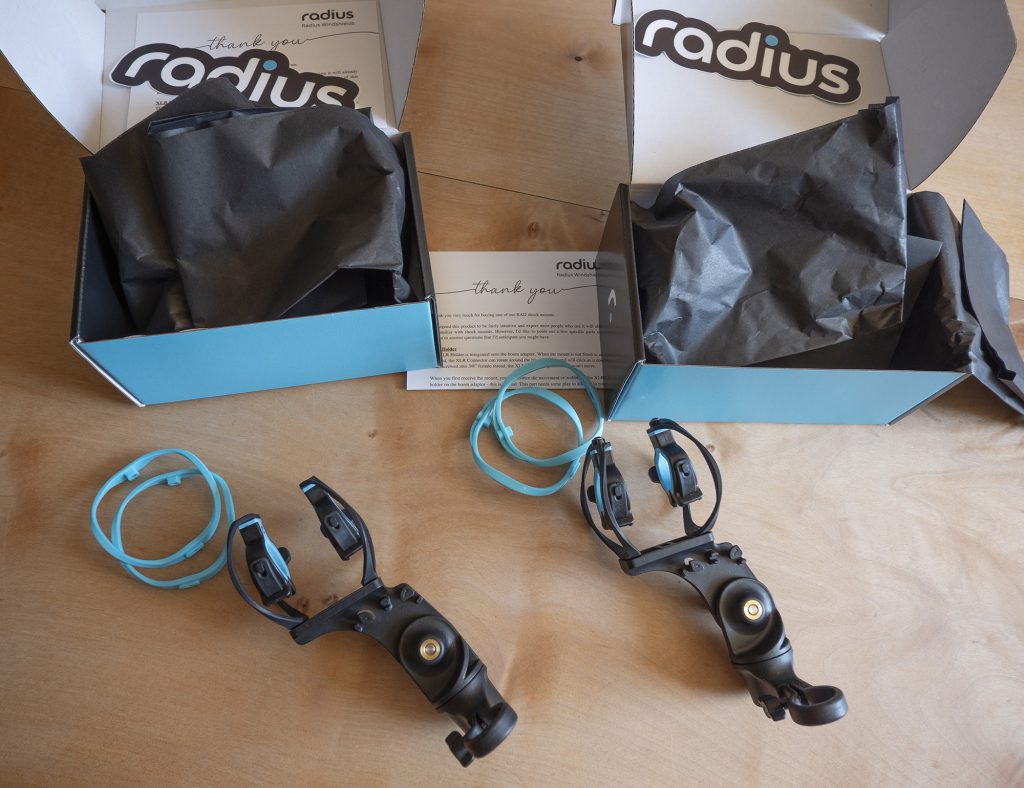
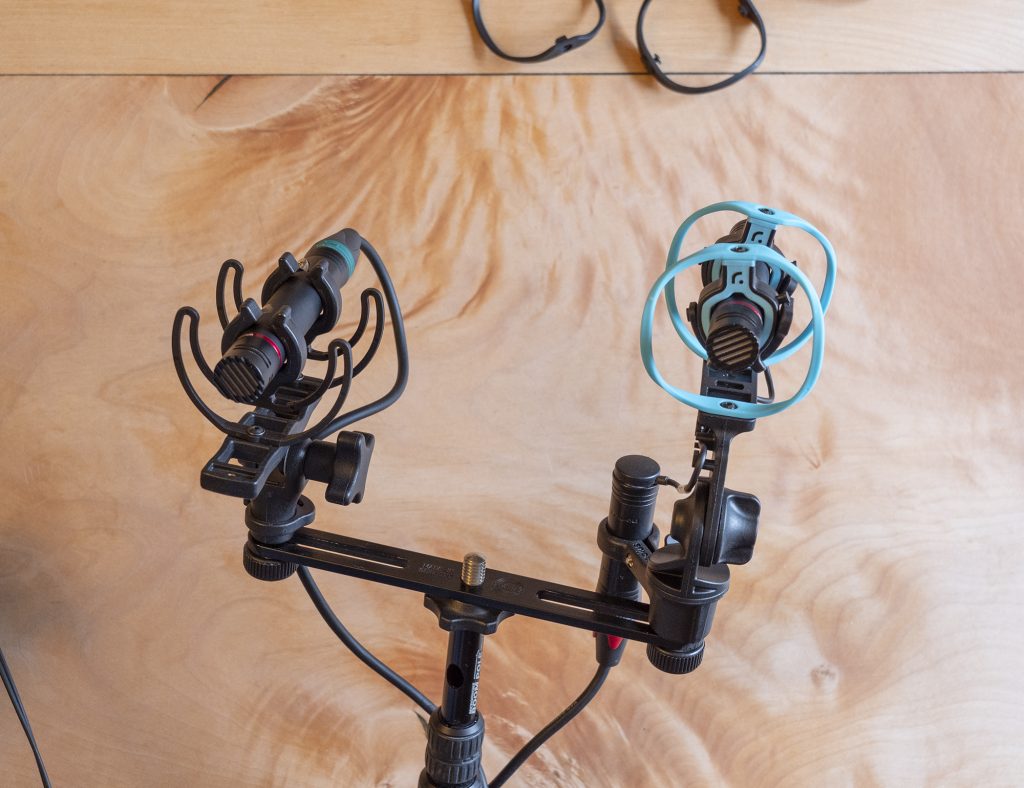
Inside the basket the Mini-ALTO utilizes the RAD-2 mount, released in 2023, which will be familiar to many. This doesn’t connect to the basket directly, but does so via an adapter, which Radius call the ‘Smiley Face’. Perhaps I need to drink more cider to see the piece of plastic in that light, but it is well made and, more to the point, its wide channel accepts the two halves of the basket really easily: the basket halves slide into place smoothly and with a positive clunk. That’s a refreshing and distinct difference from the frequent fumbling with the Nano Shield basket, and by far the easiest (dis)assembly of a windshield basket I have come across. When the adapter is not in place (i.e. when the basket isn’t in use) it can be replaced with the supplied small ‘windshield stowage holder’: this has a carabiner attached so you can dangle the basket off your body or bag until you need to pop it back on. The adapter has two other functions beyond holding the basket to the shock-mount: it provides an exit point for the cable and holds the shock-mount hoops (Radius’s equivalents to Rycote’s lyres and Cinela’s elliptical isolators). Looking at the cable exit first, the test model is provided with a rubbery gland to fit thin cables, but there is no other cable management inside the basket: the user is urged to utilize the straps on the mic clips or the short cable straps supplied to run the cable along the mic. I’m no fan of clunky and unshielded conn boxes in windshields, but I quite like the neat little clip on the rear of the rail of a Nano Shield. Of course, the cable cleats and the XLR holder on the RAD-2 mount should mean that cable-borne noise isn’t an issue. Turning to the shock-mount hoops, for me, and I suspect others, these are one of the small but most useful features of the Radius Windshields approach: their modular nature (whereby hoops and mic clips are screwed together and can be changed) is a significant departure from the Rycote lyres, where the mic clips are integrated. Above all, this means that the hoops and, by extension, the Mini-ALTO can be adapted for a mid-side (MS) pair. Radius have an MS clip in development for release shortly, with which I have had some input, but in the meantime I am using my own similar 3d-printed clips. It is such a pleasure to get away from clunky back-to-back clips and to be able to get the two mics closely spaced. I have posted previously about how the hoops lend themselves to such customization, and here’s a couple of examples of how this now translates to the diminutive Mini-ALTO:


Turning to the design of the basket, the fabric looks reassuringly transparent compared to, say, the thicker 3d tex material of the Cyclone and Nano Shield. The basket itself, though, looks less transparent on purely visual grounds: there is something of a price to pay for the slick assembly/disassembly in the resultant 21mm-wide plastic ring formed when the two half-baskets are fitted (the slight chunkiness is necessary to house the magnets securely). And each end cap joins the cylindrical part of the basket with another ring: 9.5mm wide externally, but 12.5mm wide internally. Such H-rings for end caps are a feature of most cylindrical windshields, although not, of course, in the case of the Nano Shield. I am probably a bit more focused than most on the potential impact of plastic rings around windshields given my preference for MS pairs in the field, and the potential for impact on the sideways facing lobes of the fig 8 mic in particular, but at least in this case the fig 8 mic capsule naturally sits between the central ring and that of the front end cap. The mesh of the Mini-ALTO basket is formed by plastic 3.3mm wide, with mesh cells a lot smaller than the more open Nano Shield or Cyclone, but much larger than more traditional windshields such as the Rycote Modular. We will have to see, or hear, how the design of the basket affects sound (see below), but there is no denying that it is well engineered, robust and, above all, very easy to disassemble and assemble.
Turning to the size of the Mini-ALTO 115, the numerical suffix of the model derives from the 115mm length of the cylindrical section, with the end caps giving it an overall length of 198mm. This compares to the overall length of 225mm for the Nano Shield NS1-BA. The Mini-ALTO 115 weighs almost the same as this Nano Shield model: using the same cable for both, I weighed them in at 275g and 267g respectively.

Interestingly, Radius have a choice of furs for their new windshield. The initial plan, I understand from Simon Davies, was to sell the Mini-ALTO with the black fur, likely – given it being an interior to exterior system – the most popular choice for those in production sound. But Radius now plan to sell the Mini-ALTO with the grey fur option too: the longer grey fur offers slightly better wind-noise reduction (suggested as much as 5dB) and it is certainly the fur I prefer (not just on the Mini-ALTO: I have also chosen this for the various Radius furs that I have acquired for other windshields – from Cinela and Rycote and for my DIY blimps). To give me the complete set, Radius also sent me a brown fur, which is very similar to the black fur in terms of performance and feel. I’m not entirely sure whether it would help anyone recording nature sounds blend into the background!

Handling noise
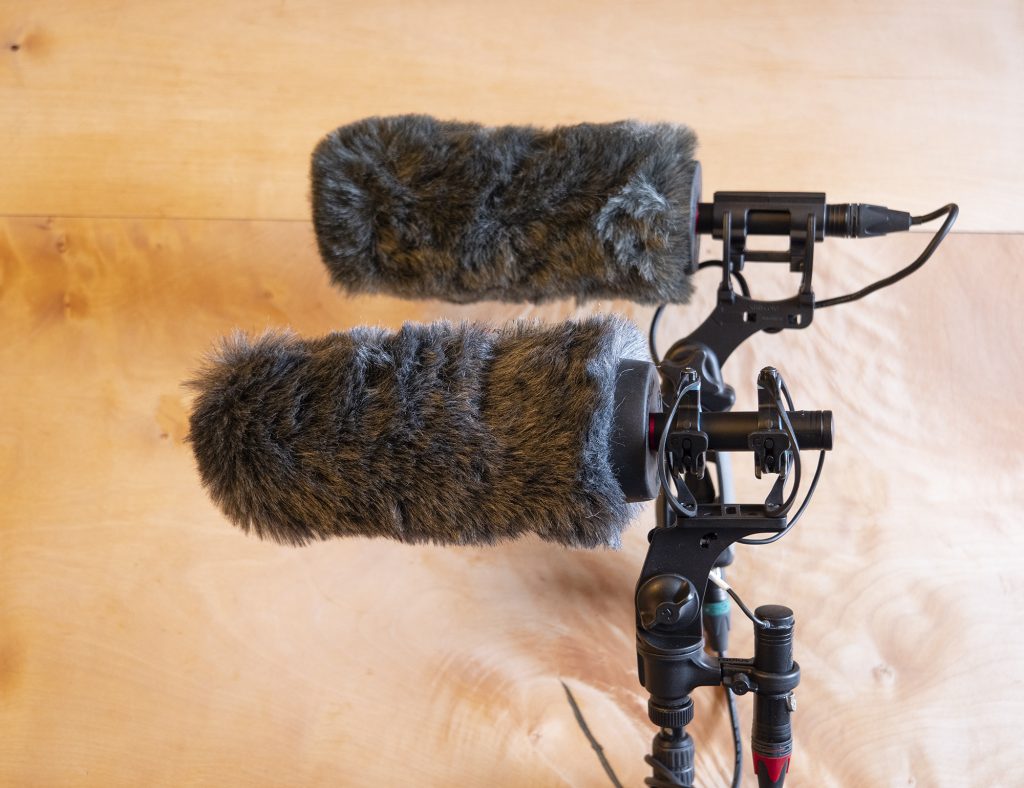
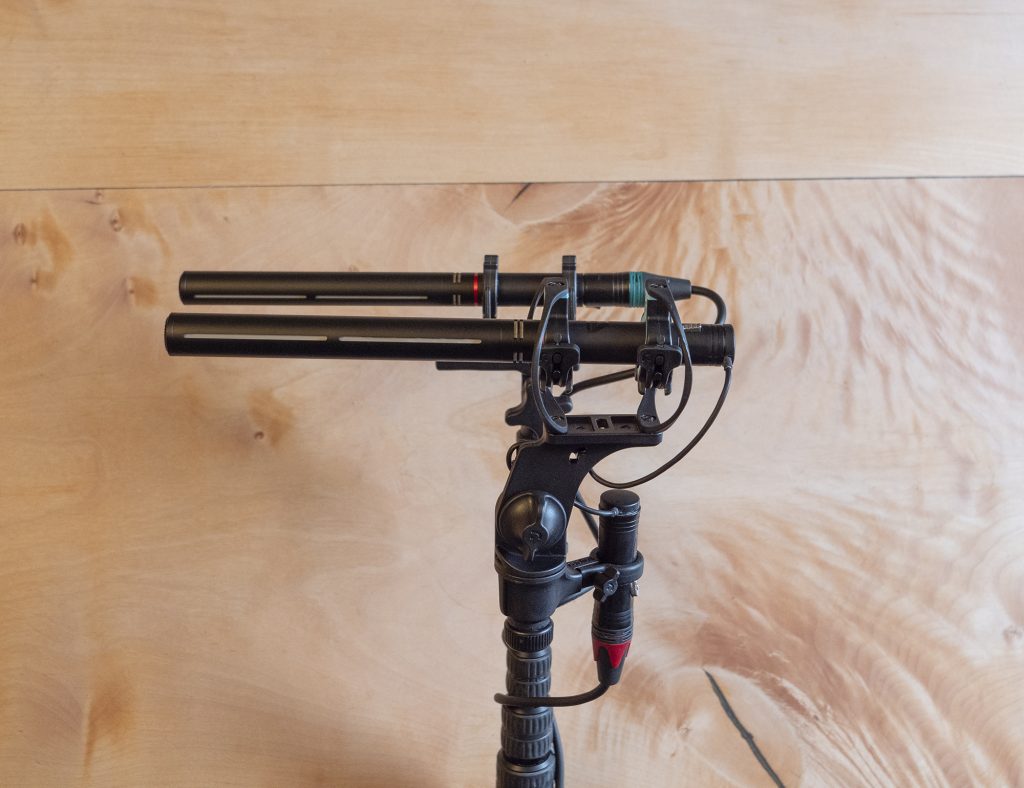
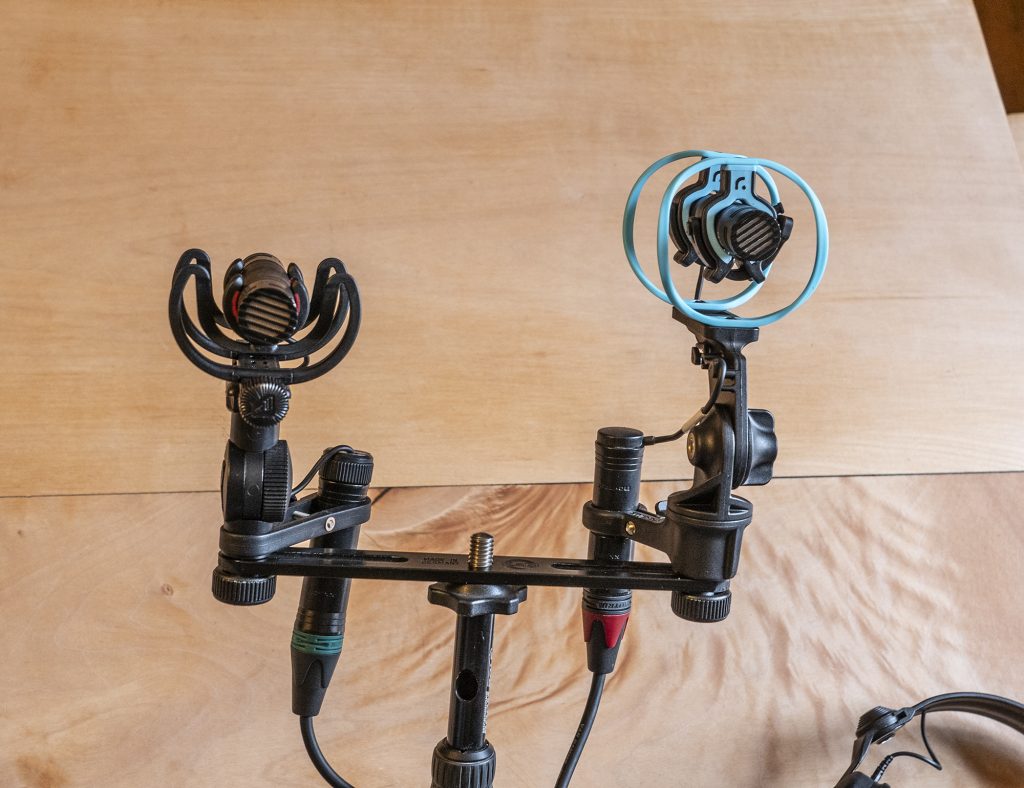
Back in September 2023 I tested the RAD-1 and RAD-2 shock-mounts and was impressed by them. The question arising for me, therefore, is how the addition of the Mini-ALTO affects things, if at all? And having found the Nano Shield lyres better performing than the older Rycote standard lyres, how does handling noise differ between the two diminutive windshields. Time to whip out the boom-pole and a short stereo bar for some simultaneous testing, this time using the new Radius 55D hoops, and a matched pair of Rycote CA-08 mics.
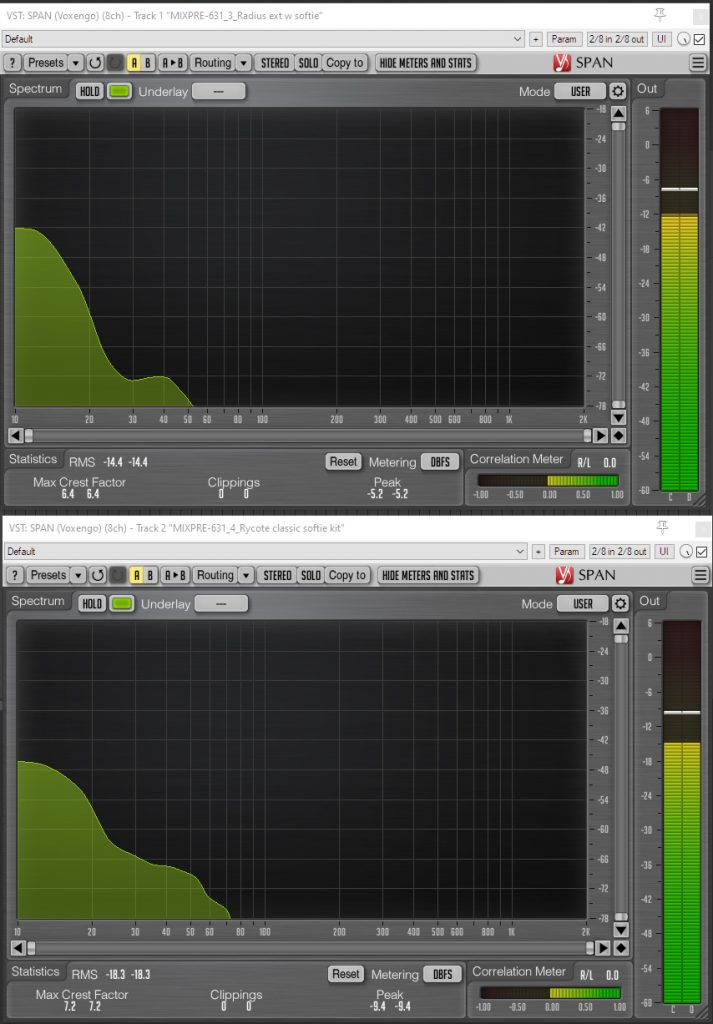
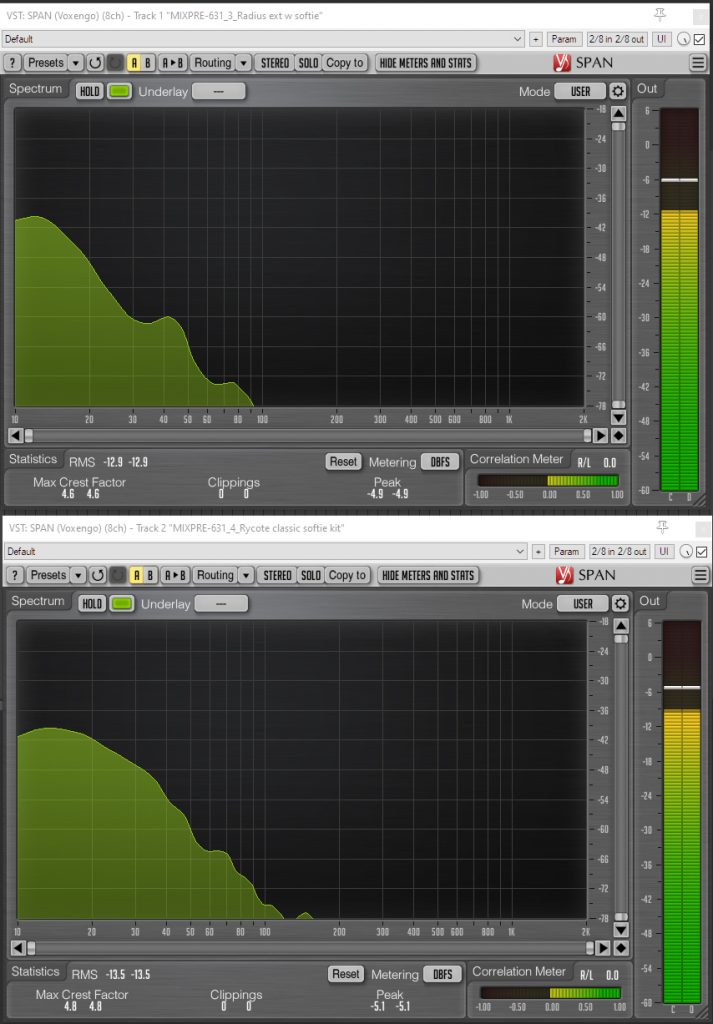
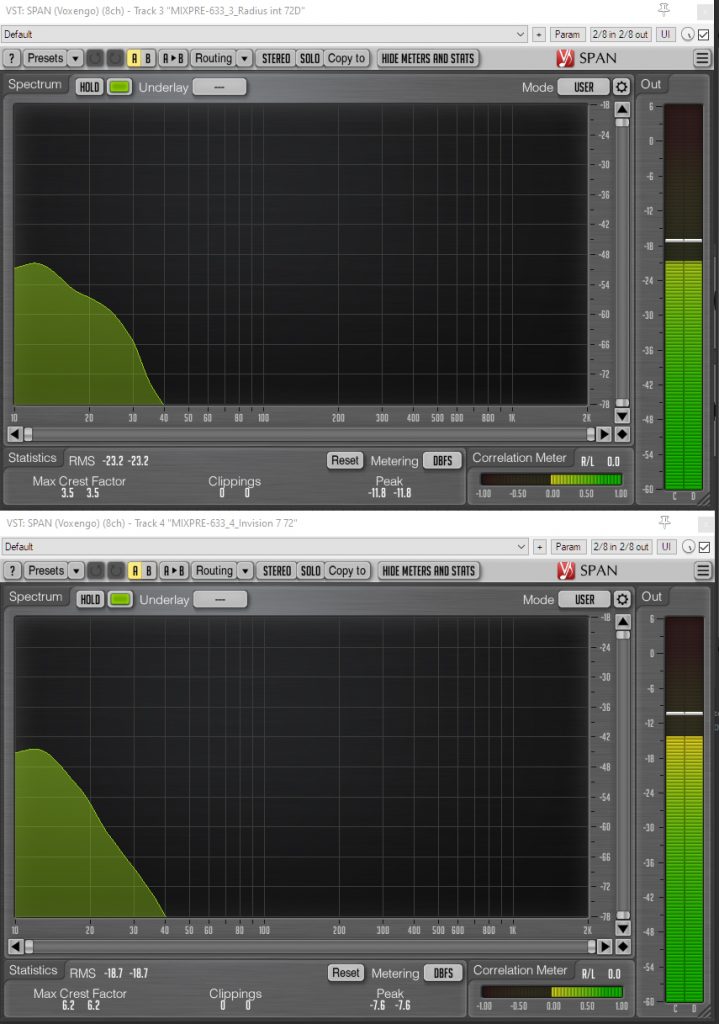
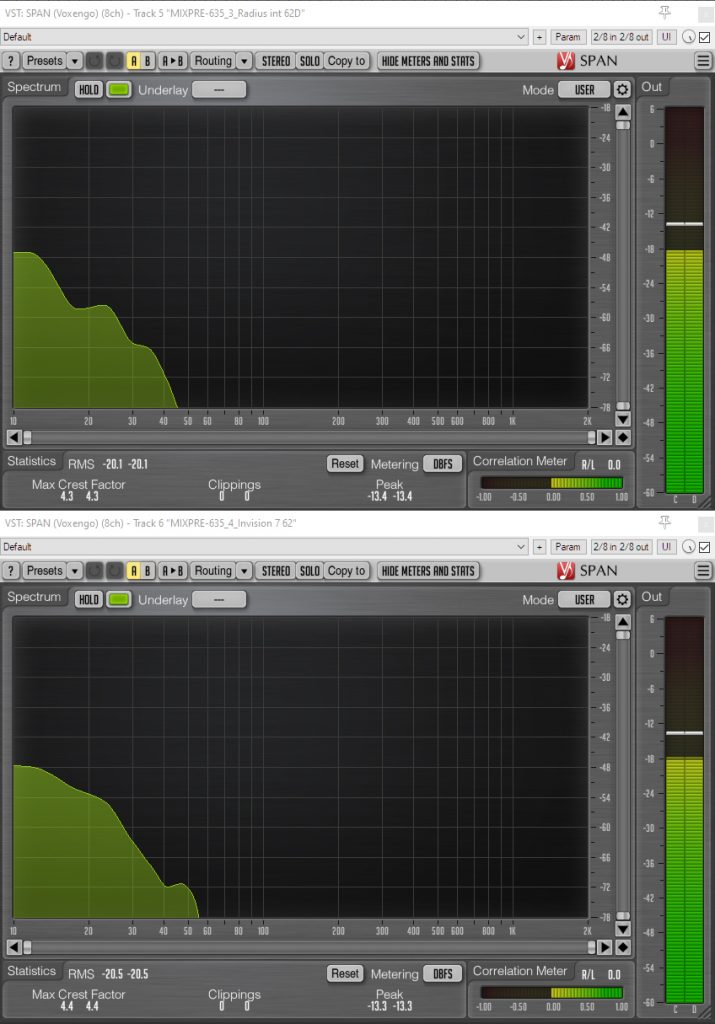
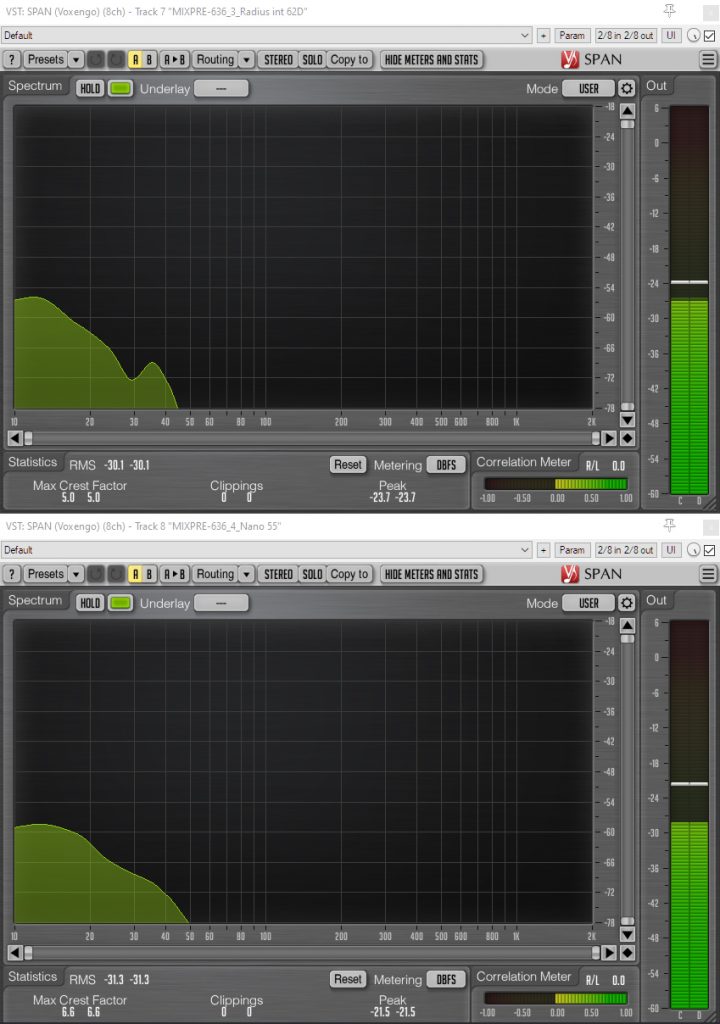
First up, here are the spectrum analyzer visualizations of a static hold with the boom-pole extended, so that my muscles were shaking (a long boom, two mics and windshields and puny arms!):


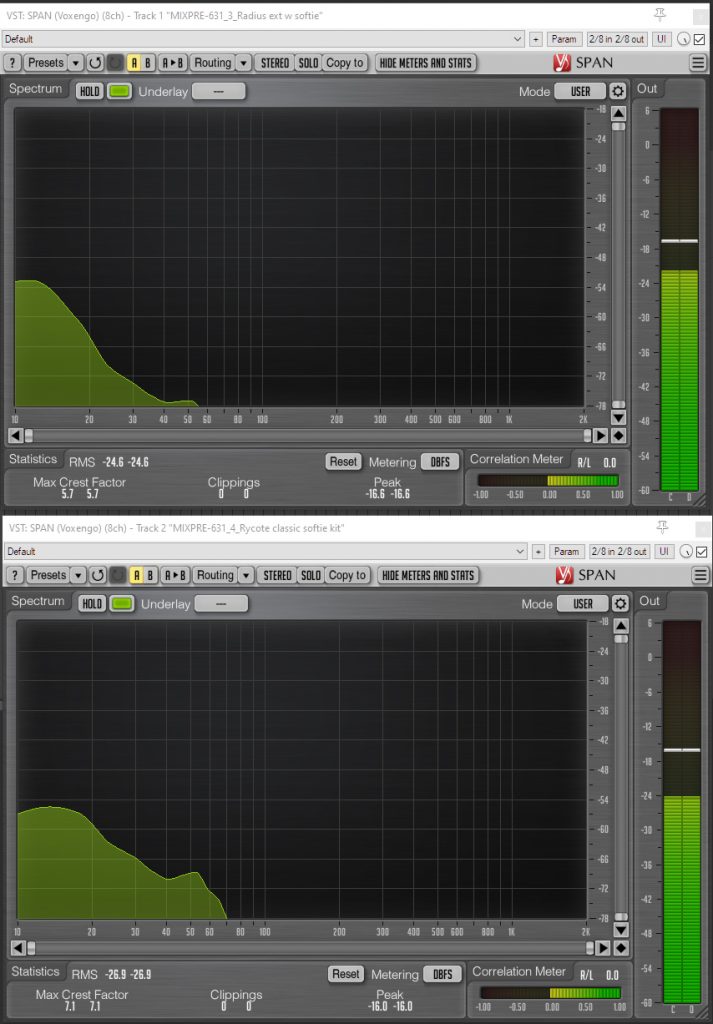
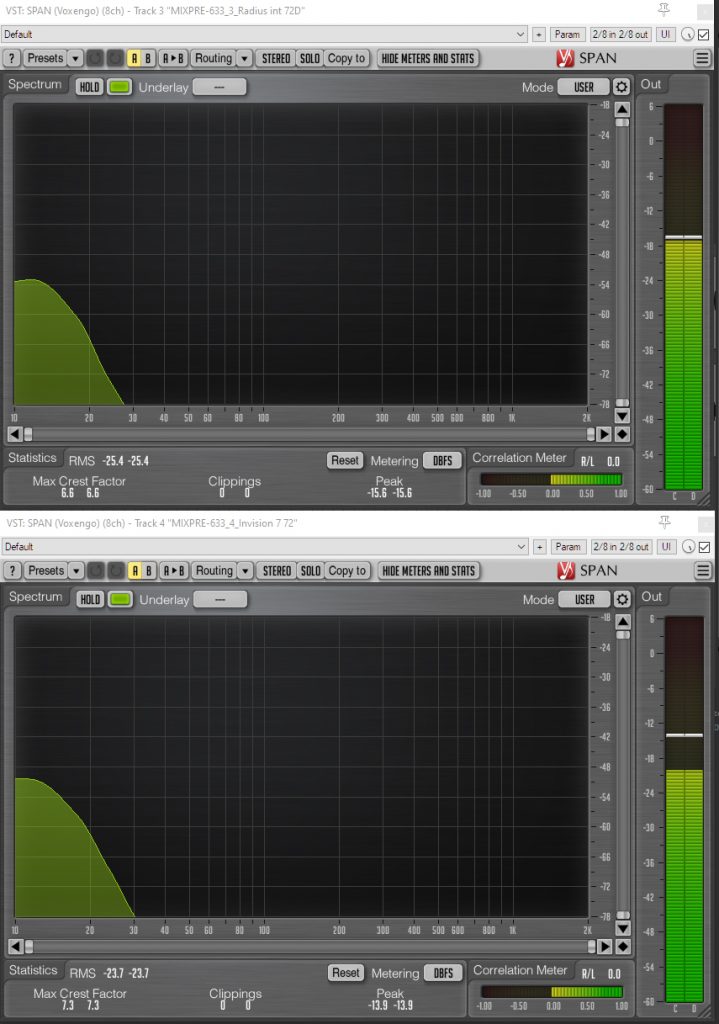
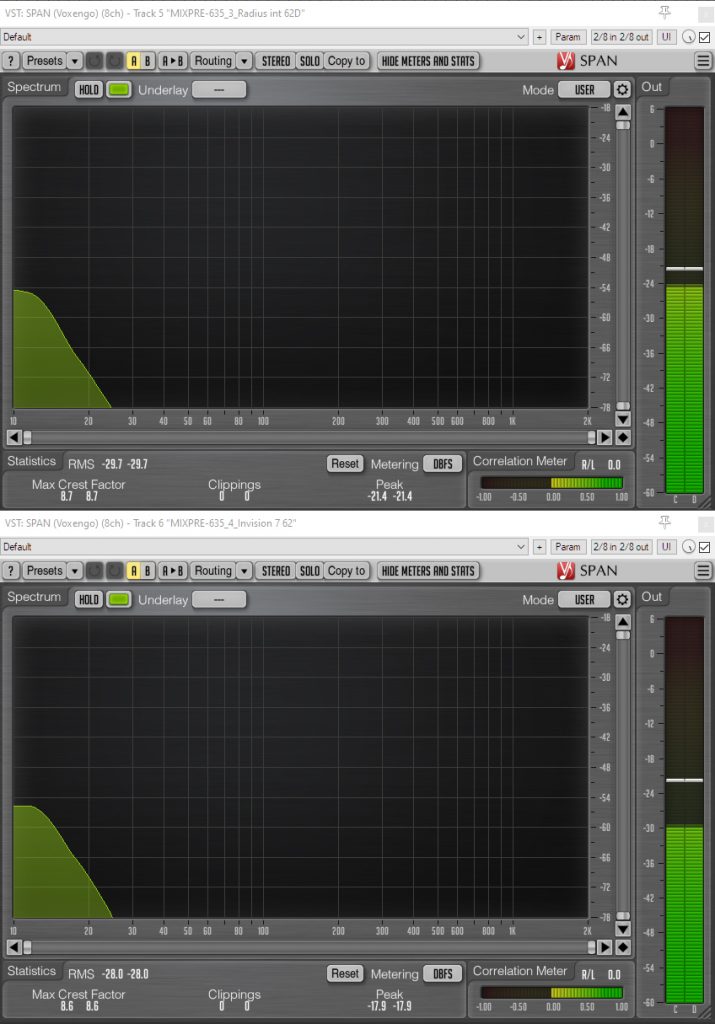
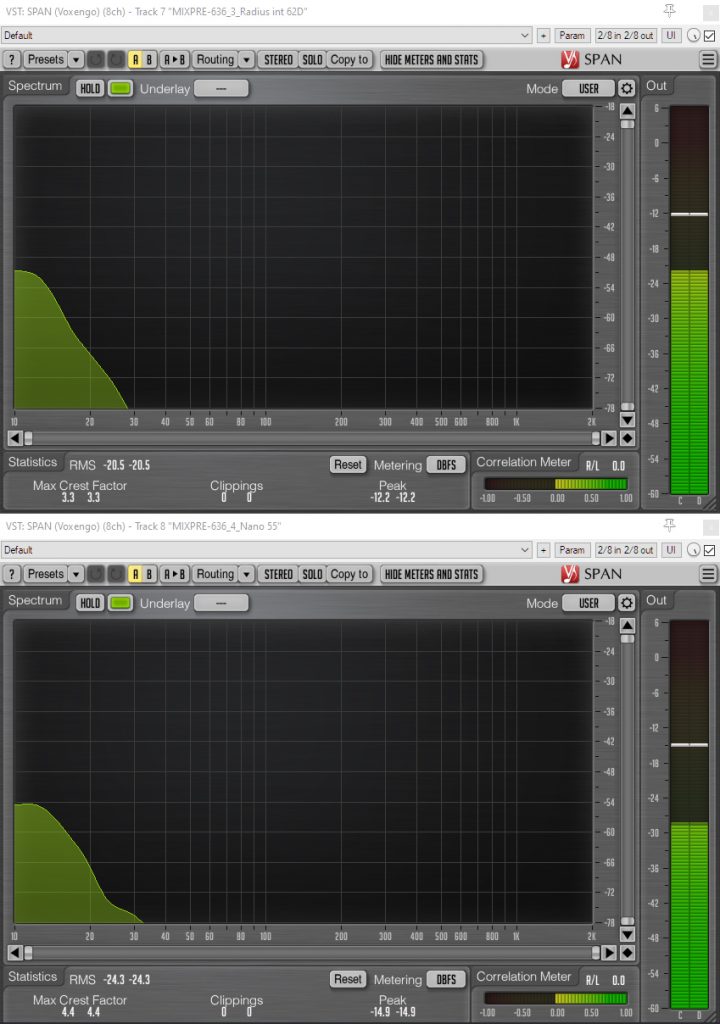
There is little in this, with the Mini-ALTO showing a slightly higher peak, but with a smaller frequency range and both are effectively removed by even a 40Hz high-pass filter (which would be a minimum for even the most static use of a handheld boom-pole). Giving the boom-pole some thumps again produces similar results:


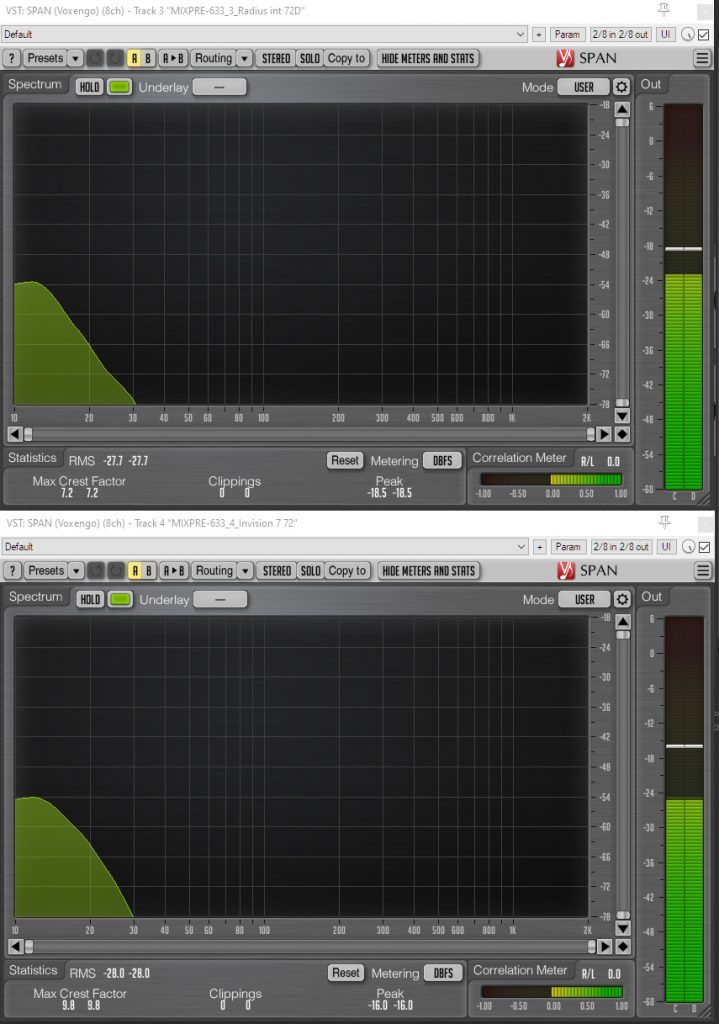
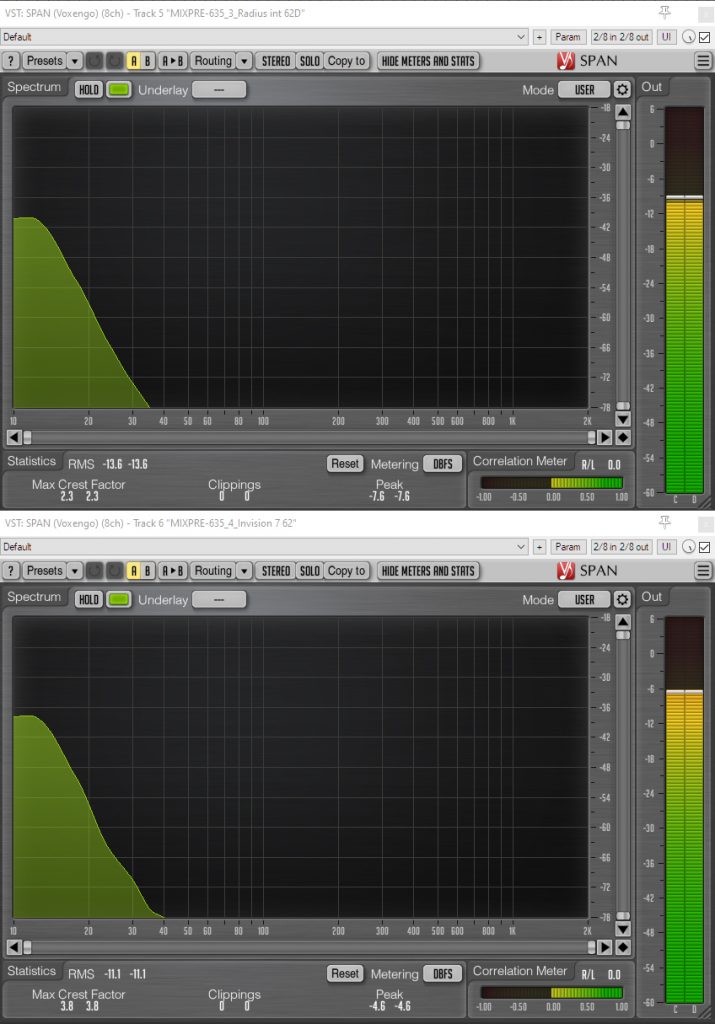
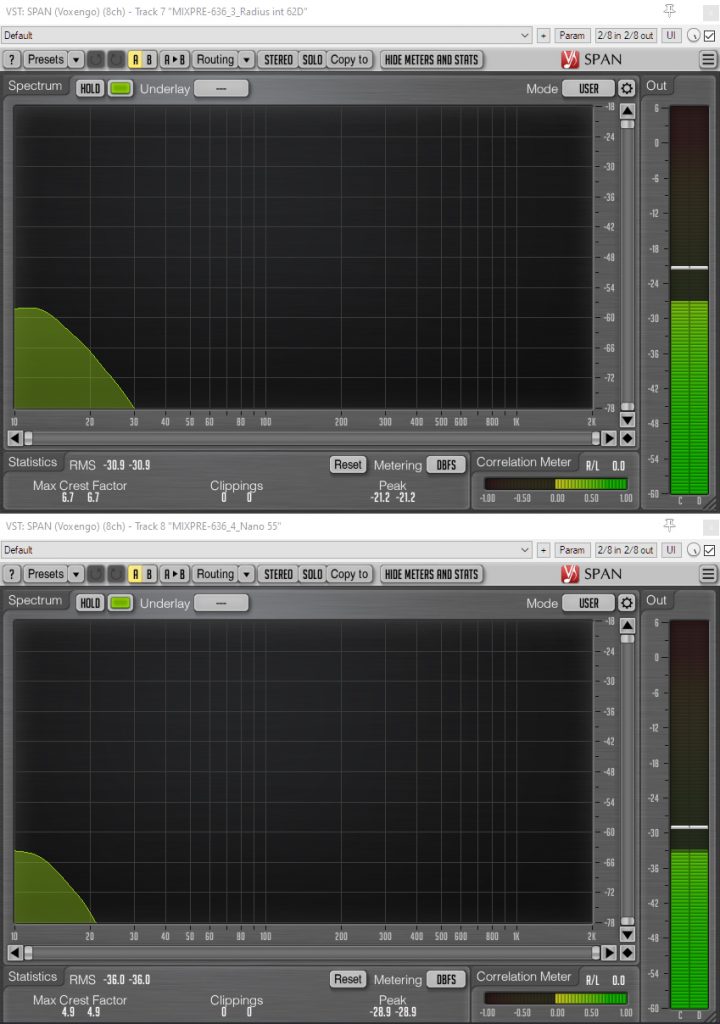
And finally, here we have some deliberate shaking of the two windshields on the end of the boom-pole:


In short, I haven’t found there to be any significant difference from the shock-mounts when tested previously sans windshield baskets, and handling noise in both the Mini-ALTO and Nano Shield was well controlled, with resultant noise from normal use easily removed at source by use of a high-pass filter in the 40Hz to 80Hz range. Obviously different mics and more energetic boom-pole use might produce different results, but there is little doubt that the Mini-ALTO is competent in this regard.
Wind reduction
The internal diameter of the Mini-ALTO is, at 81mm, smaller than most basket windshields (with many designs, such as the Rycote Modular, being 100mm diameter). Even the Rycote Nano Shield has a larger cross-section, measuring internally 86mm high and, with its elliptical form, 107mm wide. It is for that reason that Radius Windshields have emphasized that this is a windshield designed for limited outside use and, of course, why they have larger models in the pipeline. Taking a larger windshield outside is not normally a concern for me, but there are occasions when a very compact rig is desirable and I was keen to test the Mini-ALTO against the Nano Shield (itself no slouch with wind reduction). Here are two clips recorded simultaneously on a very breezy day with both windshields rigged with matched MS pairs (each with a Rycote BD10 and CA08). When I say breezy, the wind speed was around 25 mph, gusting near 40 mph, so pretty tough conditions. No high-pass filtering was used when recording or in post, whereas, in this sort of wind some filtering would be used with most windshields.
As you can hear, and, to be honest, against expectations, the Mini-ALTO 115 does a slightly better job of wind reduction: for the test, I was using the initially supplied black fur with the Mini-ALTO, and the longer-pile grey fur, which I received subsequently, should improve things further. Of course, with an MS recording it is not immediately clear whether that reflects better side, front or all-round performance, so it is useful to look at what is happening with the fig 8 and cardioid mics separately, using a spectrum analyzer:


The difference in performance between the two small windshields evidently applies to both mics (and, thus, both forwards and sidewards). I was particularly surprised to see that the Nano Shield, with its greater width, did not show any advantage over the Mini-ALTO with the sidewards-facing lobes of the fig 8 mic. Of course, much of the significant difference seen in these spectrum analyzer visualizations would be removed by judicious use of a high-pass filter (the scale used here going right down to 1Hz), but, nonetheless, it is evident that there are significant differences in the crucial area between, say, 50Hz and 200Hz. How much of a difference any sound recordist will find between the two small windshields in use will depend on the mics used and the high-pass filtering (if any) applied, but there is a discernible difference between the two and, certainly, the wind-reduction performance in a blustery outdoor wind is better with the Mini-ALTO.
And for anyone who wonders how a small windshield such as the Mini-ALTO copes with wind compares to a rather larger windshield, here are two test recordings – one with the Mini-ALTO (sporting its grey fur) and one with the Cyclone Stereo MS kit 5 – on another very windy day, again using matched MS pairs (each with a Rycote BD10 and CA08):
As expected, the larger Cyclone performs better with wind reduction in such brisk conditions, although, of course, a high-pass filter (not applied in this test recording) would improve matters for the Mini-ALTO. And, as mentioned, larger windshields in the pipeline from Radius will be better able to handle such use.

Transparency
When thinking about windshield performance many give little thought to transparency, but it is a key part of the equation and something that I have become more and more conscious of over the years, especially when using windshields with fig 8, omni and wide cardioid mics, where the polar patterns mean that baskets need to offer low colouration of sound beyond the front end of the windshield. Without an anechoic chamber it is difficult to get an exact read on the transparency of any windshield, but for a reasonable quick and dirty test I placed a bare mic on the windshield shock-mounts in front of a speaker (in my treated studio) playing pinknoise, then carefully added the basket without moving the mic for a second recording. I did this with a supercardioid mic (Sennheiser MKH 8050) head on, and then with a fig 8 mic (MKH 8030) side on to get a sense of how the two windshields compared at both angles. The results for each pair of recording were compared using a spectrum analyzer and overlaid as follows:


With the supercardioid mic and the sound source on axis there is little colouration other, as would be expected, than some high-frequency attenuation: both windshields perform well in this test, which, of course, represents the primary intended function (i.e. a single directional mic for film, ENG, outside broadcast etc. ).
Moving onto a fig 8 mic with the windshields side on to the sound source, the results were as follows:


Here the results differ: the Nano Shield shows similar (i.e. minimal) colouration as with its end-on test, while the Mini-ALTO shows more variation between the bare mic and the recording with its basket added: this is both above 4kHz and below around 150Hz. The latter represents some consistent bass attenuation, while the high-frequency colouration is more varied and potentially problematic. But before we get too concerned, it is perhaps worth including the results of the same test for the Rycote Cyclone (small):

With the Cyclone, the colouration of the higher frequencies is more significant and extends much lower (to just over 2kHz, compared with over 4kHz for the Mini-ALTO). In both the Cyclone and Mini-ALTO designs there can be little doubt that the colouration of the sideward facing lobes of the fig 8 mic is a consequence of the plastic rings around the windshields (less substantial in the Mini-ALTO, although much closer to the mic), which, in both cases, are not problematic for sounds on axis to the windshield.
There is one thing demonstrating differences with this pinknoise test or, indeed, more exhaustive and expert tests in an anechoic chamber, but how does the colouration actually sound? It is hard to come up with a perfect test, especially with limited resources, but I have settled on an approach that some at least may find informative. Eschewing the variability of successive live recordings, I placed an omni mic in front of a single speaker in my studio and played back a short section of a recent recording of mine of a singer-guitarist (Luke Chapman): the mic was angled successively at 0 degrees, 45 degrees and 90 degrees, in each position with the mic in the bare shock-mount of the Mini-ALTO and then, without moving the mic, each time carefully adding the windshield. I then repeated the exercise with the Nano Shield for comparison. Obviously each set up will vary fractionally, but not for each pair of recordings (i.e. a given windshield at a given angle, with and without the windshield basket) and it is comparing each such pair where any value in the exercise comes. I left off the furs as a) the focus here is on the effect of the basket design and b) maintaining the exact position of a windshield while adding the fur is so difficult. Anyway, for better or worse, here are the resulting sound files:
If really keen, you can download the files and set them up in a DAW and flip between short repeated sections of each pair, which is what I have done. In all the recordings with the windshield you can hear the expected slight change to the high frequencies when the basket is added, and, as anticipated following the pinknoise tests, the Mini-ALTO 115 shows the most discernible difference at 90 degrees. I was pleased to note that such colouration isn’t obvious at 45 degrees.
I have heard (rather than just measured) similar colouration with the Cyclone with side-on sound sources. Although the Cyclone windshield is now sold with mid-side and double mid-side configurations, the basket was not designed for such use, and the primary purpose of the Mini-ALTO to house a single end-address microphone is even more evident. For that purpose the Mini-ALTO offers very good transparency. Whether or not colouration from the sides actually matters for those who wish to use the windshield will depend partly on whether planned use is for a miniscule mid-side rig or, perhaps, a pair of the windshields for spaced omni mics. And, of course, it will depend on the direction of the principal sound source(s), how transparent the recording needs to be, and whether the small size and convenience of a Mini-ALTO outweigh any such concerns. Many, perhaps without consciously considering transparency, make a similar compromise with the Cyclone for MS/DMS vs, say, the more transparent Cinela models (for a comparison of the Cinela Zephyx and Pianissimo models and the Rycote Cyclone for MS use see my tests and write up), or, indeed, using a pair of Baby Ball Gags for spaced omni mics. Needless to say, there are plenty of windshields with plastic rings in places that will colour the sound for certain polar patterns and arrays, and I should stress that the Mini-ALTO is not at all unusual in this regard. Aaargh: am I just getting obsessed with transparency?!
Conclusions
What then of the Mini-ALTO? There is no doubt that it is well-engineered and, as such, builds on the Rycote experience of the team: most of the design is more robust, and much more positive and quicker to put together and take apart than the Rycote counterparts, most notably the Mini-ALTO’s closest competitor – the Nano Shield. That its wind-noise reduction capability holds up to outdoor use in moderate conditions and, moreover, exceeds the Nano Shield (at least in my tests!) was unexpected, given the smaller cross-section, and for many this will be reassuring. As the saying goes, however, there is no such thing as a free lunch, and, just as I have seen when comparing the Cyclone to the less user-friendly Cinelas, the convenience and robustness come with the price of less transparency of the windshield off-axis. As with the Cyclone, this is almost certainly a consequence of the plastic rings that encircle the basket, and, of course, such rings are to be found on most cylindrical windshield baskets, including Rycote Modular models and the Rode blimp, and, equally, are found in the spherical Baby Ball Gags. So there is nothing new here and for most users – with single shotgun, supercardioid, hypercardioid and cardioid mics – this will simply not be an issue. And for many users with omni mics, wide cardioids or, indeed, mid-side or even double mid-side, a bit of colouration from the sides will either be unnoticeable or a price worth paying for size, robustness and ease of use. For some the Cinela COSI models may well be a better compact option, but until (unless?) the release of the prototyped MS COSI version that was shown with the MKH 8030 at its announcement in September 2023, the restriction of the COSI windshields to single mics makes them not quite so appealing to me personally.
It is clear that the Mini-ALTO isn’t a panacea for all problems for mics involving wind, but it was never intended to be so. What is evident is that it is an excellent compact tool for outside broadcast, ENG, some narrative recording purposes, and, some field and FX recording, above all for those who need to switch from a bare mic to moderate wind protection at the drop of a hat. It has been fascinating watching the Radius Windshield journey thus far to the point of production of their first full basket windshield, and it will be interesting to see the larger ALTO and, particularly, the CIRRUS in due course.
And a final note: do please remember that I have been field-testing a pre-production model, as have others (who will doubtless offer other insights: e.g. from experienced production sound or outside broadcast perspectives), and that there may be the odd minor tweak before the production run starts!
Pricing and availability
For many the price of different windshields will come into play when making choices, so it was interesting to hear from Simon Davies how the Mini-ALTO compares with the Nano Shield on this too. The latter is priced at £525 ex VAT for the kit (including fur and cable), while the Mini-ALTO 115, 180 & 210 kits (again with fur and cable) come in at £360 ex VAT. Without the cable, the kits are £320 ex VAT, and if you already have a RAD-2 shock-mount then the upgrade kit (without cable) is £270 ex VAT.
In terms of availability, the latest update from Simon Davies (22.1.2025) is: ‘We’ve set a formal launch date of 1st March for v1.1, however we’ll be releasing some units during February as they become available.’