
Introduction
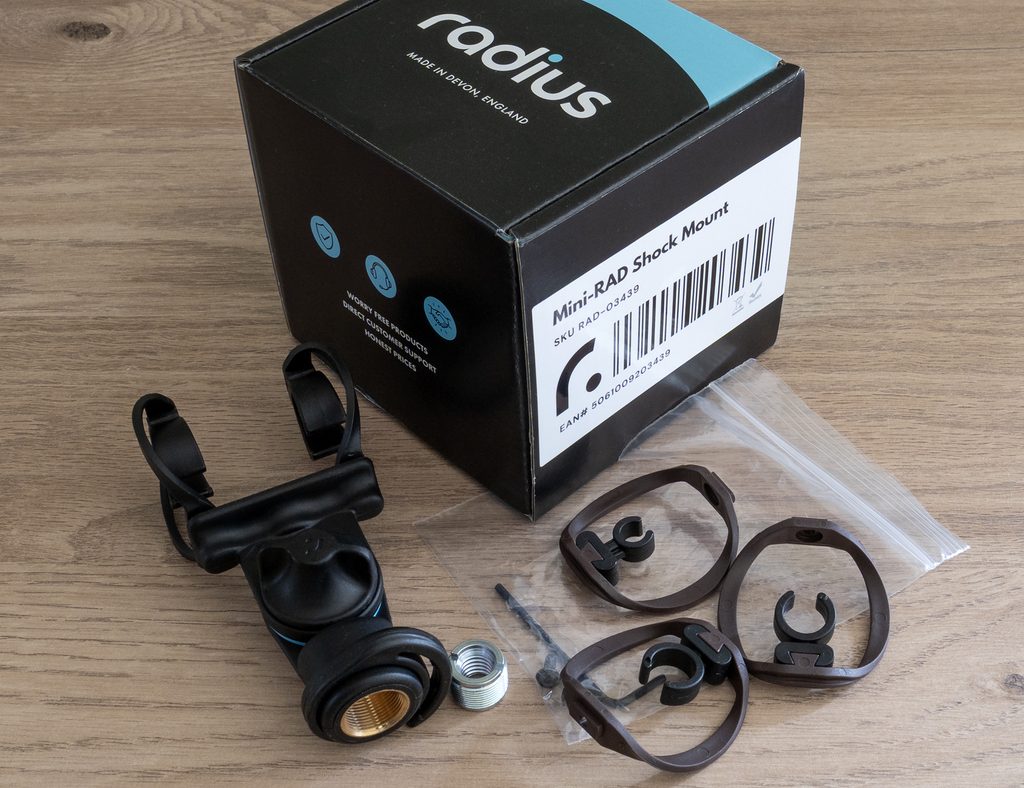
In a recent post I showed how the updated ORTF mounts for the Mini-ALTO were able to take advantage of the Mini-RAD hoops, but, needless to say, this wasn’t the design intention behind the new shock-mount components from Radius Windshields. So this blog is about using the hoops for their designed purpose, as low-profile suspensions for single mics. As one option, Radius sell the hoops as part of a complete kit, as shown in the photo above. This comes with the Mini-RAD shock mount, fitted with a pair of Mini-RAD hoops (55D black) with 19/21mm clips, as well as the following spares/alternative parts: 1 off Mini-RAD hoop (45D espresso brown: i.e. Pantone 497C ) with 8.0mm clip; 2 off Mini-RAD hoops (45D espresso brown) with 12.5mm clips; 1 off 2mm Allen key; 2 off M3 x 10mm screws; and 1 of metal 5/8-27M to 3/8-16F adaptor. The kit has an MSRP in the UK of £72.00 inc. VAT, which means it is slightly more expensive than, say, the Rycote InVision INV-6 or INV-7 (both with an RRP of £63.60), although, of course, the Rycote alternatives don’t have any spare lyres or clips. While talking prices, the Cinela E-OSIX model used in the comparisons below retails at around £240 inc. VAT, but that does include the integral XLR connectors and cable. Given that the Mini-RADs can be retrofitted to existing Radius Windshield bases (not least the diminutive Field Edition base) and – like the larger RAD-1 and RAD-2 hoops – to Rycote mounts (including the Invision INV-7 and INV-6) the availability of the hoops sans mount will be very useful for many too: these come in at £15 inc. VAT for a pair (and include any of the three sizes of clips).
Size and mounting
The fundamental difference between the standard hoops from Radius Windshields and the Mini-RAD hoops is, of course, the size. A picture (especially one with dimensions!) is worth a thousand words:
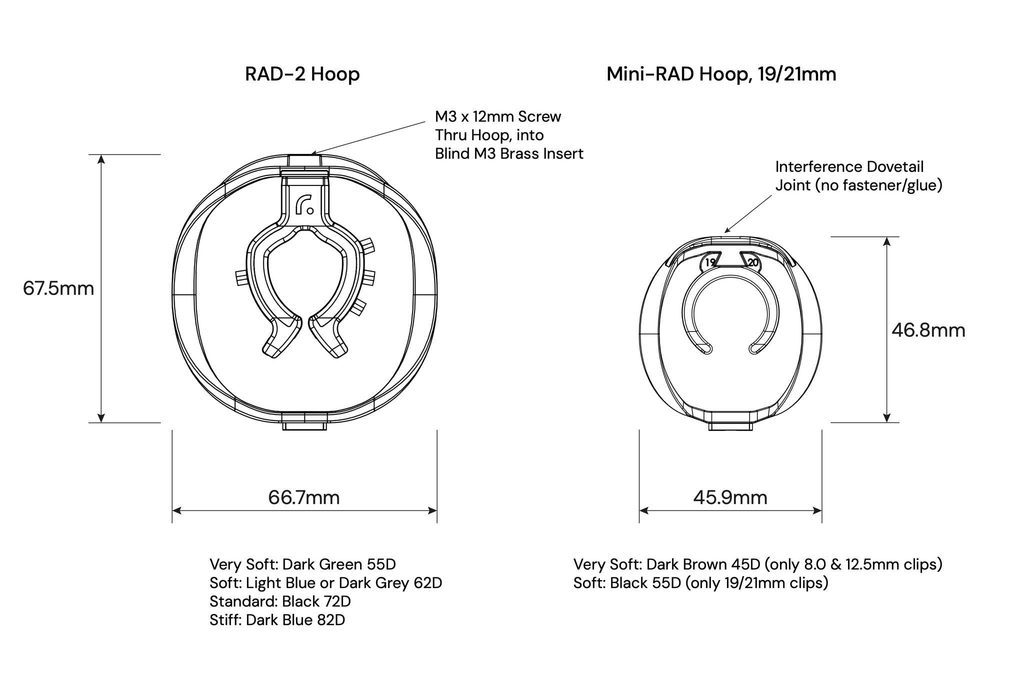
Although the fixing at the bottom remains the same, the top mount is a radical departure: the smallness of the hoop means there is no longer scope for a mic clip that is screwed to the hoop. Rather than eschewing a separate clip and going for a clip and hoop injection moulded all as one (like the Rycote lyres), I am mightily relieved that Radius have kept the modular approach: without that I would not be able to use the Mini-RADs for such unintended designs as the ORTF bars or, more prosaically, fit the 19/21mm clips to the softest hoops (45D)! The separate hoop and clip has been achieved instead by the use of a dovetail joint: this is a tight fit, but with any tendency to slide out removed by use of a projecting pip on the underside of the hoop’s dovetail and a corresponding dimple on the top of the clip’s part of the dovetail.
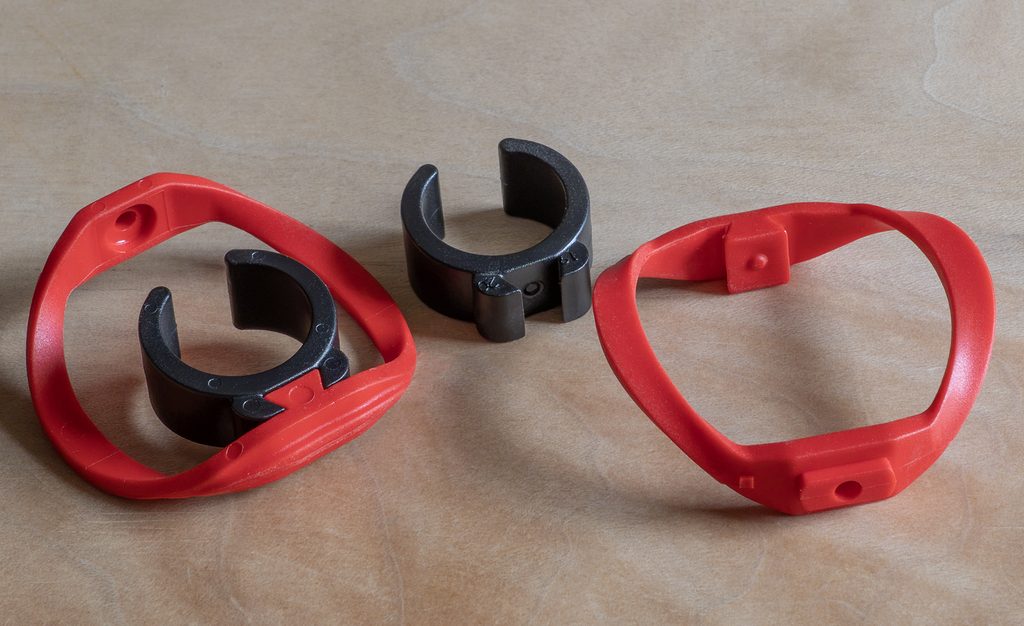
While a tight fit of the dovetail is essential to remove any movement – and noise/vibration arising from that – this does mean that pulling the two parts is bit of a challenge: in reality, I think most users will leave hoops and clips mated most of the time, which is not an issue.
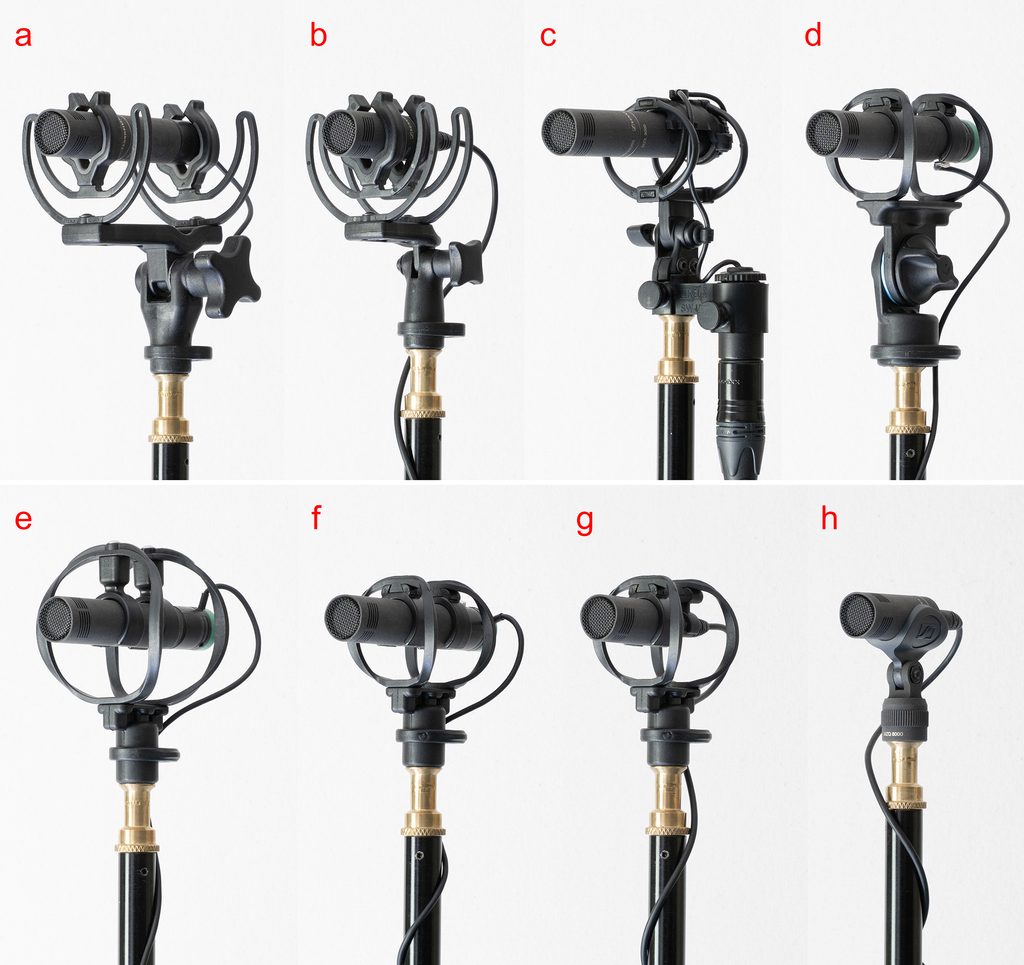
The photo above shows a size comparison of the Mini-RAD hoops, in various configurations, with the RAD-2 hoops, Rycote lyres and the Cinela E-OSIX, and a basic mic clip. I’ve shown the Mini-RAD hoops fitted on both the supplied pivot mount and the still smaller non-pivoting Field Edition mount from Radius since the latter particularly suits low-profile use on a stereo bar (for coincident, near-coincident and spaced pairs) where any pivot is better – and, indeed, normally – applied to the whole bar where it joins the top of the stand. The small size of the Mini-RADs doesn’t just help visually (think of audiences for live concerts, and, the bane of many location recordists, the pressure for visually minimal set ups to suit video), but also practically – think especially about spot mics in tight places, including those on individual drums within a kit.
Compliance
This gripping sub-heading doesn’t mean I’m looking at how the hoops meet regulatory standards, but, of course, addressing the issue of the impact of different size and design on the stiffness/compliance of the different sizes of hoops. Obviously, despite their same internal dimensions, the original RAD-1 and RAD-2 hoops differed in this regard even when made of the same shore-rated Hytrel: that was the whole point. The Mini-RAD hoops add a third degree of complexity to this, but, if we are to compare performance – and not just size – equivalence needs to be established. Handling the different sized hoops strongly suggests that, for a given shore rating, the Mini-RADs are stiffer by around one order (i.e. the standard 55D black Mini-RADs feel more like the light blue/dark grey 62D RAD-2 hoops).
While the Mini-RAD and RAD-2 hoops are similar in their compliance in the X, Y and Z axes, by virtue of their similar design, there are some significant differences compared to other suspensions. By my measurements (measuring deflection when applying a standard weight) the various hardnesses of Mini-RAD and RAD-2 hoops have 80-90% compliance in the X axis (side-to-side) compared to the Z axis (axial along the mic body), and around 10% compliance in the Y axis (vertical), again compared to the Z axis. This compares to my measurements for the Rycote lyres of around 60% for the X axis and 10% for the Y axis. More dramatically, with the Rycote Nano Shield lyres the comparative measurements are around 20% for the X axis and around 17% for the Y axis. Shock mounts for SDC mics primarily focus on the Z axis since for most SDCs this is axial to the diaphragm: it is the movement – from vibration – to and fro of the whole mic and diaphragm that generates noise just as if sound waves were hitting a stationary mic. That is fine in principle, but, of course, not all mics are end-address: there are side-address cardioid mics, such as the Schoeps MK4V, and, more commonly, fig 8 mics (or, indeed, stereo mics such as the Sennheiser MKH 8018 that have fig 8 capsules in them). A lack of X-axis compliance serves such mics poorly, as can be seen in the tests below. Y-axis (vertical) compliance, of course, has no benefit to any SDC mic (I can’t think of an instance where you would mount a side-address SDC horizontally, but with its capsule facing up and/or down!).
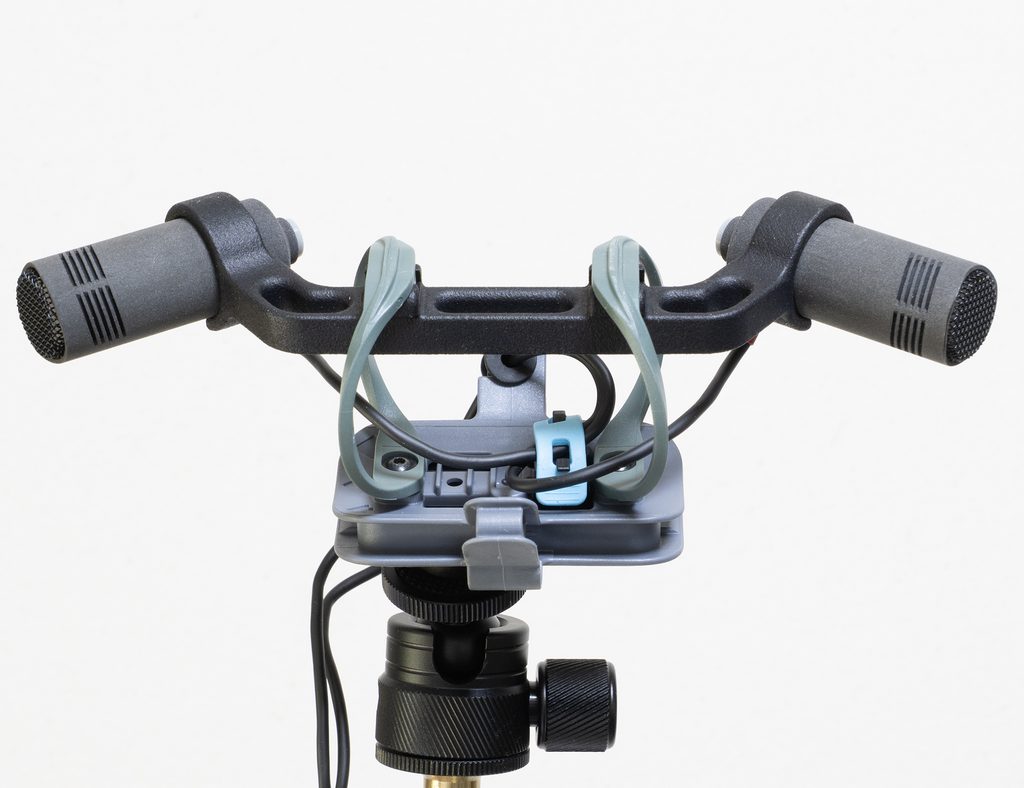
The Mini-RAD hoops, like the RAD-2 (and, indeed, the RAD-1) hoops, are well thought through, compliant to suit both end and side-address mics, mono and mid-side. On a personal note, I’ve also found their high X-axis compliance very useful for such things as my ORTF mounts for the Mini-ALTO, where the hoops are not conventionally aligned, as there is almost no loss of compliance (and performance) in such rigs.
Mini-RAD shock mount
The mount itself is rather dual purpose: it provides a compact pivoting base for a small set up with the Mini-RAD hoops and, at the same time, fits the Mini-ALTO windshield, providing a more compact base than that offered by the RAD-2 shock mount. As such it is much better suited to a boom pole and, of course, for a more minimal set up with the smaller Mini-RAD hoops for, say, music recording. It is with the latter in mind, no doubt, that the threaded brass insert has a 5/8″ thread, suited for mic stands, rather than the standard 3/8″ thread of boom poles etc. (I should hasten to add that it does come with a 5/8″ to 3/8″ adapter). The large (30mm) diameter of the pivot makes for fantastic grip: no chance of mic droop being caused by this shock mount even with a heavy mic. And that grip is continuously variable, which is nice if you don’t want the restrictions of the teeth of the RAD-2 mount (which allow pivot in 10 degree intervals): taking the pivot apart, I see that the teeth are still there in the Mini-RAD mount, but in this case don’t need to mesh as they each grip the opposing faces of the soft blue washer. Neat, and you can always remove the washer if you want the RAD-2 type mechanism. But as supplied it is, as I say, extremely grippy and has none of the issues that I have had with my Rycote Invision INV-7 (especially the older style, small knob variant) and INV-6 mounts.
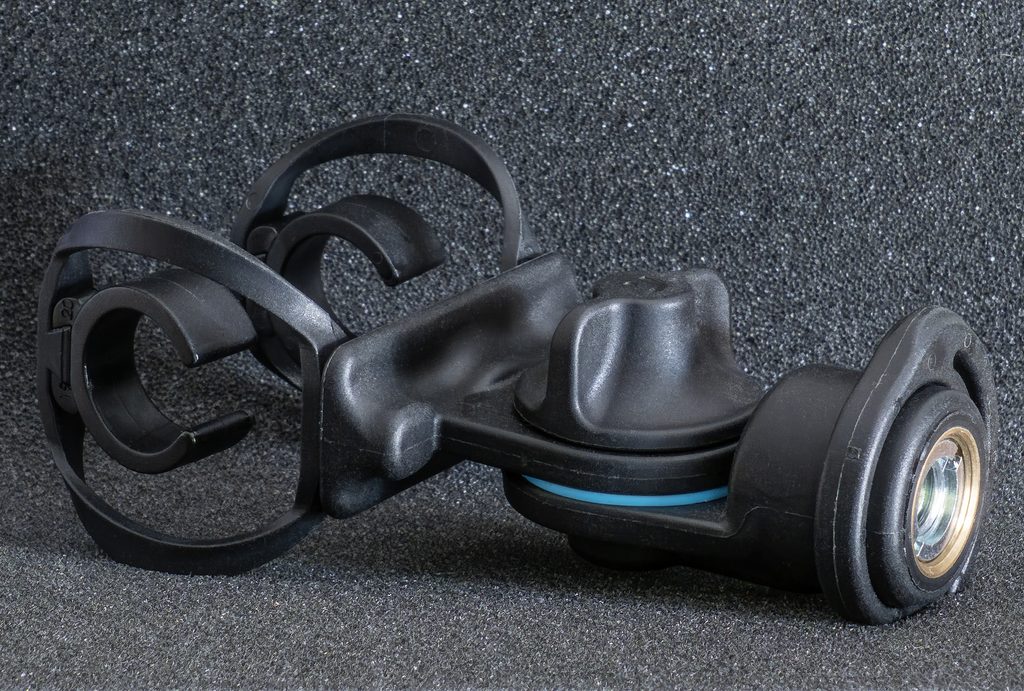
And if you need a smaller mount without a pivot, there is, as we have seen, the ultra-minimal Field Mount from Radius: this is well suited – with the Mini-RAD hoops – for very small SDCs, such as the MKH 8000 mics with MZL connectors or the Schoeps mics with Lemos.
Performance
So much for the rather obvious physical differences between the Mini-RADs and the RAD-1 and RAD-2 hoops, but how well do the smaller counterparts perform? Obviously, that’s the key question. I went down something of a rabbit hole on this, exploring vibration shaker test machines, and even going as far as making one fed by sine waves or pinknoise, before I realized that I’m no engineer and that as a consequence I was struggling to know what amount of vibration was required to translate meaningfully to real-world use, and, likewise, the relevance of Z-axis vibration (these machines produce vertical vibration). So, for all our sakes, I have retreated to the more familiar territory of real-world testing! To my mind, there are two main areas to test: use in motion (some may want the lowest profile for booming a small mic – say a small supercardioid indoors with a small foam windshield) and, above all, for fixed use. The last is especially important, since use by the music industry – be that recording, broadcast or live sound – is evidently a driver behind the development of the Mini-RAD.
For boom use, I have tested as I have done before: mounting two identical mics (MKH 8040 with XLR module) on a short stereo bar on the end of a boom pole to record boom handling noise. All mounts used matching ultra-thin Mogami cables for the final stage to the mic to minimize effects of cable-borne noise. The boom pole was fully extended, and held statically but with a medium vibration induced, to represent the sort of movements that are translated and magnified along a boom pole.
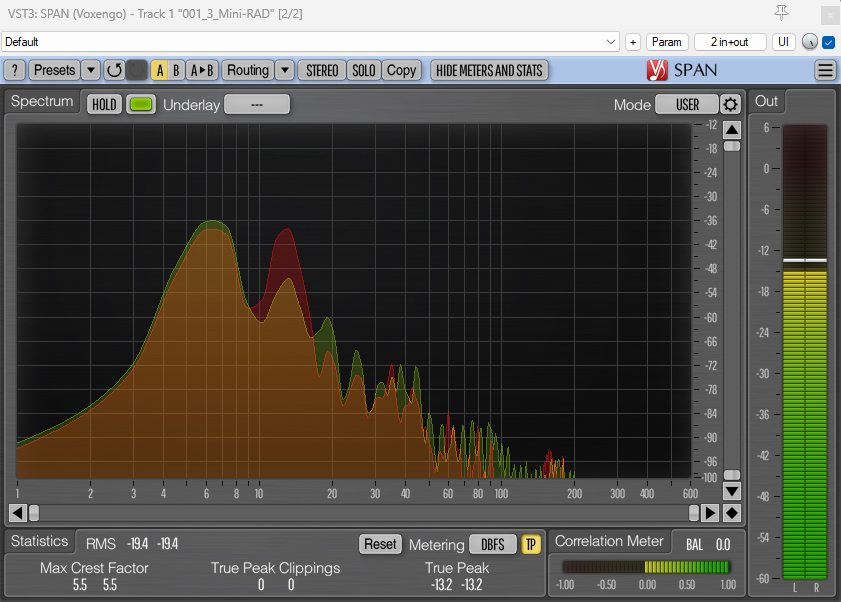
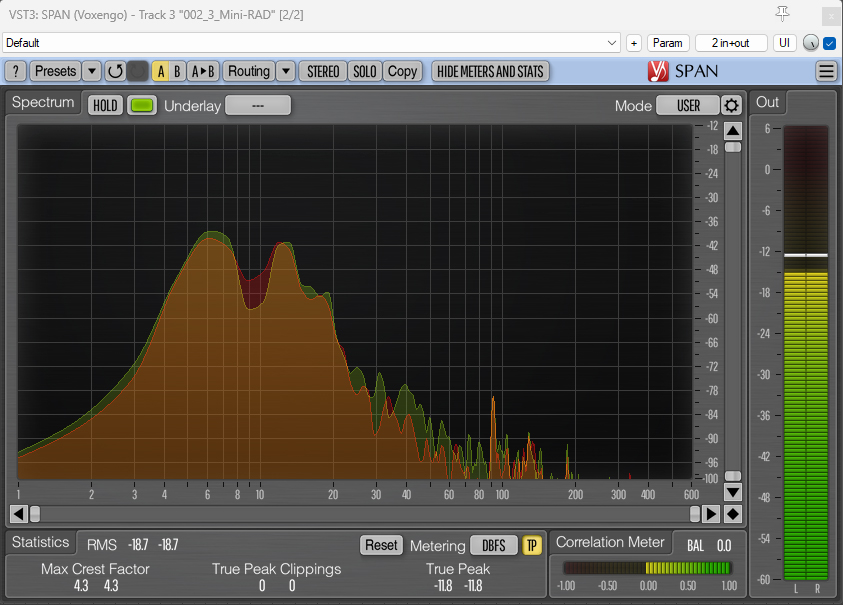
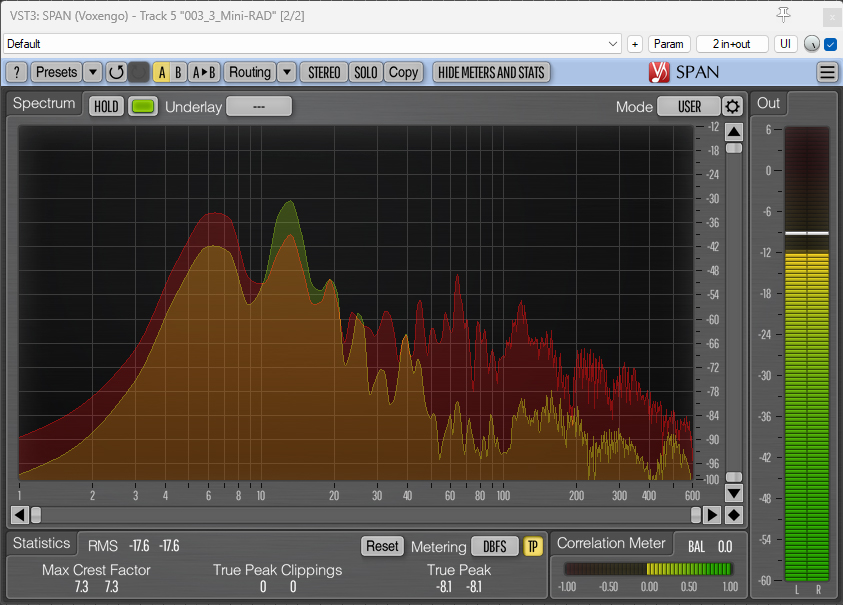
There are no surprises that the Mini-RAD hoops hugely outperform the basic Sennheiser MZQ 8000 clip (i.e. no shock mount), apart from the slightly higher peak at around 12Hz (i.e. well below any frequency that would be of concern when booming – or indeed most microphone usage): all mic shock mounts are going to have some extreme low-frequency emphasis, or resonance, as that is the inevitable consequence of any spring, but the trick of a well designed system is keeping that too low to matter and, also, ensuring that the harmonics don’t cause issues. That low-frequency is slightly more emphasized in the RAD-2 hoops, again without being a concern, and the larger Radius hoops are a bit better performing than the Mini-RADs above this: this suggests that, if booming, the RAD-2 hoops could be the better choice, which, again, is not a surprise. In these tests the MIni-RAD hoops slightly outperformed the Rycote standard (72D) lyres (with the latter’s noise between 100 and 200Hz being distinctly audible), but, and more expectedly, were bettered by the Cinela E-OSIX.
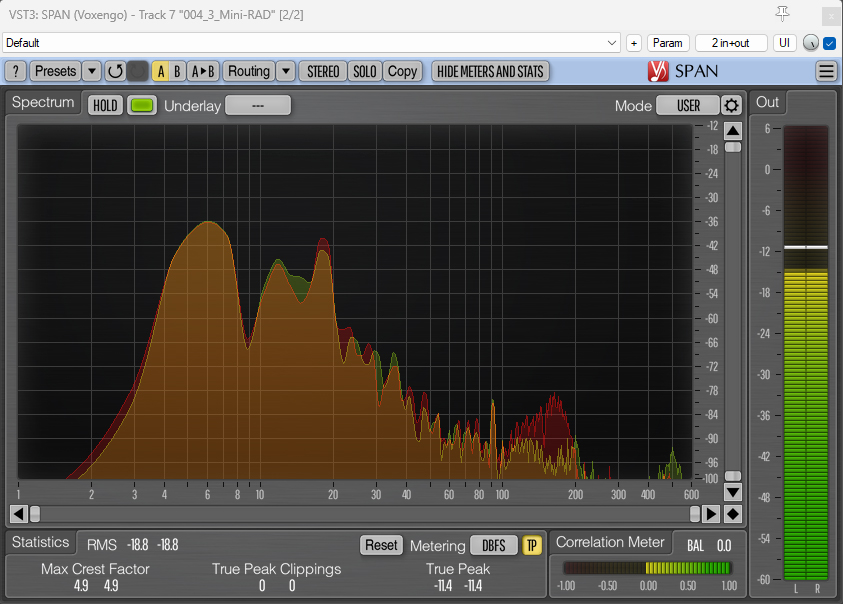
For static use, I again used a stereo bar to mount two identical mics (MKH 8040 with XLR module), but in this case putting them at the top of a lighting stand placed on a suspended wooden floor. To get a largely non-audible impulse similar to the vibration effects requiring mitigation in the real world (e.g. movement of people on stage or in an audience, tapping of a performer’s foot or low-frequency vibration transmitted from traffic movement) I simply and very gently tapped my (shoeless) heel on the floor near the stand. Obviously repeating that vibration exactly each time is nigh on impossible (and I did consider some mechanism to try and help this), so it is really the comparison of each pair that matters: given that each time I compared the Mini-RAD to something else, that still allows useful conclusions to be drawn. Anyway, here are the spectrum analyzer results:
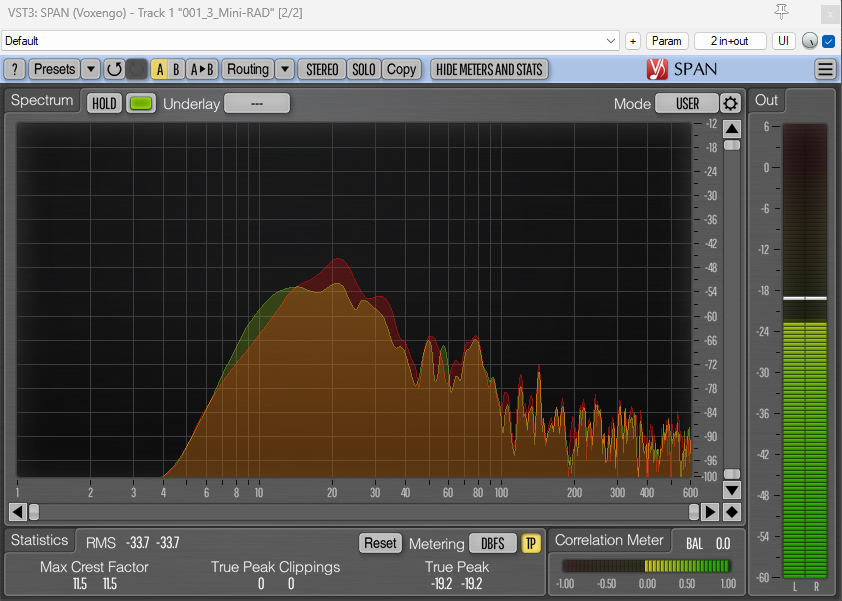
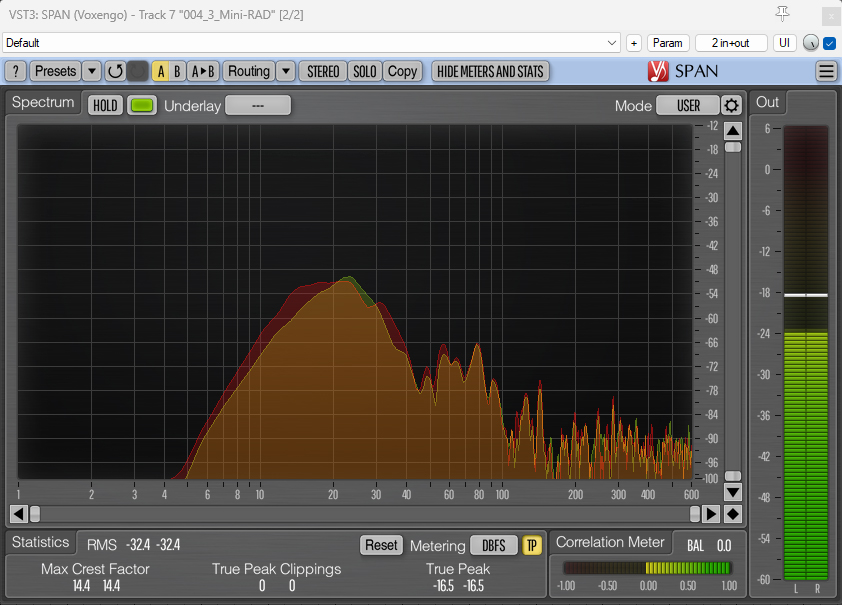
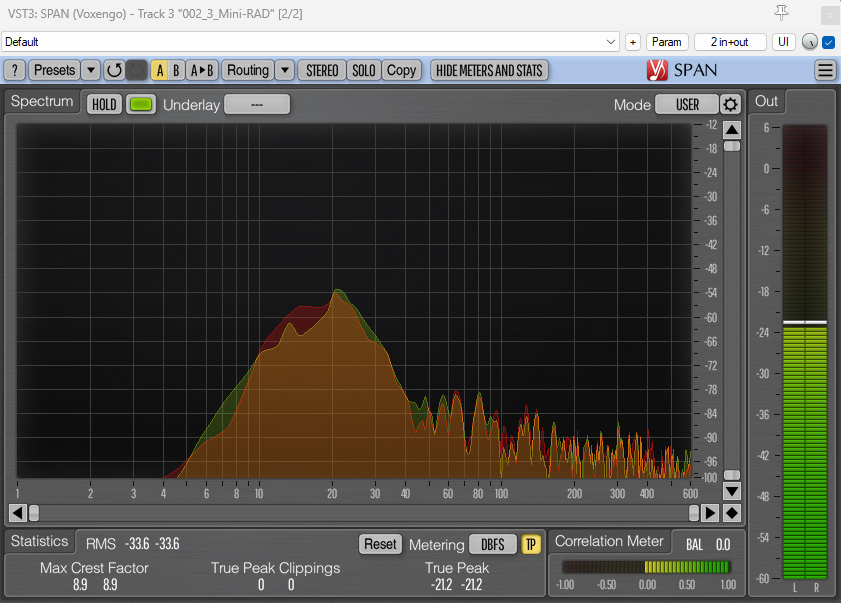
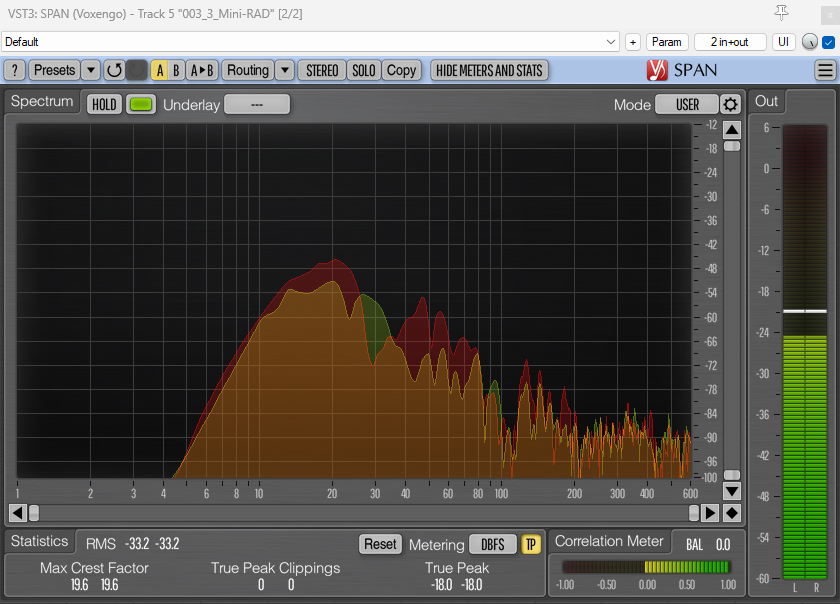
With floor-transmitted vibrations to mics statically mounted to a lighting stand, the results were a little different than in the boom pole test. If nothing else, it shows that different types of real-world vibration react differently with mics in suspension systems so supports my abandonment of a lab-based vibration device! There is one consistent element, in that the Mini-RAD hoops outperform the basic mic clip (i.e. no shock mount), albeit more subtly due to the much smaller degree of vibration involved (which is why, of course, many music recordists don’t use shock mounts at all on SDCs). Looking at the crucial area of 20Hz to 200Hz where low-frequency vibrations can cause audible issues, the Mini-RAD 55D hoops slightly outperform both the Rycote lyres and, also, the larger RAD-2 hoops. The boom-handling advantage of the Cinela E-OSIX is no longer clear: it has a very slight edge under 100Hz, while the Mini-RAD hoops are slightly better than it above this frequency. Of course, the E-OSIX is expressly designed for production sound and not music recording, so this is hardly surprising.
Conclusions
I am painfully aware that the rather homely comparative tests in performance are unlikely to be the last word on comparative performance, both from the perspective of the test procedure and, also, that they don’t cover all variations of mics, suspension compliances and sources of vibration. But, having used all these shock-mounts for some time now, the results above are consistent with my broader observations. That is, for boom pole use, the Mini-RADs seem to be slightly outshone by the larger RAD-2s and, above that, the very specific mic-tailored Cinela E-OSIX. But the Mini-RADs are competent for such use, nonetheless, so I wouldn’t hesitate to go for them if, for example, you needed a super small indoor rig for a supercardioid such as the MKH 8050 with an MZL connector. And, with any boom pole or pistol-grip use, correct mic placement, appropriately thin and flexible cabling to the mount, careful cable routing, and correct selection of hoop/lyre compliance (not least mixing front and rear hoops) is critical for whatever shock mount you use.
For static mounts for music recording – which is very much a target use – the Mini-RADs are excellent and are not outperformed by any other shock mount tested here: indeed, knowing, and having used, many other types of shock mount, I can’t think of any other contender that is likely to be as effective as those considered here. Of course, many involved in music recording and live music don’t use shock mounts for SDCs: in a stone-floored church and when using very short, non-resonant and solid mic stands that may be a sensible choice, but in a whole host of situations I suspect they are missing a useful tool. Given the performance of the Mini-RADs, their low visual impact (especially compared to RAD-2s and the Rycote lyres) and their comparatively low pricing (very obviously compared to the Cinela E-OSIX, but also, more pertinently, compared to the Rycote lyre-based mounts), it will be fascinating to see how widely they are adopted for SDCs in the music world, be that for live performances, or studio and location recording.
Meanwhile, be prepared for some more off-the-wall complex DIY mic mounts using Mini-RAD hoops here: they’ve certainly got me thinking!



No Comments