Browsing Tag

FR-AV2

Audio Gear

Deity PR-4 for field recording?

September 24, 2026
Out in the field with the Deity PR-4.

Introduction

Readers may remember the launch of the first Deity microphone by Aputure back in 2017, since when – with the company spinning off to become its own entity in 2018 – they have launched a range of low-priced products aimed at production sound. Following the launch of their pocket recorder – the PR-2 – in 2023, 2026 has seen the launch of the PR-4: with four inputs (two XLR P48 – which also take 6.35mm or 1/4″ TRS jacks – and a stereo 3.5mm input) all of which can be recorded at the same time along with the stereo mix, making it a six-track recorder. As one might expect in 2026, it is what is described as a dual-ADC 32-bit float recorder. Some of the features reflect Deity’s focus on production sound gear: the timecode, AES3/AES42 inputs, and automix are the most obvious examples. Indeed, the company’s web page for the PR-4 assumes (dare one say, a little optimistically!) its use in professional production sound scenarios. But some features will appeal to a wider market and, of course, this non-production sound market may account for a significant proportion, if not the majority, of the recorder’s sales. Such features include dual media, small size, low power consumption, and the fact that the four inputs can be recorded as isos simultaneously. As such, it presents a viable and, on paper at least, attractive alternative to other compact recorders for the field recordist, be that for nature, ambience, sound effects or, even, simple location music recording.

Intrigued and wanting to test the recorder for such use, and to build on my exploration of the usefulness of small dual-ADC 32-bit float recorders for this type of recording, I got in touch with Deity and they kindly sent me an example, gratis. Hopefully, looking at it through this lens will interest one or two others. The aim is not to repeat the content of the plethora of reviews and vlogs, but, rather, to look at what I see the as the key things relevant to field recording that can’t be ascertained from simply reading the specifications and manual.

Physical form

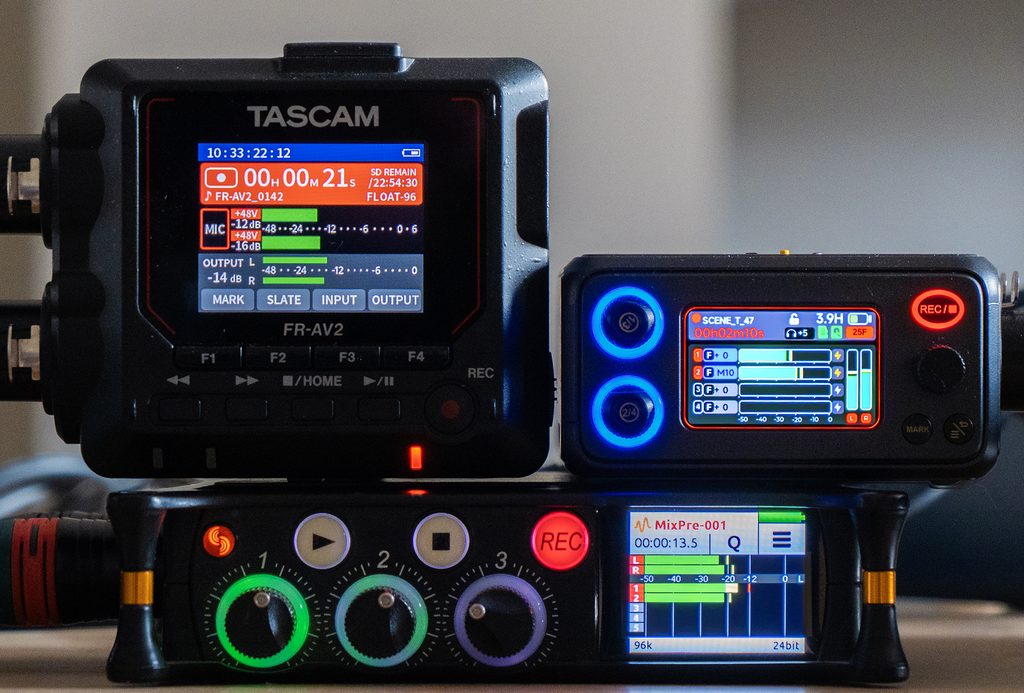
OK, you can see the dimensions and weight from the Deity website, but there’s nothing like having a device in the hand to really get a grip on how it measures up – literally – to alternatives and, moreover, to get a sense of build quality. First up, here’s a few photos showing how it compares to my small stable of tiny recorders: the Sound Devices MixPre-3 and the Tascam FR-AV2.
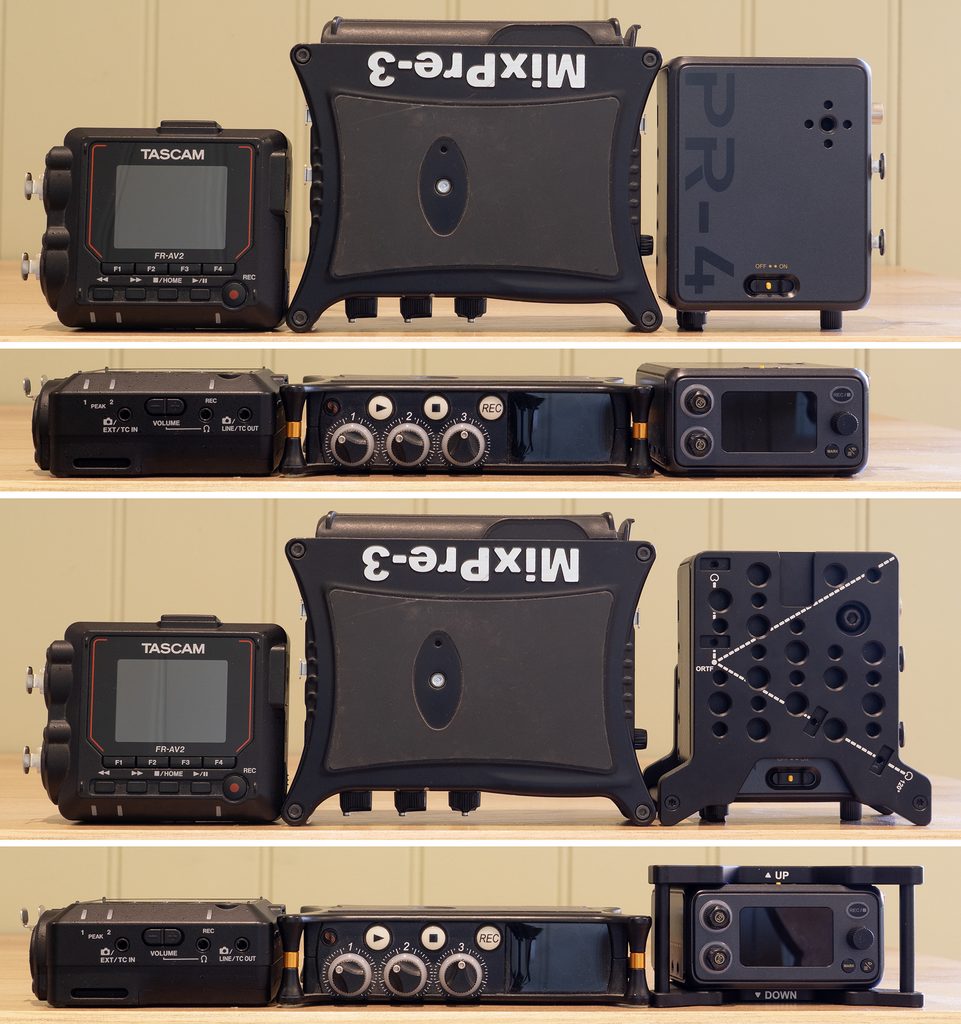
A size comparison. Left to right: Tascam FR-AV2, Sound Devices MixPre-3 and Deity PR-4. The latter is shown without (top) and with (bottom) the optional cage.

As well as the obvious size comparisons, the photos make all the more obvious the design differences: in essence, the PR-4 is copying the vertical form of many a field recorder used for production sound (think Sound Devices, Sonosax, Zoom F series etc.), and to that end even makes a little production sound bag for it.

We all have our own likes and dislikes about ergonomics, usually based on what is familiar to us, so I won’t get into the placement of inputs, outputs etc.: certainly there’s nothing odder in this sense with the PR-4 than my much-used MixPre-3 with its third XLR input alone being on the right-hand side. Given my gripes about the fiddly battery compartment of the FR-AV2, the simple latched door on the PR-4 is a relief as is the simple catch to the Sony NPF550-style battery inside: an excellent powering arrangement and impressive in such a small unit. And nice to see a slot there for a full-sized SD card slot rather than a miniSD card. Ditto the hirose input for external DC supply, which is reminiscent of professional recorders, such as my Sound Devices 788Ts. After the fiddly buttons of the FR-AV2, I was looking forward to the PR-4’s use of three knobs (two for the channel controls – switchable between channels 1 and 2, and 3 and 4 – and the select knob) on the front, but, sadly, these feel precariously wobbly and are a far cry from the similarly small but metal knobs (in that case for input trim/gain) on the 788T and, at a much lower price point, the plastic knobs on the MixPre recorders: at a lower price still, the Zoom F8’s knobs are superior. The PR-4’s wobbly knobs and, indeed, the plastic casing (which feels less robust than that of the FR-AV2, though I haven’t done a drop test!) are far from reassuring, and the latter is presumably why Deity has designed (and included in my case) a chunky aluminium cage that can be bolted on. The cage addresses some of the concerns about the case, though it leaves the bottom rear corners exposed, and raises the question, why on earth didn’t Deity give the recorder an aluminium case/chassis? It is not as if this is out of reach of budget recorders: the Zoom F8, F6, F4 and, most relevantly, the little F3 are all substantially cased in aluminium, as indeed is the Tascam FR-AV4. I also note that Deity’s upcoming PR-8 seems to have a metal chassis/case.
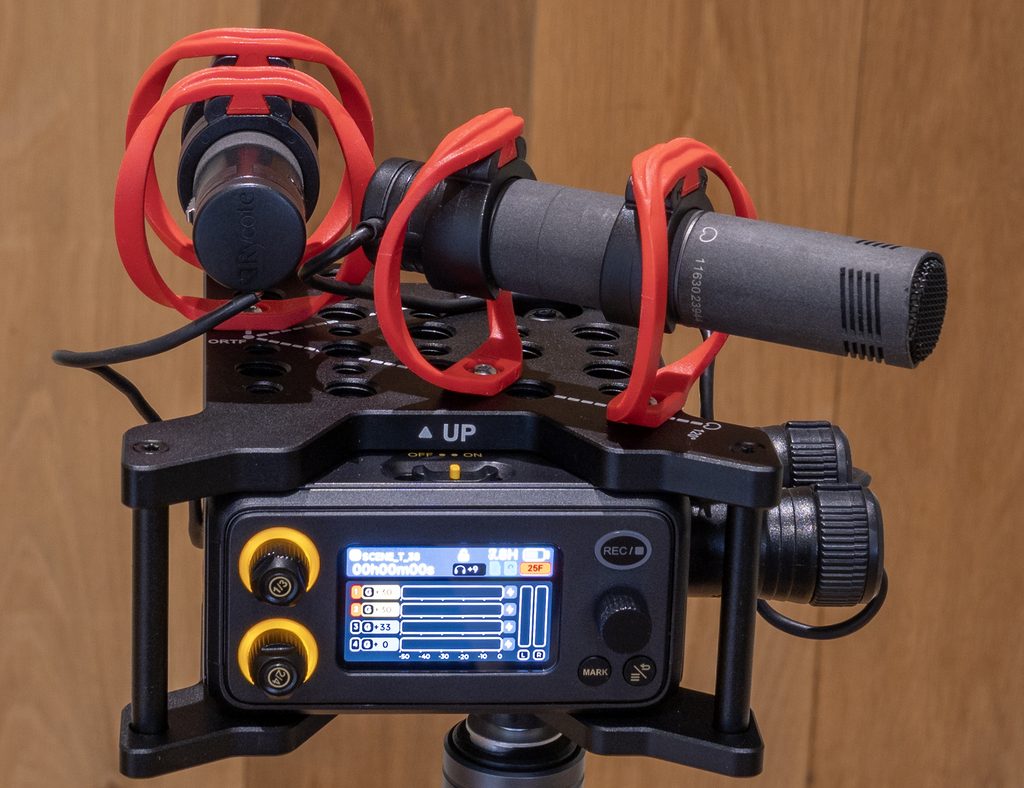
The PR-4 with its cage added, along with mics using the near-ORTF mounts.

Well, given my concerns about the toughness of the PR-4, we had better have a look at the aluminium add-on cage. It’s a nicely chunky affair, with a thick (7mm) top plate and a still sturdy (5.5mm) bottom half-plate (as I said, leaving the bottom rear of the PR-4 exposed), joined by standoffs in typical field recorder style. Both plates are peppered with 1/4”-20 and 3/8”-16 threaded holes, like a cheese plate, and obviously aimed at those incorporating the PR-4 into a camera rig: rest assured, the holes don’t penetrate the whole thickness of the aluminium so there is no chance of unwittingly driving a bolt into the plastic case of the PR-4. I am surprised, though, that there are 3/8″ threaded holes on the bottom plate: with only 5mm depth these give only about half the required thread engagement depth if using an aluminium screw (and about a third of the required thread engagement depth for steel into aluminium). I only noticed this when trying to mount the cage with a Rycote quick release, which seemed to have precious little engagement. Rather an unsatisfactory bit of engineering. Intriguingly there are four slots for fitting Rycote lyres or Radius Windshields hoops direct to the top plate, at what is marked up as ORTF. The website proclaims these allow ‘users to quickly mount a matched pair of microphones in the correct stereo configuration without needing separate bars or adapters’. Evidently there is nothing correct about the use of ‘ORTF’, which is an unequivocal industry standard for cardioid mics at 110° and 17cm capsule spacing, while on the PR-4 cage this is marked at – and indeed measures – 120°! As for speediness, this rather presupposes that you have pre-mounted four hoops or lyres to the top of the plate, are happy to use mics that fit into a very small range of usable body lengths (out of a large mic locker, the only mics I could seat comfortably and get the correct spacing were MKH 8040s with the XLR modules: heaven help you with anything significantly longer or shorter!), if you don’t need a foam on the mic, don’t require any form of cable grip/clamp, and don’t mind the pair facing at 60° to the face of the recorder. Obviously, it is far easier to grab an ORTF bar set up for your mics from your bag when needed and just mount this one to one of the many fixing points and have it point the right way. I know it’s trivial as nobody need use the supposed ORTF feature of the cage, but such details, like the too-shallow bottom plate 3/8″ threads, don’t engender confidence in the design and testing process. But, to the main point, provision of a cage by Deity from the off (at a price: £57 inc. VAT) gives some much needed additional protection, albeit with more weight (up from 333g bare to 531g with the cage vs the MixPre-3 at 635g, both with batteries fitted: the FR-AV2 weighs 289g, again with batteries) and bulk than if the recorder itself had been given an aluminium chassis.
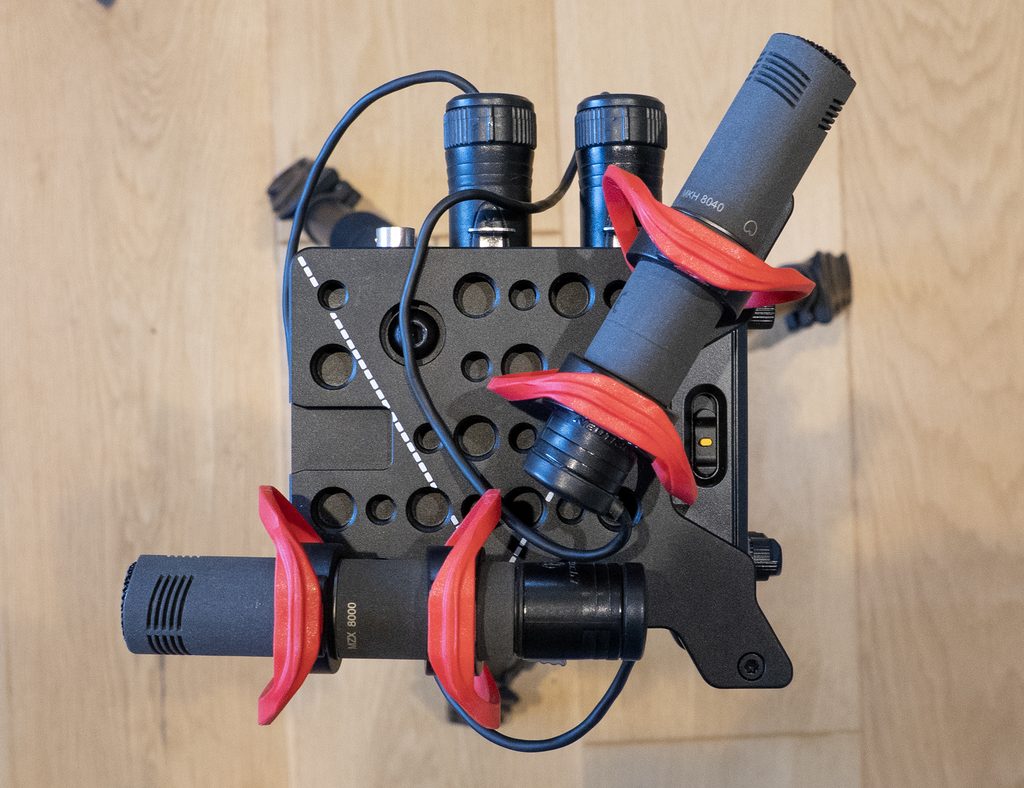
An overhead view of the cages with the mics in the near-ORTF set up.

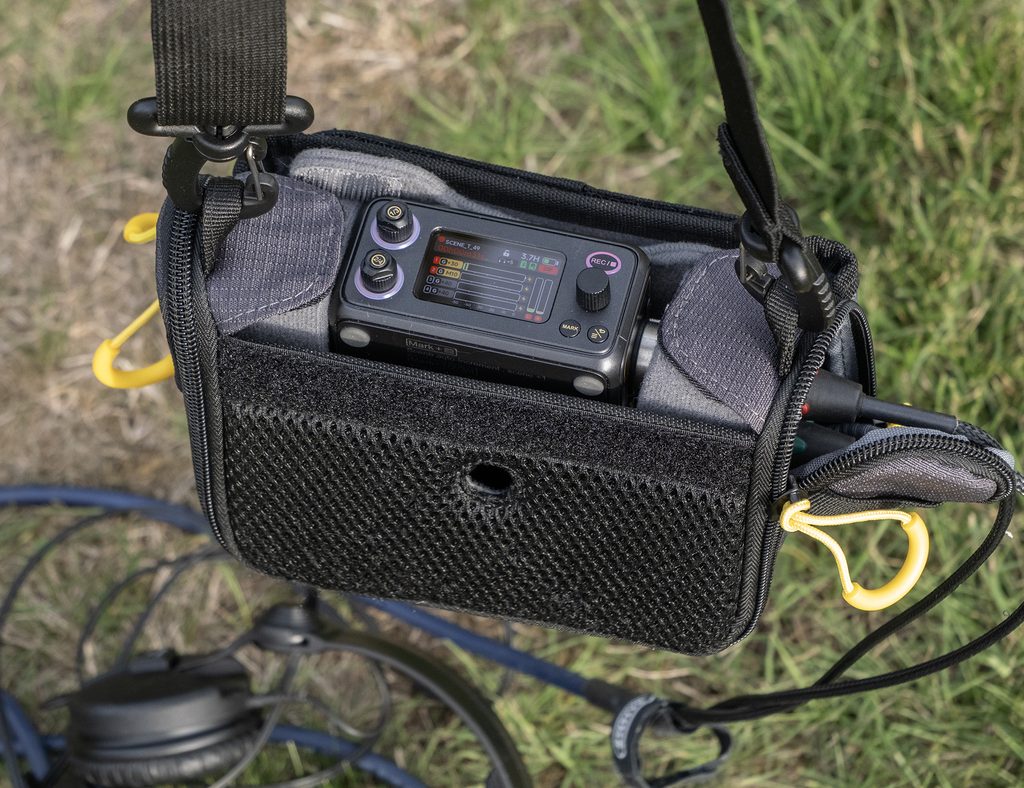
If you don’t fancy the cage, Deity also provide protection in the form of a dinky sound bag designed for the PR-4, at £73.20 inc. VAT. It’s actually quite well designed and made, even down to the entirely removable clear plastic cover: obviously the pocket is too small for headphones, but I guess you can hang them off the bag along with coiled cables. It’s not really intended for field recording, though, where you would clearly be better off with a bag for all your gubbins, mics included, but perhaps an option for anyone contemplating using the PR-4 for production sound.
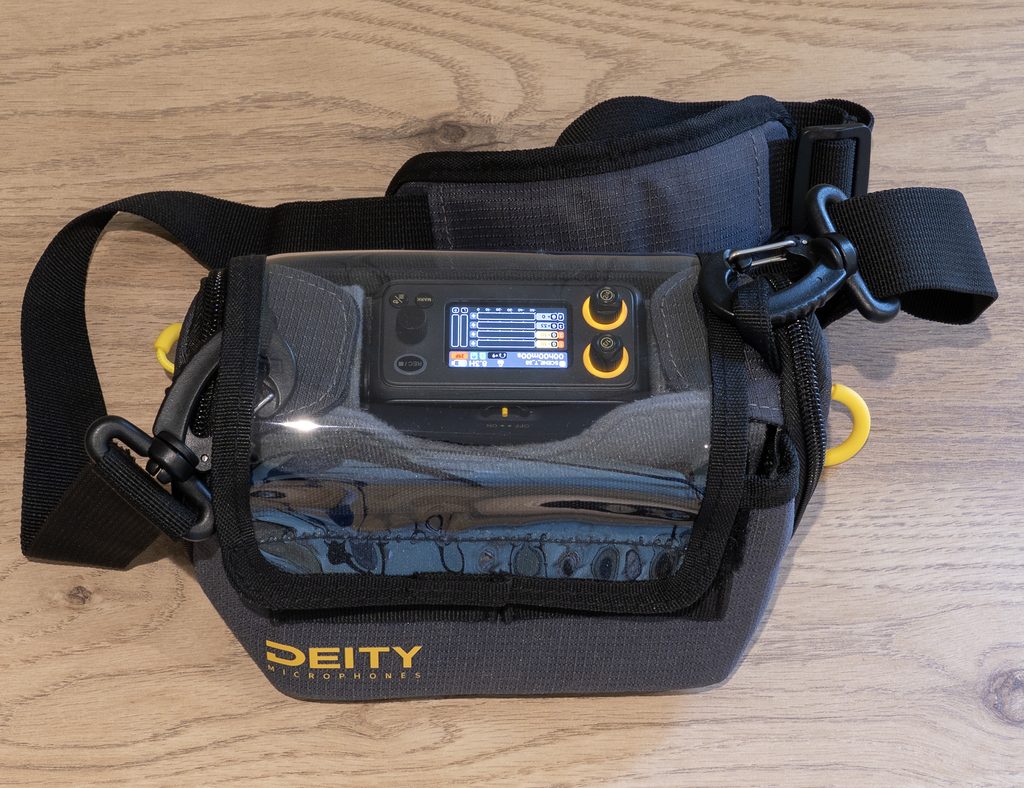
The PR-4 in the ultra-dinky bag Deity make for the recorder.

Functionality

This is the section where I particularly want to avoid simply re-hashing the manual or existing reviews – especially video-based ones – which run through the full functionality of the PR-4: for that, those are your obvious sources. Rather, it is probably more useful if I focus on the positive and negatives (and with the latter done in the hope of encouraging some tweaks in future firmware – just remember how Sound Devices modified the MixPre recorders in firmware updates, much in response to feedback) in relation to field recording. So this section discusses what I found as the most interesting and relevant aspects of the functionality of the PR-4.

Turning the recorder on (and the locking on-off switch seems fine), the knobs – despite their disconcerting wobbliness – are certainly functionally one-up on the FR-AV2’s buttons. The ‘skirts’ of the two channel control knobs light up a little like those of the MixPre recorders, although here not for additional metering feedback, but to show which mode you are in (yellow for basic, blue for expert). Perhaps equally usefully they ensure you can locate the knobs in poor light. A significant weakness of the Tascam FR-AV2 is its lack of backlit buttons when in using in low light, so the lit channel knobs on the PR-4 are a huge improvement on that: the unlit select knob is at least easy enough to locate in the dark and, though some backlighting and a bit more projection of the buttons would have helped (did the designers not imagine the recordist might need gloves sometimes?), the three buttons adjacent are just about OK to find. And when I say without backlighting, the record button at least goes from unlit to bright red when pressed. So, yes, there’s room for improvement both in terms of backlighting and tactile finish on the three buttons (come on, it’s 22 years since the Sound Devices 744T was introduced and nailed such matters, amongst many more!), and the basic physical controls fall well short of the MixPre-3 in the field, but the PR-4 is much less of an exercise in random fumbling and frustration than the FR-AV2 (or, I’d assume as it also lacks backlit buttons, the Zoom F3) when recording in poor light.

The AMOLED screen is small (36mm x 22mm: 456 x 280 pixels), but not impossibly so: it really isn’t very different in terms of area to that of the MixPre recorders (32mm x 26mm, but with a lower resolution of 320 x 256), and that one is used more heavily as a touch screen. The main home screen, however, seems much smaller on the PR-4 and that reflects the fact that use of the real estate of the screen is not brilliantly thought through. For example, it is nice having a display of the gain applied to any input, but a large ‘G’ and, even, a ‘+’ sign (there is no negative ‘gain’ option anyway!) in front means that it eats into the level meter area, as does the indicator, to the right of the meters, for whether an input has power (be that P48 or PIP). Black spaces between the four channel meters and above them all consume more of the available area. Deity have missed an opportunity to make better use of the limited available space for metering, I assume since the thinking is that this doesn’t matter when recording in 32-bit float! But that brings me to the real oddity on the screen: despite having room for a current frame rate indicator (in a distractingly bright blob of red), there is no room for sample rate or bit-depth display. I guess this shows their priorities, but sample rate in particular seems pretty key information to have immediately to hand, and is clearly shown on the admittedly larger (42mm x 30mm) FR-AV2 screen, and likewise on one of the selectable home screens of the MixPre-3. OK, you can get that information on the PR-4 by pushing the select knob to reveal the quickset screen, but that shouldn’t be necessary. Perhaps there are good reasons for Deity’s choices, but I hope that the firmware can be tweaked to at least give a couple of home screen options to suit different uses: there are plenty of recorders that do so.

Discussing the screen takes me neatly to a more positive side of it: while not a full touchscreen in the manner of the MixPre recorders, it has some touch functions. Swiping up gets you to last take), down to next take, right to record menu (such things as sample rate, arming channels etc.) and left to timecode mode, and tapping the screen sees the channel knobs shift from channels 1 and 2 to 3 and 4, and the same again reverses this. Given the negligible difference (5%), it is amusing to hear some commentators commending Deity for not using such a small screen as a complete touchscreen while liking the 2017 MixPre recorders for that functionality, but the PR-4 has a workable approach with this partial touchscreen approach, and a lower dependence on touch may appeal to many: equally, with the knob functionality too, it makes for any easier ride with the PR-4 than the FR-AV2.

This leads me on to menu structures and this I find very hard to assess: I have been using the MixPre-3 for nine years, so naturally it is second nature, and it is hard to compare objectively to the FR-AV2 (one year of very occasional use) or the PR-4 (fumbling my way around it still). Best watch one of the functional run throughs of the PR-4 or read the manual to get a more objective handle on it if interested. One general point, and not one very specific to the PR-4, is that I wish that the menus, derived quick menus and, indeed, user specified function buttons seen on so many cameras that offer much more customization could carry across to audio recorders: is it simply a case of sales numbers (and therefore product development budgets) that leaves many audio recorders seemingly so far behind in terms of firmware development?
Recording screens with the Deity PR-4, Sound Devices MixPre-3 and Tascam FR-AV2. The latter, with only two channels and the largest screen, is arguably the best, although there is almost nothing to differentiate the recording screen from the record-ready screen (that nice red area on the screen is common to both). The similar size, though different proportions, of the PR-4 and MixPre-3 screens is apparent, as is the less efficient use of space by the PR-4: the seven longer level meters of the MixPre-3 fit into the area of the six meters of the PR-4 with space to spare horizontally and, yet, are so much more usable.

Getting back on to less subjective ground, the PR-4 does a pretty good job of the most fundamental function: starting to record and, crucially, making it clear you are recording. Many a sound recorder and, indeed, camera, makes a meal of this, not realizing that operators are often working in low light, or rushed, even frantic, conditions: and, of course, the issues are exacerbated if the recordist isn’t using the gear day in day out. OK, the PR-4 isn’t as wonderfully clear as my 788Ts in this regard (but, then, it would be unforgiveable to miss pressing record on a Hollywood movie set!), but a single press of the record button causes this to light up and start the recording (with different pre-roll options) and a red border appears around the screen: a longer hold on the record button ends the recording. Contrast this with the FR-AV2 where you have to press the record button once to put the device into standby (which allows you to hear the mics and lights up parts of the screen in red) and then again to record (at which point the screen stays almost unchanged, though some, easily hidden, LEDs on the side light up): a recipe for failing to activate record properly. So a clear win for the PR-4 vs the FR-AV2 in this regard. Moreover, the PR-4 has the option for the large ‘DEITY’ on the rear to illuminate in RED when recording too: aimed at vloggers etc., I’m not sure how useful this is for field recording!

The expert and basic mode choice for the PR-4 is an interesting aspect of the recorder. It echoes the two modes (basic and advanced) of the MixPre recorders, but, in this case, the pros and cons are not so clear if you are an experienced sound recordist. Obviously, if you need one of the few features only available in expert mode (such as setting post-fader recording for the ISO tracks or panning) then you will need to use that mode, but the downside of doing so is that the two channel knobs become faders and not input gain controls. Yes you can push the knobs in to use them to change gain, but the change from fader to gain function isn’t instantaneous (it is all too easy to push in and start turning before the mode change has caught up), it is rather clunky to do with the tiny and wobbly knobs (this functionality really cries out for better-made knobs), and, of course, with just two XLR and two 3.5mm inputs the assumed preoccupation of ‘expert’ users with the mix seems rather unlikely to match reality: I suspect that many will mainly use the recorder for a stereo pair (either XLR or 3.5mm) and, certainly, that will apply to most field recordists. But gain/trim changes are a doddle compared to the same on the FR-AV2 where many a button push is required. Perhaps not such a big deal with only two channels on the Tascam, which is also probably likely to be used mainly in 32-bit float mode. Of course, this lack of need to change gain as much as with a more traditional preamp/recorder could justify the PR-4 design decision, and the faders’ predominance: but,even in 32-bit float mode, setting gain with such a machine is still useful to ensure that files come in to your DAW with waveforms that look vaguely normal, to be able to use the metering in a meaningful way and as part of the headphone monitoring chain. Anyway, it would seem a simple and reasonable thing to give the user the choice of the primary function of the channel knobs in the expert mode via a firmware update.

Mid-side (MS) is a staple of field recording, not least due to it allowing compact stereo rigs especially suited to windshields. The PR-4 offers MS decoding (which, for example, is not something found on the Zoom F3), although the implementation is a little basic and, given that, surprisingly confusing. The MS options – under the stereo link section within the input menu – are for ‘MS 60°’ and ‘MS 120°’: these are misleading terms – not least since the sensitivity of mid and side mics rarely match in MS – but essentially mean a wider or tighter stereo image. Once either option is selected the channel 2 knob becomes a means of adjusting width from a scale of MS18 via C to S18: C evidently represents equal gain for the mid and side mics, although, like many an implementation of MS (including that on the MixPre-3 and the FR-AV2), it is not a precise input gain adjustment to, say, match the sensitivities of the two different mics. The more significant limitation is that MS decoding is applied to the ISO tracks and the LR mix, and, in lacking the ability to record raw M and S to the ISO tracks and the stereo decode to the mix, there is no option to record M and S while using a headphone preset to decode the MS to LR. The MixPre-3 offers both, while the FR-AV2 – in keeping with being a strictly two-channel and two-track machine (i.e. there is no mix to concern the user) – allows the M and S to be recorded raw, while monitored in LR, or decoded in the recording too. And as long as your two inputs aren’t ganged on the FR-AV2 you can set yourself different input gain on the two channels in MS mode: it is handy to have such an offset set up for the different M and S mics, especially if handing on the raw M and S recording to someone else in post. Of course, with the PR-4 the decoded MS – necessary for proper monitoring – can be converted back to MS (a lossless process) in post, but this can lead to confusion, not least with recorded levels. It is frustrating how few recorders offer the ability to apply different trim/gain to the M and S inputs, so that the different sensitivities of the mics can be balanced, before the ISO tracks are recorded and before any decoding, but, of course, this is a benefit of the MS headphone preset in the MixPre-3 and more professional recorders such as the Sound Devices 6, 7 and 8 series: using a headphone for preset leaves the recordist able to change the M and S gains independently. So, to cut to the chase, the PR-4 has a basic if slightly confusing MS capability: again, hopefully this will be improved in a future firmware update.

Self-noise

The specifications of most field recorders in recent years are such that for most use they all have low enough self-noise that, if you are using condenser mics, you are going to be fine. That said, to be thorough, of course, I should test the self-noise of the PR-4 in comparison to other small recorders: in this case the Tascam FR-AV2 and the Sound Devices MixPre 3. The latter is the original 24-bit model from 2017. One thing I wanted to explore a bit more was not just their respective self-noise using the XLR phantom-power (P48) inputs, but, also, the 3.5mm PIP inputs: all three manufacturers are disappointingly coy about the specifications of the 3.5mm inputs, but it is clear that in each case different (and lesser) preamps are in use than for the XLR inputs.

Initially I tested the different recorders with 150 ohm dummy loads, but, with the Tascam and Deity models, getting a clear grip on gain was nigh on impossible, even when feeding the recorders with a 1kHz tone before swapping to the dummy loads: only the MixPre-3 returned figures that were in line with the EIN in the specifications, which was reassuring (at least my procedure was correct!). So, instead, I turned to more real world testing. For the P48 XLR inputs I set up a very low self-noise mic (the Rode NT1: 4.5dBA) in my usual homely quiet space (buried in duvets in the airing cupboard, with mains electricity turned off) and used a three-way passive splitter (an EMO E335) to send the signal to the three recorders: a 1kHz tone was played to set the levels (both to allow for the different gain structures of the recorders and any variance arising from the splitter). And I placed a mechanical stopwatch next to the mic for a bit more interest and, of course, as confirmation that nothing odd has been done with the levels.

First off, I set the three recorders at max gain, although, of course, that only makes real sense with the 76dB of the MixPre-3: the 1kHz tone was used to match the levels of the other recorders to this in my DAW (Reaper).

Second, I set the three recorders to minimum gain, which, again, only makes sense with the 6dB minimum gain of the MixPre-3: I gave this a whopping 70dB additional gain in post to bring this up to the level of the first recording, and, again, used the 1kHz tone to match the levels of the other two recorders.

The second test might seem rather pointless since, needless to say, everyone would expect the two 32-bit float recorders to have no difference in self-noise whatever the (notional) gain setting: for these recorders gain is simply a tool for monitoring purposes and to ensure that the level and waveform looks healthy when brought into a DAW. The more astute and/or readers of this blog will know that – contrary to expectation – the 24-bit Mixpre-3 performs exactly the same: there is no difference if you record a quiet sound at 76dB max gain or if you record at minimum gain of 6dB and add 70dB in post. This doesn’t apply to all 24-bit recorders, of course (for example, drop the gain to 6dB on my 788T for a quiet sound and boost heavily in post and, as you would expect, you will hear much more hiss than if recorded with more appropriate gain in the first place), but I included this test here as another salutary reminder to those who think the irrelevance of gain is somehow intrinsically linked to use of recorders using a 32-bit float file format.

So, these real world tests confirmed the hierarchy of quietness of the three recorders is line with the specs: the MixPre-3 EIN is specified as -130dBV (-128dBU); the FR-AV2 as -127dBU; and the PR-4 as -127dBV (which equates to -125dBU). Taking a recording of near silence (rather than the stopwatch), showed slightly greater real-world differences than the specs would suggest (1.4dB more noise for the FR-AV2 and 4.2dB more noise for the PR-4, both with reference to the MIxPre-3 and all A-weighted). Of course, while the differences are demonstrable with even a condenser mic, at 4.5dBA the NT1 is an extremely quiet mic and using it to record a stopwatch with 76dB gain is not an everyday occurrence: for most use, the self-noise of the XLR inputs of all three recorders would be fine.
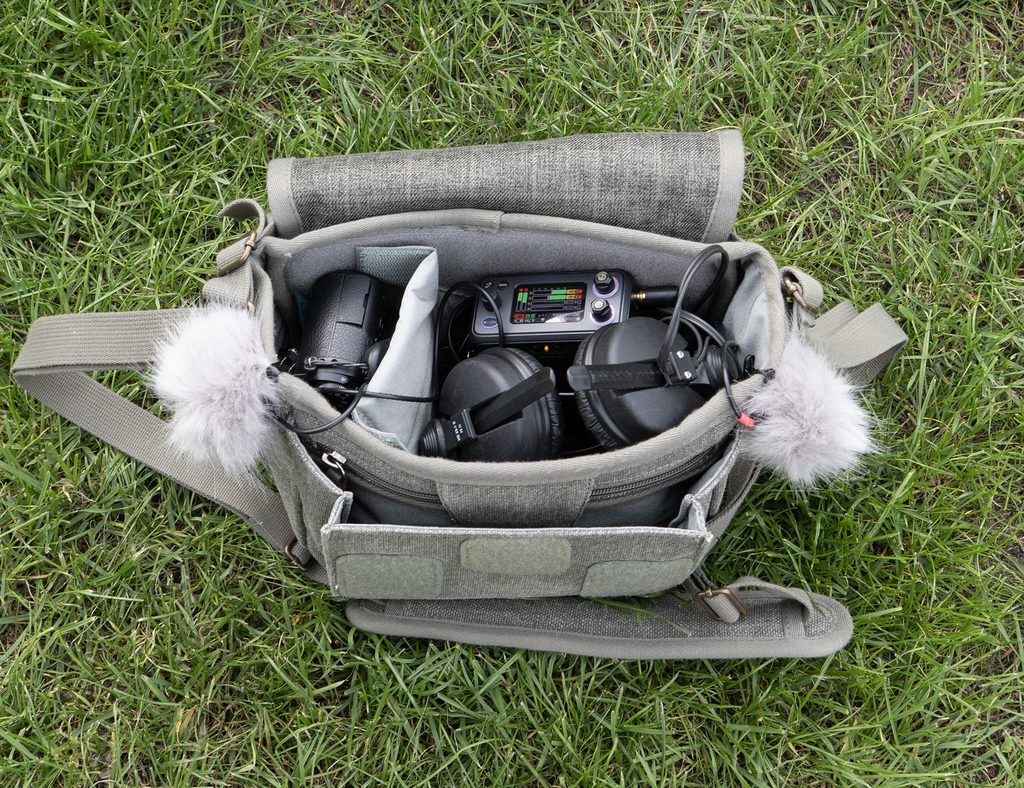
The smallness of the PR4 makes it ideal for the super-compact travel kit, especially if used with small mics such as the many Primo EM172/272-based mics: in this case a pair of Micbooster Clippy mics plugged into the 3.5mm input.

Real world testing of the 3.5mm plug-in-power inputs of the recorders means, of course, that a low-noise LDC mic such as the NT1 is not feasible: indeed, the typical use of lav mics with substantial self-noise (usually around 23dBA or more) on such inputs masks the greater self-noise of the preamps used for these inputs. But, of course, for field recording frequent use is made of PIP mics with lower self-noise made using Primo EM172/272 and AOM-5024L-HD-R capsules (either as DIY projects or via small-scale mic makers such as LOM, FEL Communications/Micbooster, Immersive Soundscapes and Oaka): these omni capsules have a self-noise of 14dBA, which is into the territory of many respectable SDC mics. Taking an example of this with a Clippy mic from Micboosters (with a Primo EM172 capsule), I tested as before, albeit sequentially (I have no 3.5mm PIP splitter, should such a thing exist) so ensured nothing moved (including the 1kHz test tone source) between each test. The results were quite revealing: the PIP inputs of the PR-4 produced the lowest self noise with the MixPre-3 inputs 0.9dB (A-weighted) noisier, and the FR-AV2 very noticeably worse at 10dB noisier than the PR-4. Of course, it is hard to remove the impact of the 9.5dBA noisier mic than in the XLR tests, but, again, the dummy load approach ran into correct gaining difficulties with the two 32-bit float recorders: suffice it to say, however, that the PR-4 is substantially better than the FR-AV2 in this regard and if recording very quiet nature sounds or effects with PIP mics such as the Clippy or LOM ones with Primo EM172/272 capsules, or equivalents, you may well be better off with the Deity recorder. Of course, using P48 XLR versions of such mics will avoid the lower preamp quality for the PIP inputs and, with mics with self-noise of 14dBA, any self-noise differences between the recorders would effectively disappear.

How does the recorder sound?

Understandably, wildly cranked up recordings of stopwatches may not be your thing, and you might want to know simply how the recorder sounds. This, of course, is much trickier than with microphones, where differences tend to be much more obvious (there’s a lesson there!), but, as with my FR-AV2 vs MixPre-3 comparison, I had a bash at something relevant to field recording.

When comparing preamps or recorders, getting an accurate comparison is tricky: on practical grounds I think a passive splitter is the best, but, of course, there will be those who say the different outputs (especially the difference between the direct pass-through and the transformer-isolated outputs) will skew the readings. Having seen some very – indeed, surprisingly – positive test results of the EMO 335 when used for this purpose, I kicked off testing the three outputs of that same model of splitter on the MixPre-3, using a mic in front of a speaker playing pinknoise. I also tested my Palmer PMS-02 splitter, and both were equally excellent: given that the Palmer is not rack mounted and is more suitable for field recording, I will use this. Here at the spectrum analyzer tests for it:
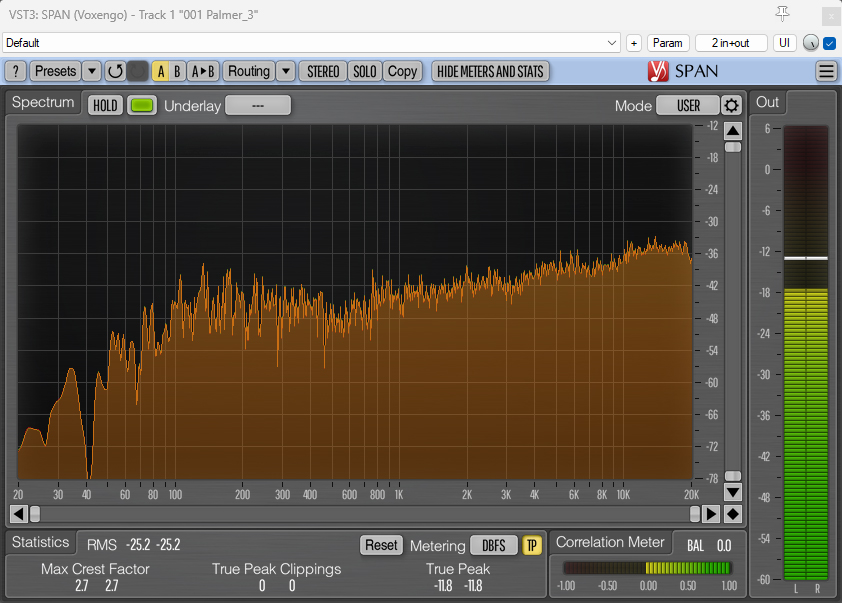
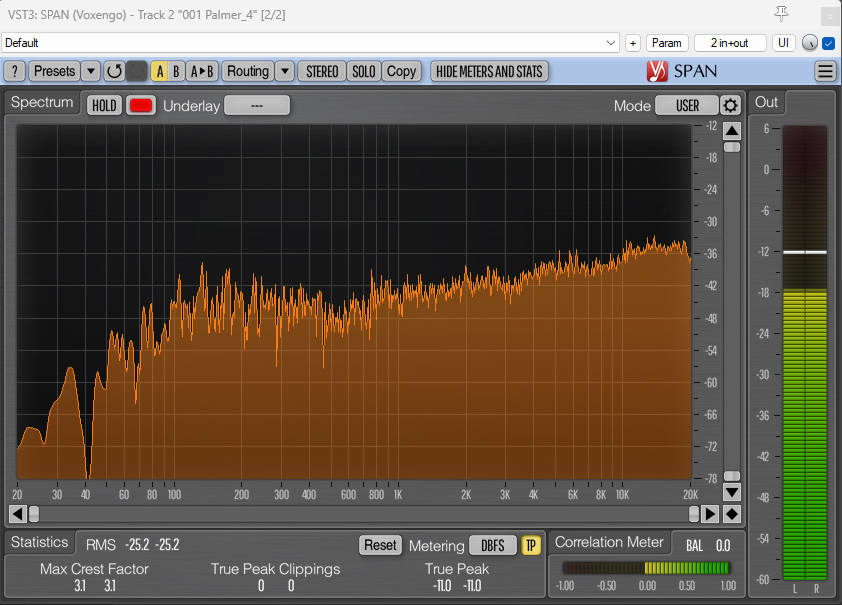
Spectrum analyzer results (pinknoise) for the Palmer PMS-02: direct (parallel) output (green) vs transformer-isolated output A (red): it is almost impossible to see the individual colours of the different outputs as – with level matching (+1.0dB for output A) – they match almost perfectly.
Spectrum analyzer results (pinknoise) for the Palmer PMS-02: transformer output A (red) overlaid with transformer-isolated output B (yellow): again, it is almost impossible to see the individual colours of the different outputs as – with level matching (+1.0dB for output A and +0.1dB for output B) – they match almost perfectly.

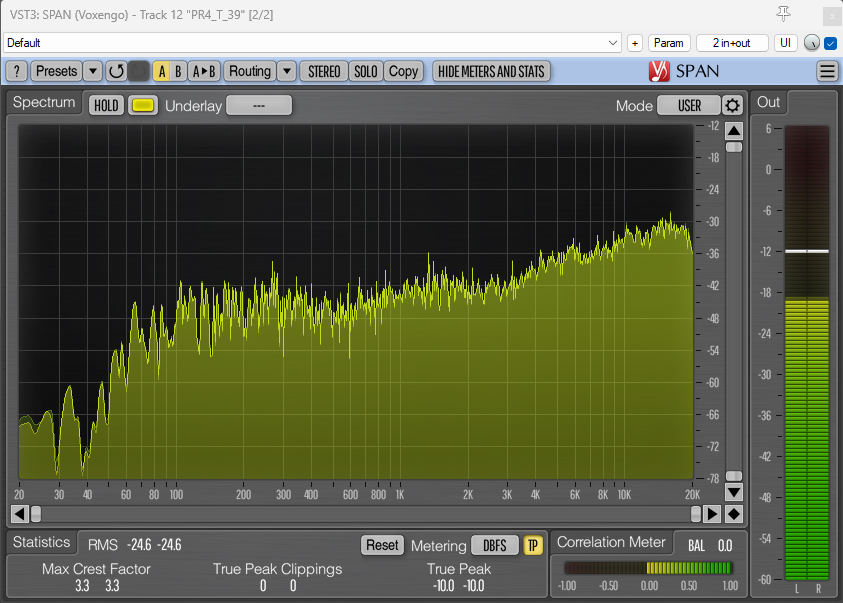
OK, I know that’s a bit of an aside from the PR-4, but it’s useful to establish just how good a splitter can be, and it was a reassuring check before cracking on with some comparative field tests. Whilst still in studio, I also took the opportunity to use the same set up with pinknoise (replayed through a Vivid S1 into an MKH 8040) split into the MixPre-3, FR-AV2 and the PR-4, with the following results:
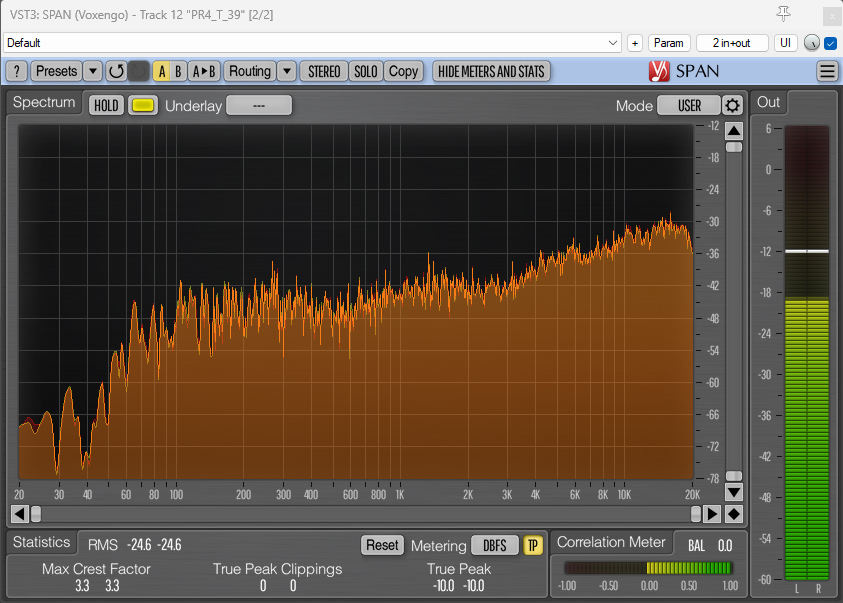
Spectrum analyzer results (pinknoise) for the PR-4 (yellow), overlaid with that from the FR-AV2 (red).
Spectrum analyzer results (pinknoise) for the PR-4 (yellow), overlaid with that from the MixPre-3 (green).
In for a penny, in for a pound: and here’s the spectrum analyzer results (pinknoise) for the FR-AV2 (red) overlaid with that from the MixPre-3 (green).

The match is very close: granted, not as close as the three different outputs from the splitter going into the same recorder (the MixPre-3), but matched well enough that one would not expect significant differences for field recording.
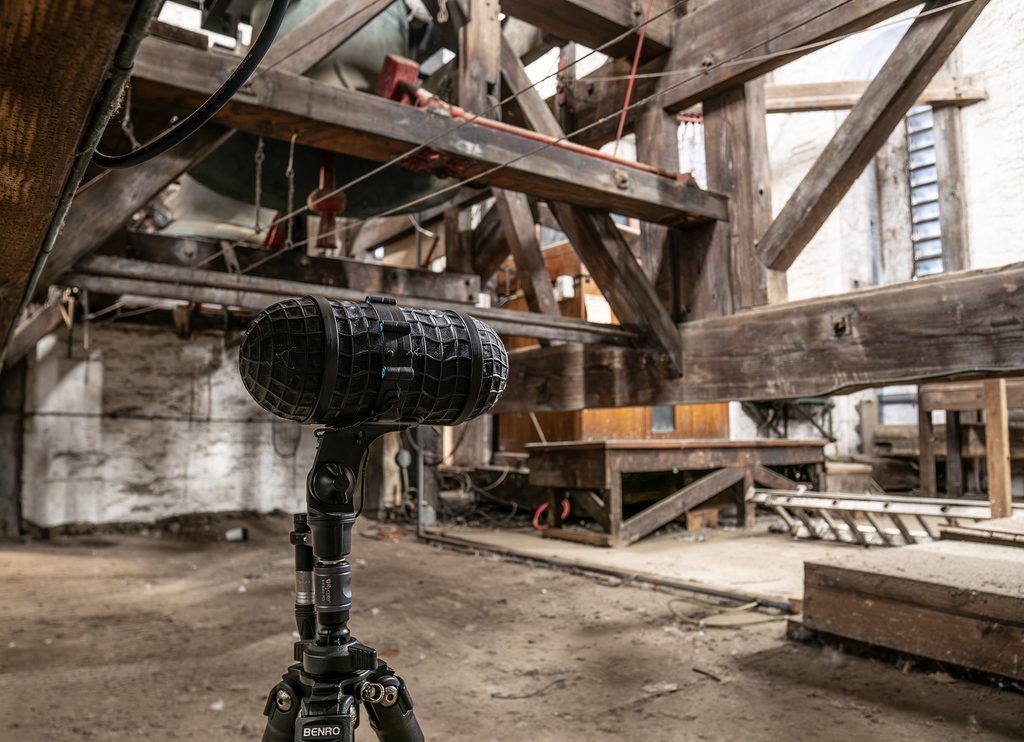
Amongst the cathedral bells for a bit of extreme testing, with mics under the bell frame.

And, going into the field, here are three recordings from a familiar location (to those readers of this blog) – the massive belfry at Norwich Cathedral. To make things a bit more extreme, the mics (an MKH 8090 and MKH 8030 pair) were placed within the bell frame, just below one of the bells for the midday chimes. As usual, there was a little wind blowing in the belfry so I used the Mini-ALTO basket for a bit of protection. I think this is as good a field test as any, and the downloadable files mean that readers can scrutinize and play around with the tests further.
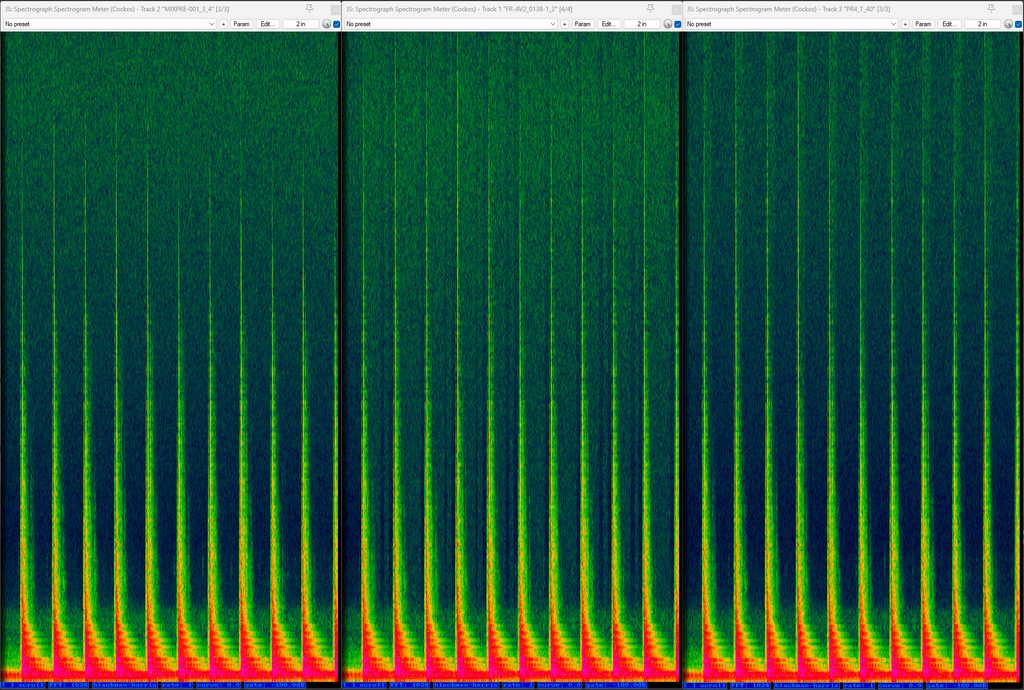
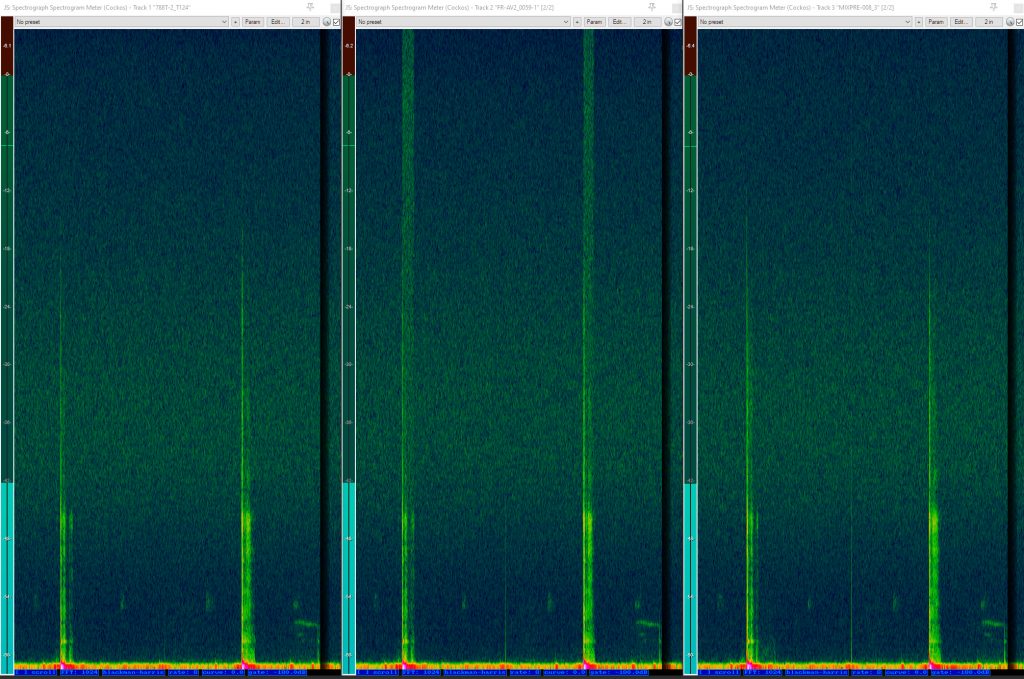
Spectrograms of the bells tolling the midday chimes: MixPre-3 (left), FR-AV2 (centre) and PR-4 (right). The recordings were at 96kHz so the vertical scale is from 0-48kHz.

All three recorders handled the loud sound of the bells fine, and the differences between the recordings is negligible – well, at least to my ears! I cranked up the quiet section before the bells start to chime by a massive 60dB and did likewise with the tail of the final bell. and the recordings were extremely close (incidentally with no difference in self-noise discernible). That said, looking at a spectrogram of the three 96kHz recordings, you can see the ADC switching in the case of the two 32-bit recorders. The MixPre-3 looks as one would expect (the high-frequency peaks of the bells disappearing into the rising self-noise – at high frequencies – of the MKH8000 mics), while the FR-AV2 and the PR-4 show the sharp banding in the self-noise of the mics as their dual ADCs switch. Of course, there is a gulf between seeing or measuring such things – especially at such high frequencies – and hearing them, and I’ve not managed to discern anything audible, even slowed down to half and quarter speeds (with one and two octave drops in pitch respectively): the files are downloadable for anyone to have a play with. Moreover, in doing some high frequency burst tests using a shaker close to some much lower noise mics (Nevaton MC59-O at 5dBA) it was impossible to even see the switching visually: as far as I can see it is the ultrasonic self-noise in the MKH8000 mics that means the switching between loud and quiet sounds is obvious in spectrograms of the two 32-bit float recordings.

Conclusions

There are many aspects of the functionality, such as timecode, of the PR-4 that I have skipped over that likely to be fundamental to many of its potential users: this functionality – in a small and affordable package – certainly seem to be the basis of the various awards the recorder has garnered in its launch year, and, of course, may well be what drives the PR-4’s sales. For example, if you want a very affordable recorder with AES3 and AES42 inputs, the PR-4 stands alone.

My focus, as set out from the start of this post, has been somewhat different, looking at the basics of the recorder: its physical form, robustness, operability, functionality for straightforward field recording, and, of course, how it sounds. Starting with the latter, the PR-4 is competent: self-noise is entirely respectable (and much better than the FR-AV2 for the 3.5mm mic inputs) and fine for most use; max input levels are not as minimal as on many other budget recorders; and, subjectively, the preamps sound fine for much usage. With the last, I wouldn’t grab the PR-4 in preference to other options I have here to record an acoustic music performance, but there are other things that would drive that too: XLR P48 channel count, form factor, transport controls etc. But the recorder would still manage a decent job on many a simple stereo-pair music recording, and could even be useful as a simple back up (e.g. of a stereo mix). Obviously size, weight and the decent powering options make the PR-4 a more attractive proposition for field recording for nature, sound effects etc., as part of an ultra-compact rig: here it competes against the Tascam FR-AV2, Zoom F3, Sound Devices MixPre-3 and, perhaps for some, even the many hand-held recorders with in-built mics and external XLR inputs. None of these devices is remotely up there with the quality, functionality and serviceability of field recorders made for professional use (such as Sound Devices 6, 7 and 8 series, Sonosax SX-R4+, Zaxcom Nova or Nagra VII), although the MixPre-3, which is part of Sound Devices’s foray into a lower-priced market with the MixPre recorder series, comes closest. But just as it is frustrating that Sonosax have yet to add a recording capability to their exquisite and solid SX M2D2 preamp, it is frustrating that at the cheaper end of the market that Zoom, Tascam and, now, Deity have come near, but have yet to make a small two (four with 3.5mm inputs) channel recorder that is robust (i.e. an aluminium chassis/case, with well engineered knobs, buttons and latches), ergonomic (i.e. has knobs for functions best served by them, and tactile back-lit buttons otherwise), and gets the basic functionality right (e.g. displays all relevant information clearly, perhaps gives more custom display options/choices; and provides decent MS capability). The recording quality of the Tascam FR-AV2, Zoom F3 and Deity PR-4 is fine for the purposes that they are likely to be put to: if only, they were a bit better engineered, more ergonomic and mastered the basic functions. Much could be done with simple firmware changes (and let’s hope Deity echo Sound Devices in that regard), but some involve improvements to the physical form of the recorders and doubtless would increase cost and, therefore, price. However, with the MixPre-3 ii priced well over twice the PR-4 there is considerable scope for getting this right at a still attractive price with a device that remains significantly smaller than the MixPre-3: besides, many are likely to buy the aluminium cage for a bit more protection. It’s very early days for Deity in terms of making audio recorders, it is good to see another maker on the block (field recorders being a lot rarer than, say, cameras), and I’m hopeful that they are nimble and responsive enough to see that – in a future iteration – they could bring something to the market that hits the spot. And if you feel I have been a bit hard on a budget recorder (let alone its add-on cage!) and that key features – such as those AES inputs – mean it will perfectly meet your needs as it is, well good on you – I truly hope it works out: there is no denying that there’s a lot of useful functionality and performance in the PR-4, and at a price that would be unthinkable a few years ago.
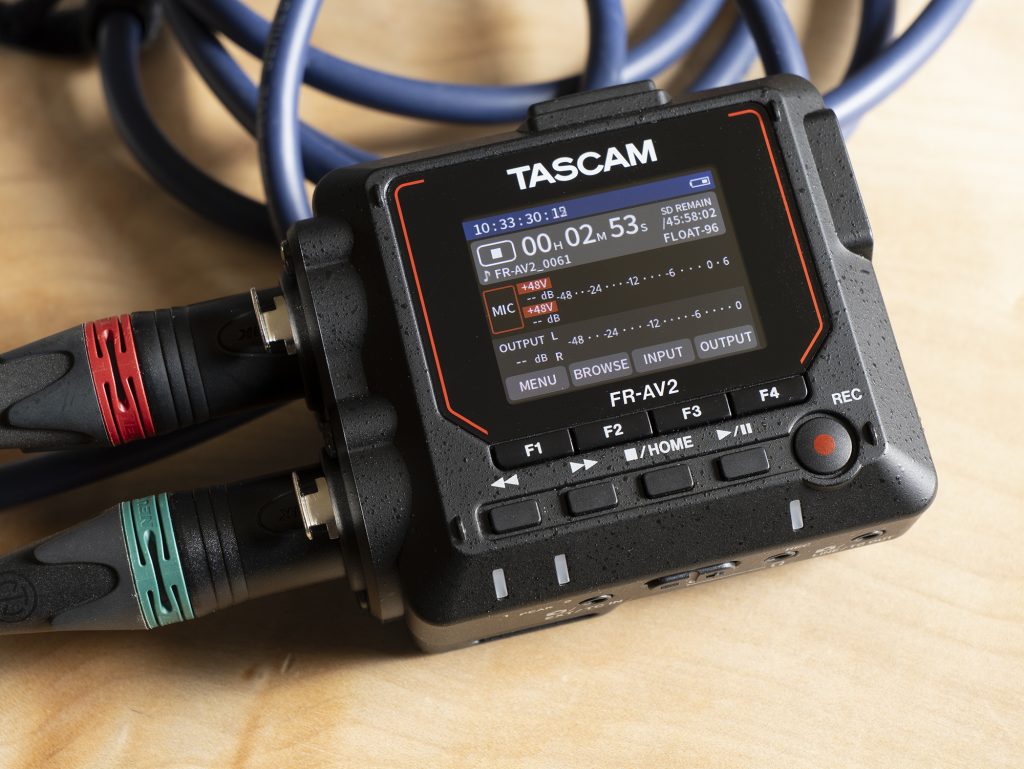
Audio Gear

Dual-ADC and 32-bit float tests with the Tascam FR-AV2 (with comparisons to the Sound Devices 24-bit MixPre-3 and 788T)

October 10, 2025

Introduction

Before getting into the blog post proper, I should point out that it comes with two caveats! First, I should clarify that this isn’t a full review of the Tascam FR-AV2 recorder: rather, it is a tale of dipping a toe in the water of 32-bit recording for me, exploring some of the aspects of such recorders that I have wondered about and about which I have struggled to find any authoritative analysis, let alone related to this specific recorder. It may well be that all these aspects are covered somewhere, but obscured by the smokescreen of so much (including a fair bit of nonsense) for and against dual-ADC 32-bit float field recorders. Whether I can add anything useful is another matter as, indeed, is the question as to whether anyone else is interested in the aspects of 32-bit float field recorders that have intrigued me. And, second, this post comes from the perspective of someone whose current main recorders are a pair of Sound Devices 788T recorders (one with a CL-8), along with a Sound Devices MixPre-3 for when I want lighter kit or simply don’t need the larger channel count. For a few years I also owned a Zoom F8n, but it has been a long time since I have bought, or even used, a cheaper and smaller recorder such as the FR-AV2. That said, in the increasingly distant past I have owned a Zoom H4, a Zoom H2n, a Tascam DR70D and a Sony M10: the last I valued as truly pocketable device, and was sad when it died. But I cannot claim to have had hands-on experience of the current options for, say, sub-£500 recorders, so please do bear that in mind!

Back in July 2024, when I last wrote about field recorders, I said ‘doubtless some find 32-bit float handy (e.g. for drop rigs for nature field recording, or for inexperienced recordists), but, personally, I see it as a solution to a problem I don’t have (without increasing mic input headroom – so many of these 32-bit recorders only have a 4dBu max mic input – and, also, introducing issues related to switching between ADCs)’, and to a great extent my feeling was the same a year on, before doing the tests outlined below. I’m not doing drop-rig or other unmonitored recording, and haven’t been bedeviled by recordings ruined by clipping nor, equally, suffering from self-noise arising from using excessively conservative gain. Moreover, most of the 32-bit recorders out there lack many of the features I value in my existing 24-bit recorders, with notable exceptions being the Sound Devices 8-series recorders: but I’m not in the market for one of these expensive recorders at present. So my interest in testing a 32-bit dual-ADC recorder came in a roundabout way (and, not, I hasten to add, because someone sent me a freebie: they didn’t!): with my little Sony M10 long dead, and just occasionally my MixPre-3 being not small enough for ultra-compact use, I wanted to buy a tiny recorder, which needed to have two channels of P48 (phantom power) and also to offer PIP (plug-in-power); to be able to handle mid-side recording, allowing recording of the M and S ISOs, while decoding to LR stereo for monitoring; to have no built-in mics; and to have decent-sounding preamps with low self-noise. Of the available options, the Tascam FR-AV2 seemed the best, if not only, candidate, and the required functions were certainly evident, although ‘decent-sounding’ preamps were not guaranteed (I have found no clear test), but there was reason to be optimistic: unless marketing hyperbole, the unit – with its ‘Ultra HDDA’ preamps – appears to have the same preamps as the excellent sounding but now discontinued HS-P82 recorder (it is unclear whether all Tascam’s ‘Ultra HDDA’ preamps are identical, but evidently there is at least some common ground). Its relatively cheap price (I paid £318 from CVP) was a bonus, although, of course, the flip-side of this is plastic construction and, perhaps, the absence of a few useful hardware features. While its 32-bit float dual-ADC design was rather incidental to my criteria for a tiny recorder, it, nonetheless, provided a good opportunity to explore such technology, so I think it would be fair to say that this was very much an extra reason to buy the recorder. And, of course, it is that aspect of the design that is the main subject of this post.

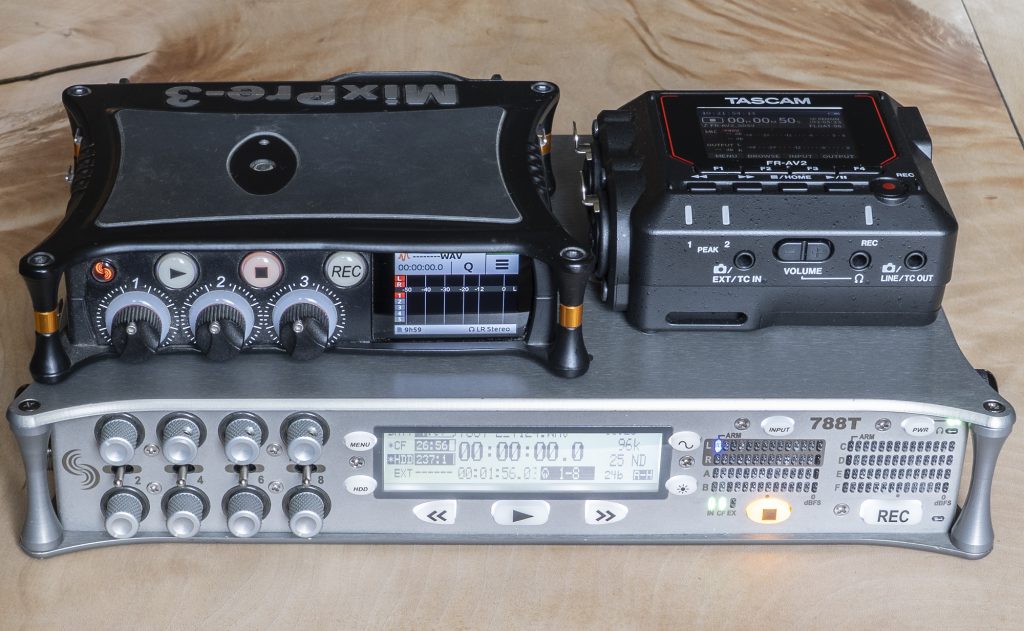
The Tascam FR-AV2 along with the Sound Devices 788T and MixPre-3 recorders used for comparative testing: the FR-AV2 is usefully smaller than the fairly dinky little MixPre-3.

Overall impression

As I said, this isn’t a full review of the FR-AV2 and certainly not a re-hash of its specs, but a few observations might be relevant to those considering buying the device.

Physically, the plastic form gives it a budget feel (slightly toy-like, if you want to be harsh), but that very much comes with the territory at this price point. And, in case anyone is wondering why aluminium would be used beyond aesthetics and affectation (that premium feel!), decent preamps kick out heat and aluminium cases are often essential parts of heat management (my Sound Devices recorders get warm, as designed). A few slightly odd design features stand out immediately: the ‘premium’ (as Tascam names the non-Neutrik) XLR sockets have catches that are rather proud (liable to catch when stuffed in a pocket?); there’s a 1/4″ thread on the bottom, but why not 3/8″, which would have relevance to field-recording (described as an intended application of the FR-AV2), but which would also allow an inserted adapter for 1/4″ for the camera fraternity if preferred?; the battery door is one of those awful push-down-and-try-and-slide-off jobs, that is resistant to moving and will be a grim feature for someone lacking good grip or in some difficult field location (and you can’t, to mitigate this, charge the batteries while in the recorder); and, above all, the buttons have no back lights. Given the lack of a touchscreen (no big deal to me, though I like those of the MixPre recorders) the last seems decidedly odd: in low light, or with a half glance, it’s far from doddle to find the right button. Even some dimples on the ‘home’ button would help locate fingers.

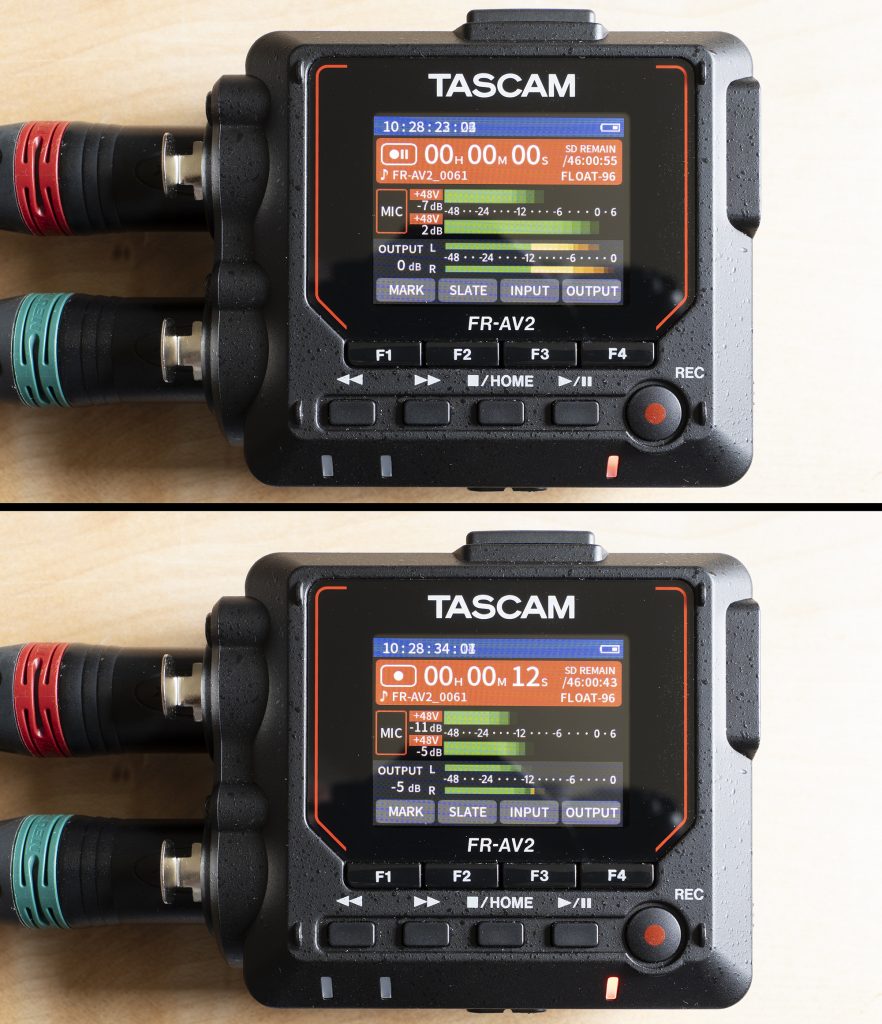
Turning on the recorder, the screen is nice and clear, although the menu doesn’t seem quite as good as it could be (but there the recorder is in good company at any price point!) and there are some unexplained and annoying quirks. For example, why can’t the user have pre-roll (‘pre rec’) without having to have the pause option too? The immediate and unsatisfactory answer is that the latter also puts the recorder into standby mode, without which there is no pre-record, but the other recorders I use do not require a standby mode to have been pre-pressed (and for five seconds to have elapsed first): what on earth was Tascam thinking? More worryingly, the screen looks almost identical in recording and recording standby mode (surely the top part of the screen could be, say, orange for standby then red only when actually recording, rather than red in both instances?), although a flashing red LED indicates paused or standby mode vs the solid red LED of actual recording. It all seems a little prone to encouraging the classic error of thinking you are recording when you are not, which seems especially ironic given that a major part of the selling point of 32-bit recorders is easier use: reducing chances of cock-ups should be part of that.

Scope for confusion? The two rather similar screens for standby (top) and recording (bottom).

The FR-AV2 has a distinct advantage over the Zoom F3 (its most obvious competition) in that it has provision for MS recording. On the one side the implementation is needlessly clunky (why not have adjacent menu options for ‘stereo link LR’ and ‘stereo link MS’?), but, more positively, it is possible set gain for the two channels separately. While gain is to some degree irrelevant (see below), this difference carries through to your DAW, and gives precision when monitoring (more so than the ‘wide’ function, which is similar to the MS width option on a MixPre recorder). You can even ‘gang’ the inputs and change the overall gain whilst keeping the difference between the two channels intact. This means you can compensate in the field for the very normal situation of different sensitivities for your mid and side mics, though, evidently, you need to know those sensitivities and not confuse yourself by continuing to use these different gains when swapping to a pair of mics for LR stereo.

Plug-in-power (PIP) is another feature absent in the Zoom F3, but found in the FR-AV2 and, as I said in the intro, something I want in such a small recorder: a pair of PIP omni mics (such as any of the Primo EM272-based mics: e.g. the Clippies from Micbooster) makes for a very compact rig for when travelling with the most minimal sound equipment. And, it is good to see that the FR-AV2 offers a choice of 2.5V and 5V: many of these mics benefit from something less anaemic than the common 2.5-3.0V.

Moving on to outputs, the FR-AV2 has a fairly modest headphone amp, delivering 50 mW + 50 mW into 32 Ω, which is less than the hardly stellar Zoom F8n I used to own (100 mW + 100 mW) into 32 Ω, and is well short of the 300 mW + 300 mW of the MixPre-3, but proves usable with my HD-25s (70 Ω) and, if needed, you can always crank up the recording level (without fear of clipping the actual recording) near to the peak output level for monitoring.

Turning to getting your recordings off the FR-AV2, the USB connection seems poorly implemented: just shifting a stereo file to your computer takes an age, which is surprising in such a new device. In the comparative samples I have moved from recorder to PC while testing, USB data transfer rates have been around four times slower than my MixPre-3 (2017 technology) and seven times slower than my 788T (2008 technology)! This seems bizarre. But at least it’s only a two-channel recorder!

So a mixed bag: a far from ideal recorder, with some of the obvious hardware improvements being cost-neutral to have implemented, some (such as the backlit buttons) that would have been worth a modest price increase. The software-related issues, of course, are open to being fixed in a future firmware release, but I have no idea whether Tascam will be responsive (I have provided feedback and so far the response has been about as far from Sound Devices as possible!). I am uncertain whether the competition at this price point is better or worse in terms of hardware design and software implementation: doubtless there are YouTube reviews, blogs and forums full of comparisons between the FR-AV2, the Zoom F3 and other obvious competitors that cover this, and, indeed, discuss aspects I haven’t touched on here (e.g. the FR-AV2’s implementation of timecode and Bluetooth). And perhaps some of the quirks that have surprised me will be seen more positively by others: I could well be missing something!

Right, let’s get on with the 32-bit float recording side of things…

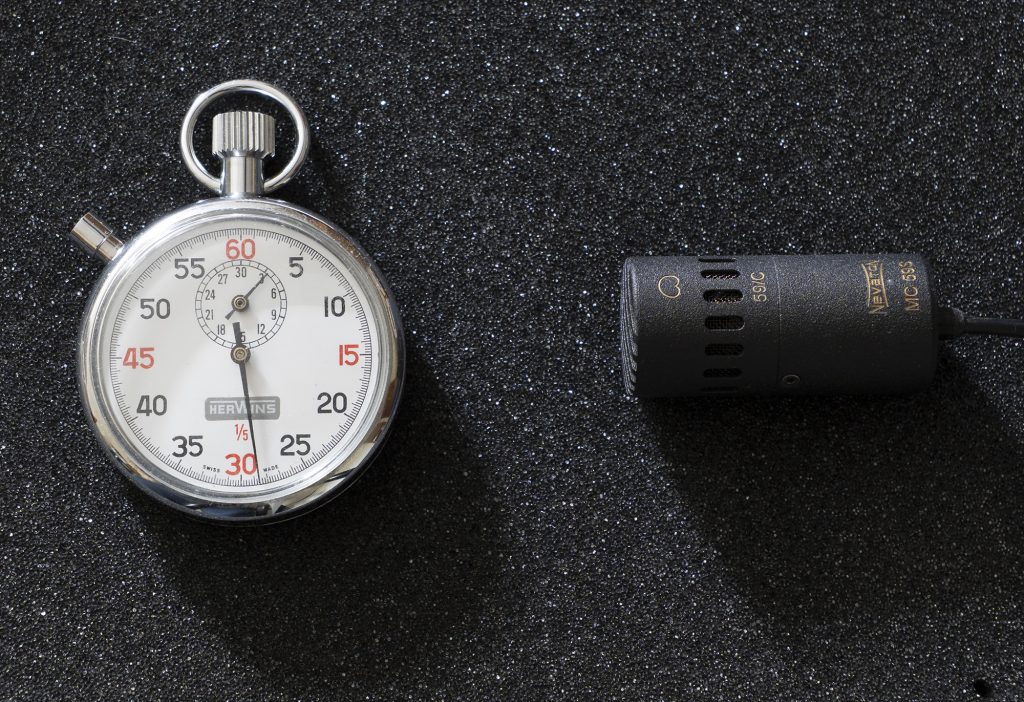
A mechanical stopwatch and a Nevaton MC59/C: tools for checking self-noise at different recording levels!

Recording level

Funnily enough, when doing a bit of background reading on the FR-AV2 I noticed some confusion about the recording level options, so, given that the manual sheds no light at all on this (a little surprising!), it is probably worth being crystal clear here. The setting of recording levels in 32-bit float mode (at least) does not bake in any analogue trim/gain: it is to help set levels for monitoring and outputs, to allow compensation to be made in the field for different mic sensitivities in the two channels (most obviously for MS recording), and to set the levels at some more immediately useful level for when you bring the recordings into your DAW. To double-check this I recorded a mechanical stopwatch in the quietest location I could manage (in an impromptu enclosure, under a pile of duvets, in the quietest room of the house, and with the electricity turned off!) and using an extremely low self-noise mic (Nevaton MC59/C: an apposite choice given that Dmitry and Egor at Nevaton suggested the mechanical stopwatch approach for mic tests) at recording levels of 0dB,+ 20dB, +40dB and +60dB, then brought the files into Reaper, adding/subtracting gain there so that the overall gains from the recorder plus in post were matched: all four adjusted recordings sounded identical, with no difference in self-noise. Voila: as expected!

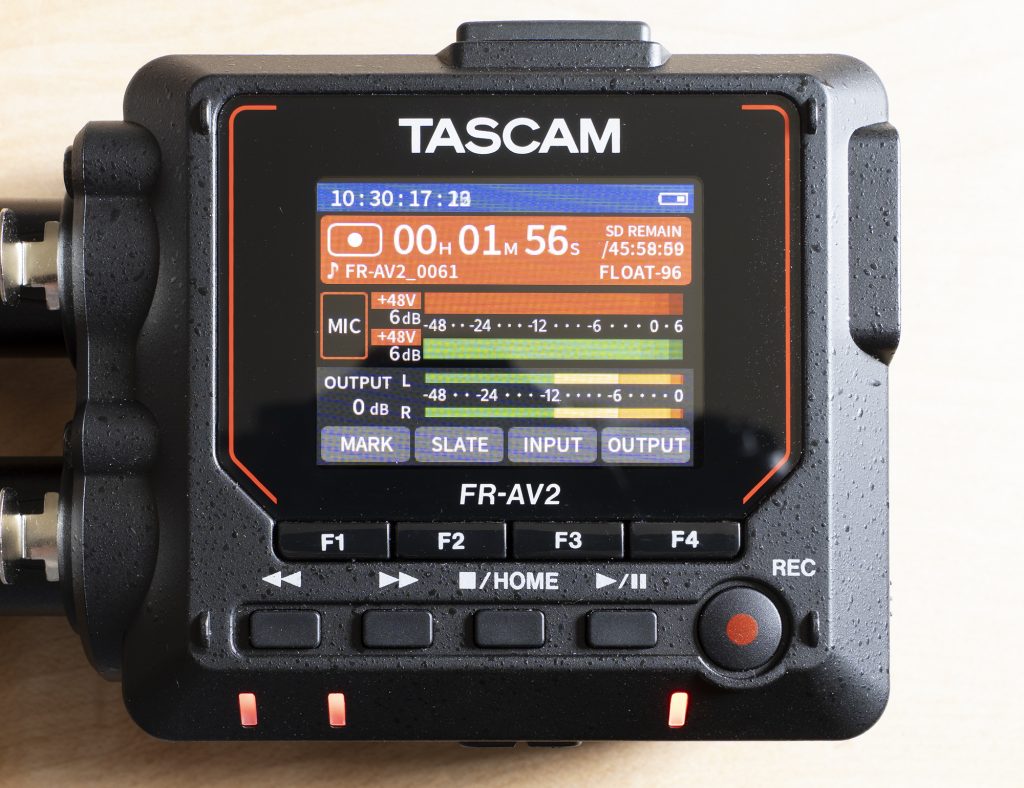
On a related note, the peak level indicators (a red LED for each channel), which the manual describes as lighting up ‘when the input level exceeds the peak level’ are dependent on the recording level setting, so their function isn’t as indicators of mic input overload, but as indicators of overload of the outputs: i.e. to the headphones and if running a line out to camera. The indicator for overloading the analogue inputs of the recorder is, rather, the fact that the level indicator meter for the input channel will turn entirely red, as opposed to its normal green: if not red, peaks will be recoverable in post irrespective of the recording level settings and any indicated output level overloads. And, just to double check, I tested this too. Again, voila: as expected!

Input overload indication on the FR-AV2 shown by the red level meter, here just overloading for mic channel 1.

Self-noise

Following on from recording levels, and the consistency in self-noise irrespective of the setting, what then of absolute self-noise? Given that level setting of the FR-AV2 lacks the clarity of a more conventional recorder with trim/gain, I repeated the mechanical stopwatch test, using a Rode NT1 mic (for its very low [4dBA] self-noise), and compared it to a MixPre-3 (first generation: i.e. 24-bit) and a 788T using a passive three-way splitter. I set the FR-AV2 recording level at +40dB, although, as we have seen, this will make no difference to the self-noise, and then recorded parallel clips with the MixPre-3 and 788T at 76dB gain (i.e. the maximum gain on both) and then 56dB, 36dB, 16dB and 6dB gain (the last being the minimum gain possible on the MixPre-3). In Reaper I then raised the level of the FR-AV2 clips to match the 76dB-gained MixPre-3 and 788T clips, and then raised the remaining progressively quieter MixPre-3 and 788T clips to match (i.e. in turn adding 20dB, 40dB, 60dB and 70dB of gain in post). The results of the tests can be heard (and downloaded) below (and if you want to cut to the chase, just listen to the FR-AV2 and MixPre-3 clips in test 5!): and don’t forget, these are massive gain levels applied to three extremely quiet recorders and a mic that is as quiet as they go.

First: the two 24-bit recorders at max input gain (76dB) and the FR-AV2 with its level raised in post to match:

Second: the two 24-bit recorders at input gain of 56dB with 20dB gain added in post, and the FR-AV2 with its level raised in post to match:

Third: the two 24-bit recorders at input gain of 36dB with 40dB gain added in post, and the FR-AV2 with its level raised in post to match:

Fourth: the two 24-bit recorders at input gain of 16dB with 60dB gain added in post, and the FR-AV2 with its level raised in post to match:

And, finally, fifth: the two 24-bit recorders at input gain of 6dB with 70dB gain added in post, and the FR-AV2 with its level raised in post to match:

Sorry about the slog for anyone who actually went through the clips and compared them!

There are three aspects of these self-noise comparison tests that merit comment:

• First, the three recorders have indistinguishably similar self-noise when the two 24-bit recorders were gained to suit the quiet sound source, which is not surprising from the specs: equivalent input noise (EIN) of the FR-AV2 is –127 dBu, while that of the MixPre-3 is -128dBu and the (oddly unspecified) 788T is apparently -128dBu too.

• Second, the self-noise of the FR-AV2 means that it is very effective for recording quiet sounds (OK, this is obvious from the specs, but it is perhaps useful – given the confusion that surrounds dual-ADC 32-bit float recorders – to be reassured that this applies to the quietest signals).

• Third, and I suspect this may well be a big surprise for some, the 24-bit MixPre-3 recordings showed no more evident self-noise if recorded with 76dB (the maximum) gain or extremely low 6dB gain (i.e. its minimum mic input setting) with 70dB gain then added in post. The 788T recordings behaved similarly (i.e. no more self-noise) until gain on the recorder was dropped to 16dB (so the point where self-noise increases is somewhere a little above this) and at 6dB (with 70dB added in post) the recorder was noticeably hissier. Obviously, a mic with more self-noise would mask this and bring the effective constant self-noise lower, nearer to the MixPre-3.

The third point reinforces the lack of need to record at very hot levels with a 24-bit field recorder with decent preamps and, a point often missed, the 24-bit MixPre first generation recorders have no additional self-noise across the whole trim/gain range from 6dB to 76dB (they have a quite different preamp and ADC design to the 7-series recorders, with two op amps per channel feeding into two ADC channels per mic input, which are then combined in the ADC: here is an informed tear-down of a first generation MixPre-6).

Clipping

This leads neatly onto the subject of clipping. Now this was something about which I had no prior doubt: despite the much-touted no clipping side of dual-ADC 32-bit float recorders, this cannot compensate for overloading the mic input. Like many budget recorders, the Tascam FR-AV2 has a fairly modest +4dBu maximum input level for microphone input, when the gain is at minimum. This isn’t unusual, and can be found outside the small handheld recorders with which, perhaps, the FR-AV2 is most likely to compete: it is, for example, the same as the Zoom F8n Pro. The last is odd, since the preceding (24-bit) Zoom F8n (which I used to own) had a significantly higher maximum input level of +14 dBu, as does my MixPre-3 (first generation): the second generation MixPre-recorders (i.e. with 32-bit float and dual ADCs) also have a maximum input level of +14 dBu. Turning to my older 788Ts, these offer mic inputs with +8 dBu maximum (but, note, when gain = 10 dB, yet trim/gain for mic inputs can be reduced to 0.1dB); and, for line inputs +26 dB maximum (gain = 0 dB): the last might seem irrelevant to mics, but, crucially, the 788T can supply 48v phantom power when in line-input mode. The current 8-series recorders from Sound Devices have almost exactly the same input specs as the 7-series (though slightly more line-level headroom at +28dBu) and also allow P48 in line-input mode. Looking at another example of a current professional recorder, the Sonosax SX-R4 has a + 21dB max mic input level. So, if on the deck of an aircraft-carrier recording jets landing, any of the Sound Devices or the Sonosax (and other similar professional) models will see you home sans clipping (as long as your mics can handle the SPL) while the Tascam FR-AV2 is likely to struggle. The higher maximum input levels of my other recorders has certainly been put to good use a few times by me (e.g. when close-miking loud bands with condensers) and are there for good reason, not for some only theoretical need. And turning to my own tests for this post, using a sensitive mic (an MKH 8060 shotgun), I found a simple hand clap enough to get the Tascam FR-AV2 to overload the inputs, while the 788T had no trouble at all.

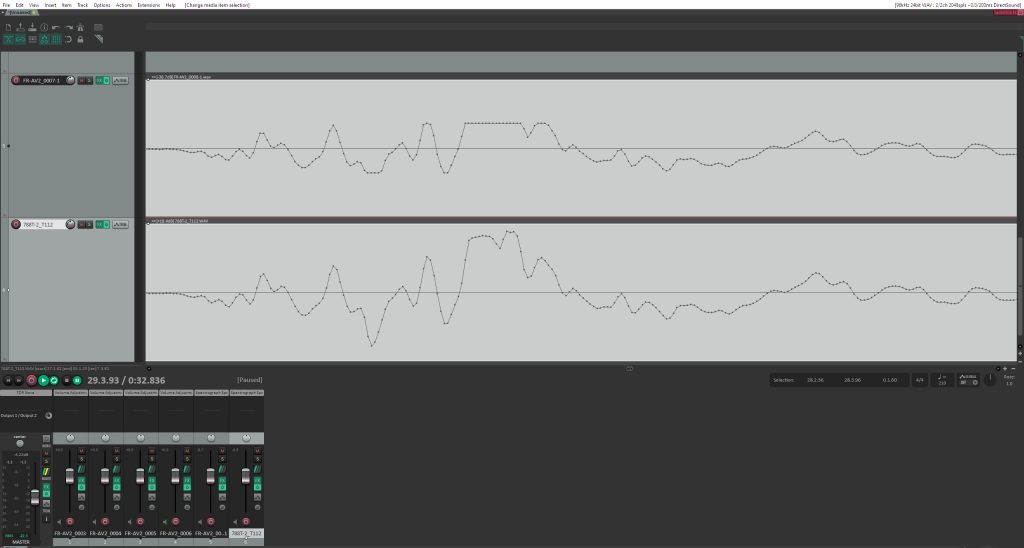
Input clipping on the FR-AV2 (top) vs unclipped signal on the Sound Devices 788T (bottom): dual ADCs and 32-bit float won’t always save you if your input stage can be overloaded (or, indeed, if you exceed the max SPL of your mic).

Now the MKH 8060 is capable of outputting a maximum of around +12dBu, which is by no means unique, so, as with all such common +4dBu inputs on more modest recorders, you just need to bear this in mind and remember that the 32-bit float format doesn’t solve the hardware limitations of the FR-AV2 and its ilk. If recording extremely high SPLs with sensitive mics with no built in pads, then make certain to pack a couple of, say, 20dB in-line attenuators (make certain they have P48 pass-through). Likewise, the user needs to be beware of mics with modest maximum SPLs causing clipping earlier in the chain. But, for most use by most users, the Tascam FR-AV2 should be fairly clip proof, and is certainly less likely to result in clipping in most common usage than a poorly or non-monitored 24-bit recorder, a 24-bit recorder set with too high an input gain (possibly, as we have seen, out of an irrational fear of getting too low a recording and burying signal in preamp self-noise), or when recording an unexpectedly wide dynamic range. So, yes, of course, in many cases the Tascam FR-AV2, or similar, will help recordists avoid clipping.

NB If you don’t have an expensive 24-bit recorder aimed at production sound professionals, or a more modest 32-bit device such as the FR-AV2, the tried and tested alternative of dual-recording (where, say, a stereo pair is recorded at two different gains to two pairs of channels) is found on many a 24-bit recorder, including the modest but great value Tascam DR-70D.

Recording extreme dynamic ranges

Taking these thoughts and tests on self-noise and clipping forward, the oft-cited benefit of dual-ADC 32-bit float recorders is their performance in situations where there is unpredictable and extreme dynamic range. Recording both gentle rain and thunder claps is one example often given. Weather is a fickle thing and we don’t have much in the way of thunder storms in Norfolk anyway, so for a more mundane, but equally telling, test I headed outside and went for the combination of a coin spinning, a burst from a hammer drill (drilling into concrete) 300mm from the mic (this time an MKH 8020 omni SDC mic, with still very respectable 10dBA self-noise), and also the quiet background noise of a few birds tweeting and the distant rumble of a military jet: this presents a huge dynamic range . For the tests, I compared the FR-AV2 (set with ‘rec level’ at 0) with the MixPre-3 (gain at the minimum of 6dB) and the 788T (gain set at 20dB, so that the level indicators were at the top of the orange band and just shy of the red for the drill sound: i.e. how many might record the drill, but not the quiet sounds). In none of the three cases was the signal loud enough to overwhelm the mic input stage: the aim was to give the FR-AV2 a fair test and not simply reveal the limitation of its analogue mic inputs again. With 6dB gain on the MixPre-3, this was recording very conservatively for the drill sound, let alone the quiet background and coin spinning, so headroom for any louder still sound was considerable (as it turned out, a substantial 21dB) and well short of limiter territory. Here are the three recordings, unedited apart from the levels of the FR-AV2 and MixPre-3 recordings raised a little to match the 788T recording (by use of a 1kHz tone, which is included in the clips, with a narrow band-pass filter applied):

As expected, the overall recordings sound pretty much identical, but, of course, with extreme dynamic range (and think back to the thunder and soft rain example), the recordist will often want to edit the recording so that the loud and the quiet parts are both audible – in short raising the quiet part. You can download and play with the files and try this yourself, of course, but, as a more immediate alternative, here are some short excerpts from these recordings to show the consequences of doing this on the quiet sounds, first of the coin, with the level of each recording raised in post by another 30dB from the full-length recordings above:

And here are some short excerpts of the distant and faint bird (and jet plane) sounds from the full-length recordings above, this time with the matched levels raised by a whopping 50dB in post:

To my ears the recordings sound largely identical, and, certainly, there is nothing different in terms of self-noise. Even the previously observed slight rise in self-noise of the 788T at very low gains and with a low self-noise mic (i.e. at 16dB gain with the 4dBA Rode NT1) is no longer evident with the recorder at 20dB gain and with the MKH 8020 (10dBA) mic. Food for thought for some perhaps? Slightly ironically, this serves as a reminder that conservative gain settings on a 24-bit recorder (plus, of course, decent limiters though they were not used in this test) may well cover the issues of the unexpectedly loud sound (and consequent fear of clipping) that have led many to buy a dual-ADC 32-bit recorder!

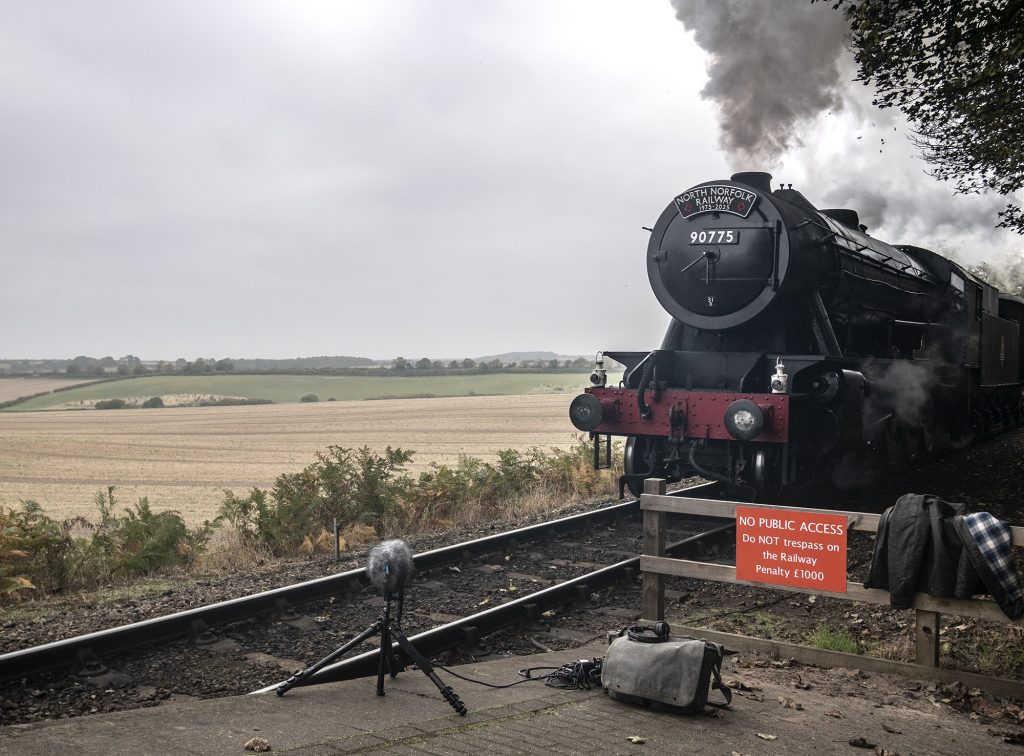
From gentle birds tweeting (and a bit of background traffic on the distant coast road) to the massive sound of a WD 2-10-0 loco (‘The Royal Norfolk Regiment’) passing inches from my mics represented a pretty good example of extreme sound level change: but – and here’s the cautionary tale – you don’t gain anything from dual-ADCs with 32-bit float vs the first generation MixPre-3 (i.e. 24-bit) even for such an extreme recording..

And for another example, I popped along to nearby Kelling Heath Halt on the North Norfolk Railway, for a bit of field recording with a huge range in sound levels. Here, the little halt station (a request stop) is not used by trains on the upward incline from Weybourne, so is a good place to be able to place mics right by the wheels (and cylinders) as the locomotives come past working very hard. And I was especially in luck this time, as the steam loco that passed was one of the largest on the line. The recording was made using a Sennheiser MKH 8018 stereo shotgun into the FR-AV2 and, again, the MixPre-3 set at its minimum gain of 6dB. Here are the two recordings with 15dB gain added in post to the MixPre-3 recording and the FR-AV2 leveled to match (and, also, the fig 8 side channel of the MKH 8018 was also given an additional 7dB gain in post to match its sensitivity to the mid mic capsule):

As before, you can download the wav files to play with them yourself, but, again, to make things easier here are two very short excerpts from the quietest parts, with much more gain added in post: another 65dB gain was added in post, giving a total of 80dB gain to the MixPre-3 field recording (plus, of course, that additional 7dB for the less sensitive fig 8 side capsule).

Again, there is significant difference between the dual-ADC 32-bit float FR-AV2 and the 24-bit MixPre-3 recordings, and no difference in self-noise even when the low level MixPre-3 recording is pushed to extreme measures in post. The MKH 8018 is a very high output mic (56mV/Pa; -25 dB ref (1V/Pa)), and yet the MixPre-3 recording had 19.4dB of headroom above the peak level for that channel (and much more for the fig 8) and, of course, came nowhere near needing its effective limiters. In normal use I would not have set the MixPre-3 gain quite as low as for this demonstration, mainly to aid monitoring. Given the ability of the MixPre-3 to recover extremely low-level signals (without any self-noise penalty) just as well as the FR-AV2 (and, obviously, similar 32-bit float recorders with very low EIN), and its greater ability to handle high input levels, it is difficult to imagine a scenario where extreme variation in sound levels and the wish to raise quiet sections whilst editing means that the FR-AV2 and similar recorders offer any performance advantage.

NB Don’t be mistaken: I am not advocating that, if you have a first generation MixPre recorder that you should leave it permanently with the gain at 6dB: for quiet sounds you will struggle to monitor (through headphones and on the meters), will have low output levels, and will find the waveforms nigh on invisible when you take the files into your DAW. And if you pass files on to someone else for post you will be decidedly unpopular.

Switching ADCs

There are blogs, videos and forums that have demonstrated, illustrated and discussed the issue of switching ADCs in dual-ADC 32-bit recorders (and, indeed, dual-ADC 24-bit recorders such as the Sony D100 that also use switching). By issues, I mean the effects of the on-the-fly switching of the source of the recorded signal from the low-gain ADC (i.e. that for high-level audio) to the high-gain ADC (i.e. that for low-level audio) and vice versa. The main problem, insofar as it is a problem at all, appears to be the jump in self-noise when the switch is made between the ADCs: at face value, this seems unlikely to be an issue if the change in self-noise is masked by the signal. The key then would seem to be if switching ADCs can be heard on the fading tails of sounds. Of course, there may be more to the different ADC performance than self-noise (distortion, for example), and, with this in mind, I have wondered about any implications for different ADCs being used for different channels (both for L and R stereo and especially, M and S pairs) due to significantly differently levels. I have yet to find anything crystal clear on this (apart from a few seemingly well-informed comments). Being nothing of an electronics engineer, I am poorly equipped to understand, analyse and communicate exactly what is going on with switching dual-ADC designs, but that puts me in the same boat as most who choose between single-ADC 24-bit recorders and dual-ADC recorders (be they 24-bit or 32-bit). So, for me there are two practical tests I can do with the FR-AV2: first, see if the switching of ADCs is observable; and, second, and more importantly, see if the switching can be heard.

Spectrograms left to right: Sound Devices 788T, Tascam FR-AV2, and Sound Devices MixPre-3. The ADC switching in the FR-AV2 at the louder signals is quite clear to to see. The 96kHz sample rate means that the vertical scale is up to 48kHz.

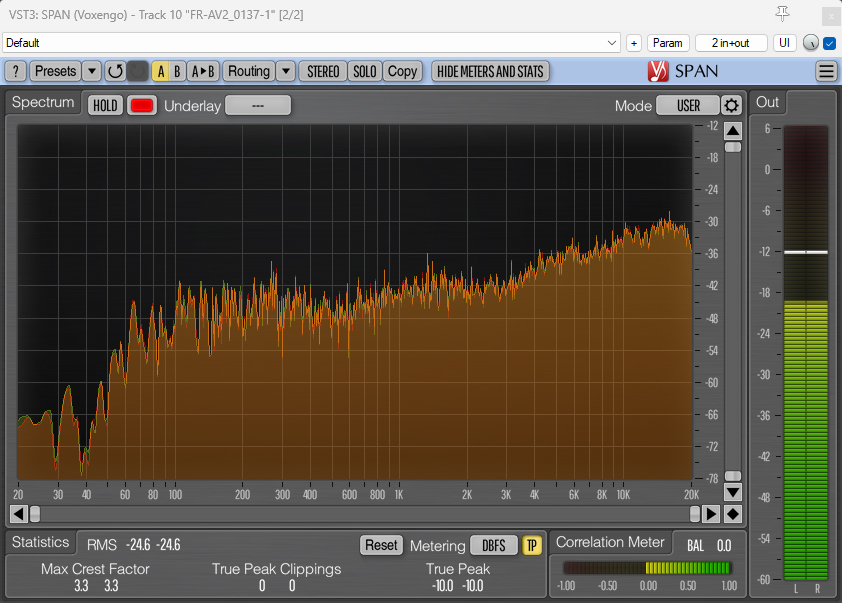
Well the observable part is easy in the sense of visual indication on a spectrogram, as shown above: in this example (using the FR-AV2, MixPre-3 and 788T, with levels matched by a 1kHz tone) some gentle taps on the mic body (MKH 8060) to cause high-level low-frequency peaks are accompanied by a jump in self-noise in the FR-AV2, which I crudely measured at about 10-20dB, but only distinguishable from around 24kHz. But as the sound level drops, so quickly does the ultrasonic self-noise, as the recorder switches ADC. Here are the sound files from which the above was derived:

I’ve played around with this and other tests, dropping the pitch a couple of octaves (relevant to some sound design) doesn’t lead to any obviously audible switching-related increase in noise or other artefacts. As I said, I have no claim to have any expertise in this, but my conclusion – from a sound recordist’s perspective – is that the FR-AV2’s implementation of switching between its dual ADCs has no audible effect: but if someone can show differently that would be interesting!

Conclusions

Well first off I should say that I am happy with the Tascam FR-AV2: I bought it for its tiny size and other key features described in the introduction. With its dual-ADC and 32-bit float design it delivers low-self noise across what, in normal terms, would be described as any gain level. This is very different than was the case with the 24-bit cheaper handheld recorders I have owned in the past. I think that this is the crucial point: prospective purchasers of this and similar recorders (say the Zoom F3) are going to be comparing them to budget 24-bit recorders.

But when compared to my (first generation) MixPre-3, the FR-AV2 offers no practical advantage in high dynamic range recordings: it offers no better ability to bring up the quiet sounds in post, while handling extreme loud sounds at the same time and, as we have seen, has less capability of handling extremely high mic input levels. The last may not be an issue for many, or even most, users, so perhaps we could say that for most the two recorders are equal in this regard and that all the FR-AV2 does is solve the ‘issue’ of the MixPre-3/6/10 user who is inexplicably afraid of setting trim/gain at very conservative levels for such use! Now, of course, not all non-budget 24-bit recorders exhibit such consistent self-noise and dynamic range across the whole trim/gain range (as we have seen here with the older 788T: although in practical use – as in the recordings of the hammer drill etc. and the steam train – this is hardly significant), so that means you need to know exactly how your recorder performs (and not just with a 150k resistor shorting the inputs, but with mics that you will use: their self-noise will come into the equation).

As for the switching ADC issue, I am relieved to find that this seems much less of a concern than the on-line discussions and demonstrations might suggest: that might reflect my ears, my use and, indeed, that the FR-AV2 is a more recent dual-ADC and 32-bit float design. So, yes, through testing the FR-AV2 I have modified my view from July 2024, when I wrote about field recorders and said ‘doubtless some find 32-bit float handy (e.g. for drop rigs for nature field recording, or for inexperienced recordists), but, personally, I see it as a solution to a problem I don’t have (without increasing mic input headroom – so many of these 32-bit recorders only have a 4dBu max mic input – and, also, introducing issues related to switching between ADCs)’: certainly with regard to the FR-AV2, I don’t have the ADC switching concern, though perhaps am just left with a niggling, lingering feeling – however irrational perhaps – that something isn’t quite right and that, for a critical – say music – recording, I would stick to a non-switching dual-ADC recorder. This is rather theoretical anyway for me personally, as given the channel count of the FR-AV2, its less than ideal ergonomics and its lack of so many other features, I would be highly unlikely to use it for an acoustic music recording. That said, I will try and remember to take a split of the main pair on some future music recordings to really give those ‘Ultra HDDA’ preamps a good check: so far, I think they sound fine. And, in the meantime, although the dual-ADC and 32-bit float aspect of the recorder remains a solution to a problem I don’t have, I would have no hesitation in using the FR-AV2 for sound effects or field recording should I need something smaller than my MixPre-3. The FR-AV2 has met my specific needs, but, of course, may well have a much wider application for many and, for them, offer significant advantages over existing or alternative options.