
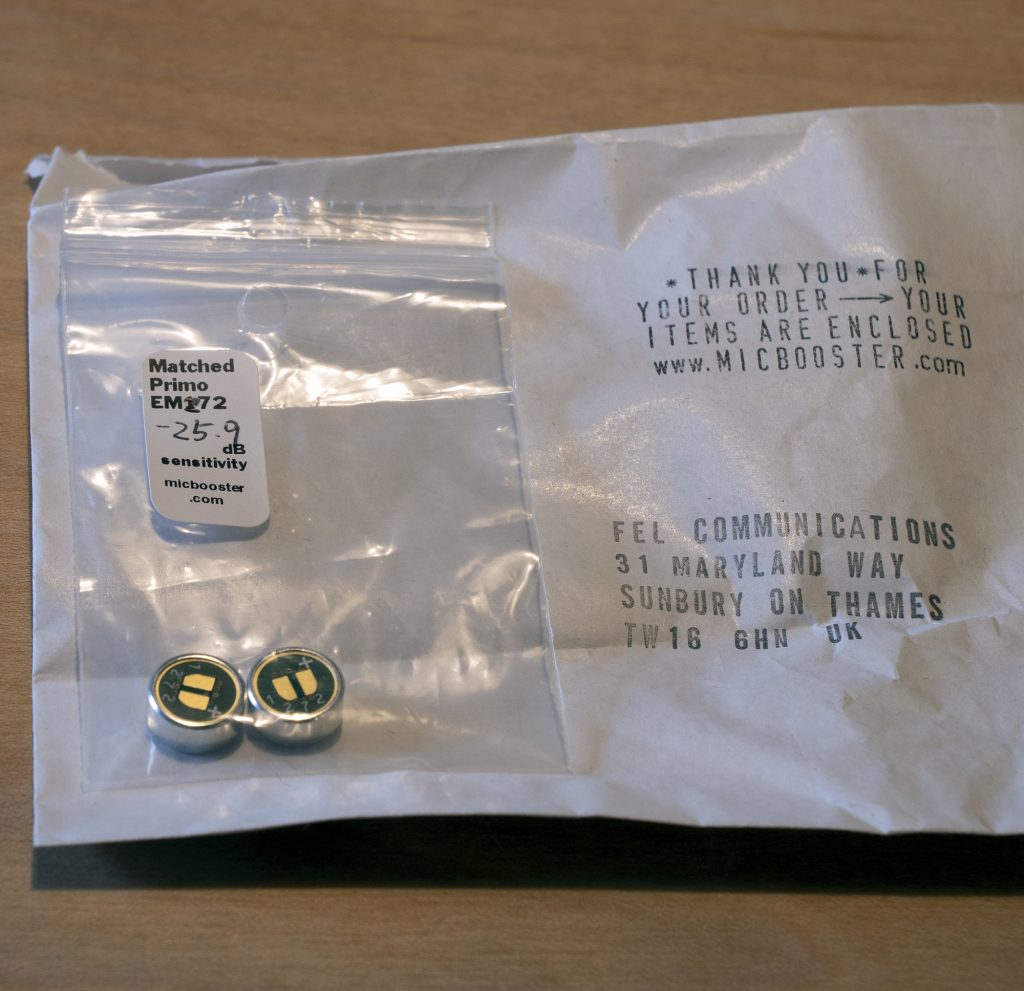
Primo microphone capsules are much-loved by the DIY crowd, especially the omni EM172 (now replaced by the EM272) capsule: it is a 10mm capsule with 14dBA self-noise. As such it offers similar scope to a lavalier (lav) mic for times when you want something much smaller than a small diaphragm condenser (SDC) mic, but has much lower self-noise: lav mics typically have around 22-5dBA self-noise, which can be pretty noticeable for many recording uses, such as ambience and nature recording. The sound quality is on a par with capsules used in mid-range handheld recorders, but, of course, once you have external mics you can be much more flexible. For example the omni mics on the much-loved Sony PCM10 are too close together for stereo, so plugging in a pair of EM272 mics allows for a proper spaced pair: you can clip those to your hat, the sides of your specs or, to look slightly less silly and to avoid your head movement giving odd shifts in the stereo image, to the sides of a bag or rucksack.
And the best thing about the Primo capsules is that they are cheap. Currently in the UK an individual bare capsule is £12.78 from FEL Communications Ltd (Micboosters): FEL/Micboosters also offers various versions (e.g. pre-soldered), other Primo capsules (including cardioid and figure 8: see below), matched pairs and, for those not into DIY, capsules already made up into finished mics – their Clippy and Pluggy models. There are a couple of other manufacturers who use Primo capsules in affordable mics, the most well-known of which is LOM in Slovakia, but I think Micboosters is the only one that also sells the bare capsules: and it is one of those great small British companies, run by the very helpful Nick Roast, who has worked as a BBC sound engineer for over 30 years.
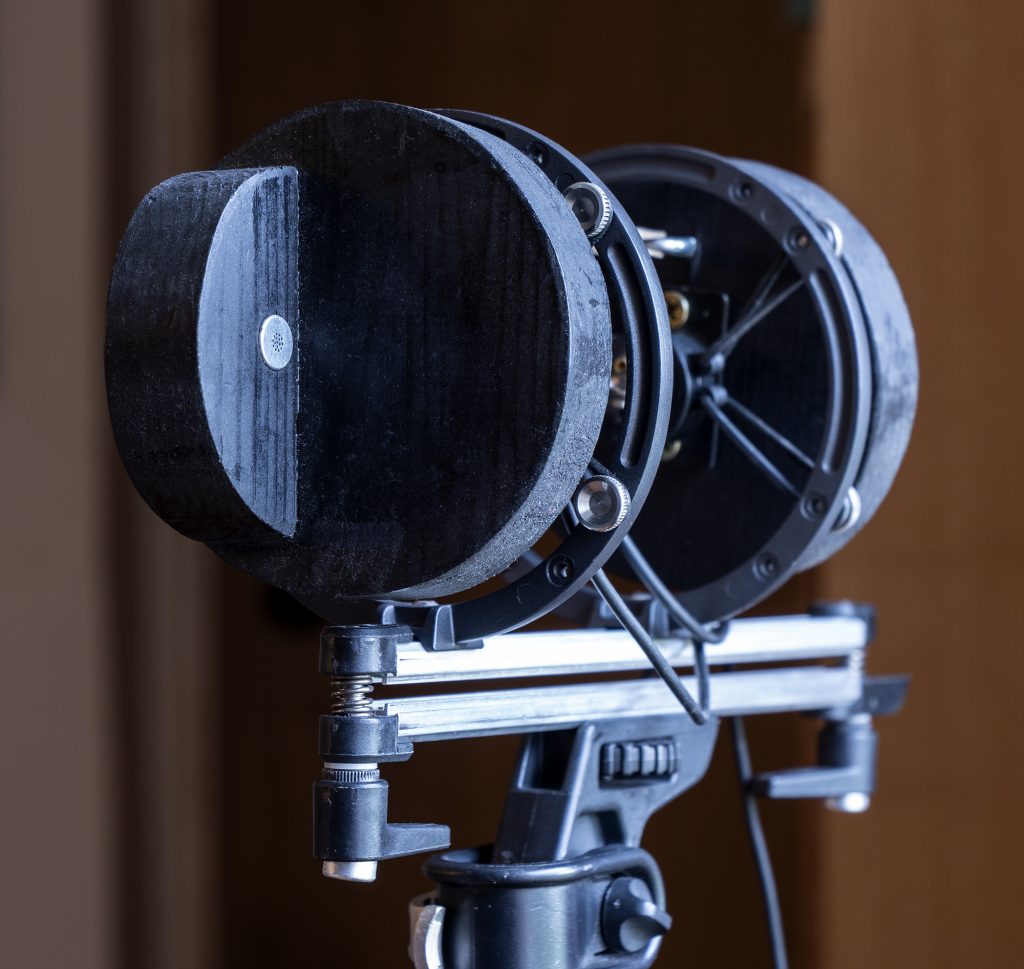
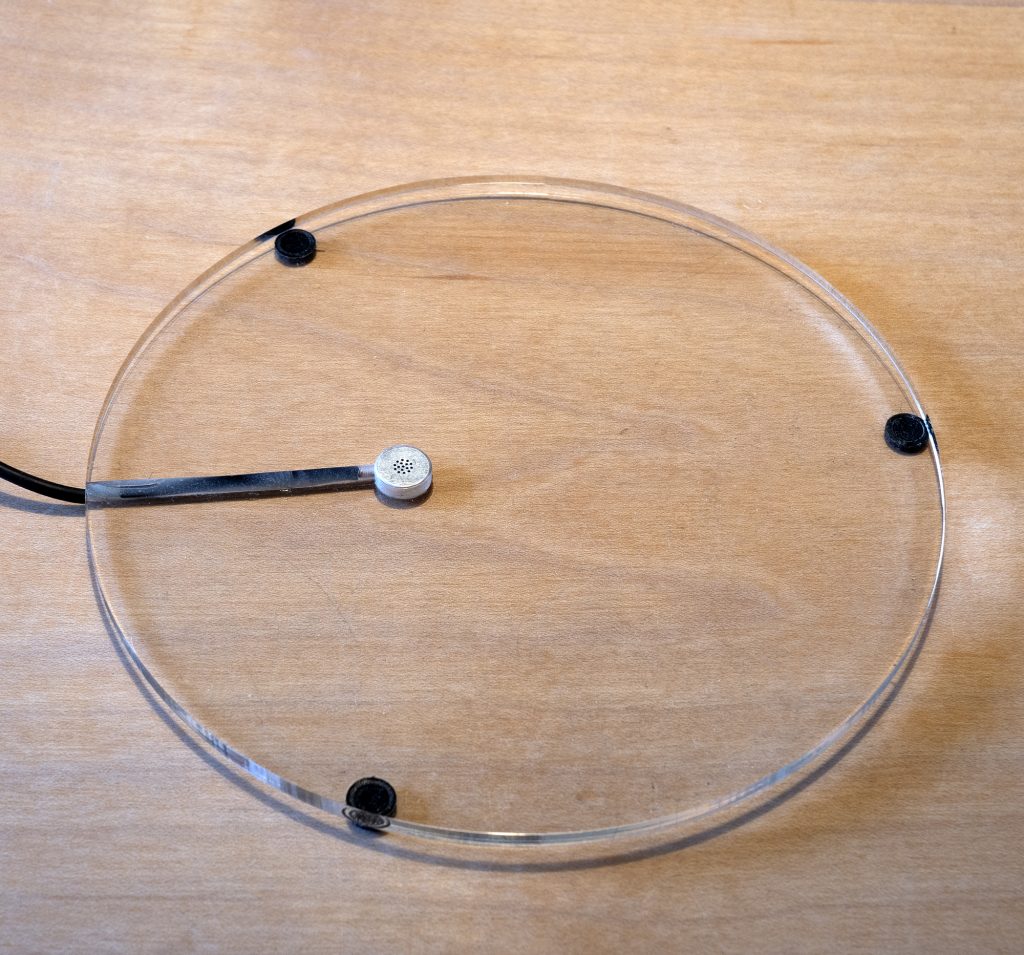
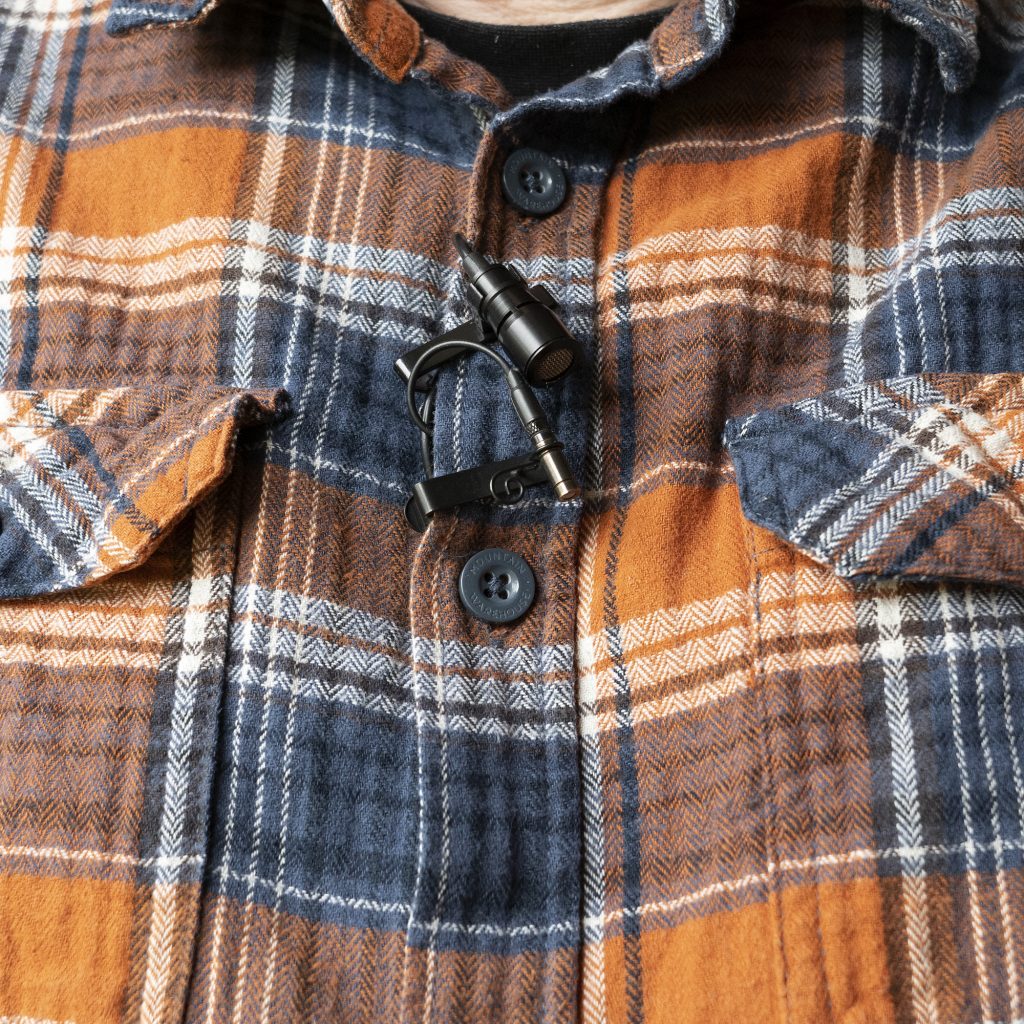
I have a pair of the Clippy mics (together with Rycote furry covers that are made specifically for them), which are useful for discreet or minimalistic stereo recordings and as lower noise lav mics for dialogue. And I have used bare EM172 capsules for what Curt Olson – who inspired my experiments – calls a ‘head-spaced parallel barrier array’, albeit in my case small enough to fit inside a Rode Mk1 blimp and with some of the mic placement attributes of SASS arrays: the circular baffles are c.90mm diameter and the mics are 160mm apart. Surprisingly effective. I’ve also used an EM172 to make a boundary mic, with the capsule set off-centre in a disk of perspex (150mm diameter and 5mm thick). Perhaps next I should buy some silicon ears (I see Micboosters sell them too) and make a binaural head with a pair of EM272s, as others have done.
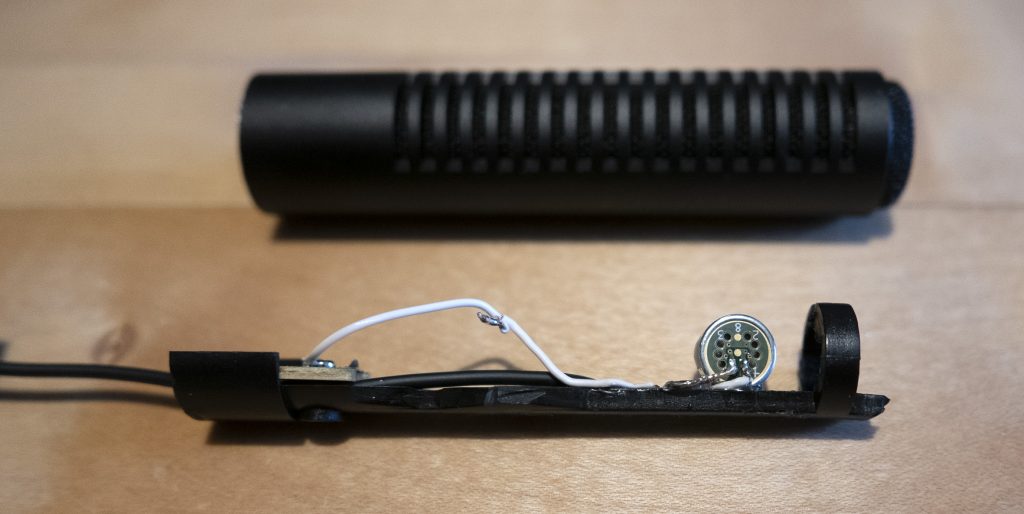
Primo also make a single diaphragm figure 8 capsule (the EM283), again 10mm diameter, but this is not normally available via retailers. I noticed that Micboosters had started selling them and, as I had never heard of the capsule nor could find anything about it via the internet, I bought one for the princely sum of £19.68 for fun/curiosity. The specs are not as attractive as the EM172/EM272 and the 22dBA self-noise might be rather too high for many, but it is fine when used as part of a mid-side pair for louder sources such as music or some street ambiences. I found that the EM283 capsule needs better RFI screening than the EM172 and EM272, but that’s nothing unusual. I just bunged it in an old sawn-off shotgun mic tube for testing and, though this makes the mic unnecessarily large, it is fine – all hum eliminated. At some point I’ll get around to making a smaller housing with the fine mesh screening I have bought for the job. Not entirely sure if I’ll make much use of this capsule, unlike the EM172 and EM272 ones, but it has proved useful in an odd way: I had been thinking of acquiring an AKG CK94 figure 8 mic to provide the side mic for a mid-side pair with my CK93 hypercardioid, but was worried about self-noise (the CK94 is also 22dBA) and this convinced me that for my intended use I really do need something a lot quieter (so will need to save for an MKH30). UPDATE 26.5.2021: despite my conclusions about the EM283, I did buy a used AKG CK94 after all (a bargain came along) and its theoretically identical self-noise of 22dBA is not at all problematic. Lesson learned? That not all self-noise specs are equal! I’ve written a blog post about the new mic here.
So the final word: I’d really recommend playing around with bare Primo capsules as a cheap way to learn about arrays, and, even if DIY isn’t your thing, I’d recommend a pair of ready-made Clippy mics with these capsules as a great and very affordable alternative to a pair of lav mics for those occasions when SDC mics (and P48 power) aren’t feasible.
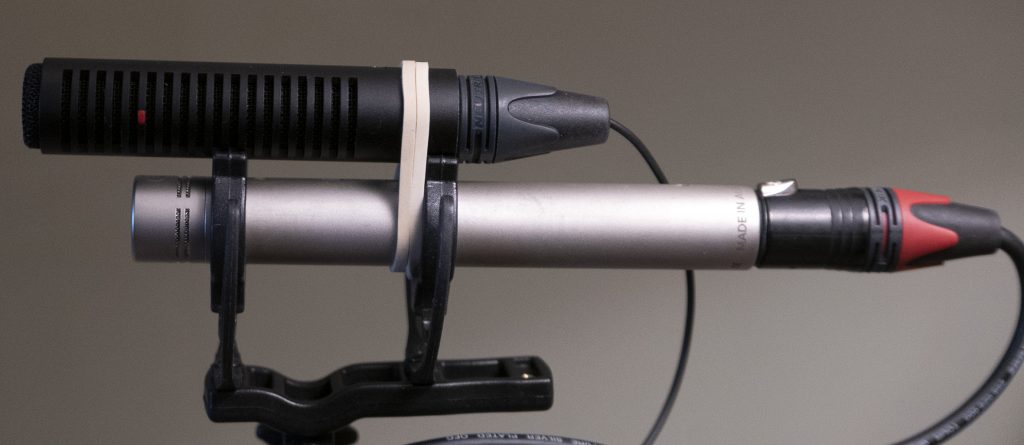




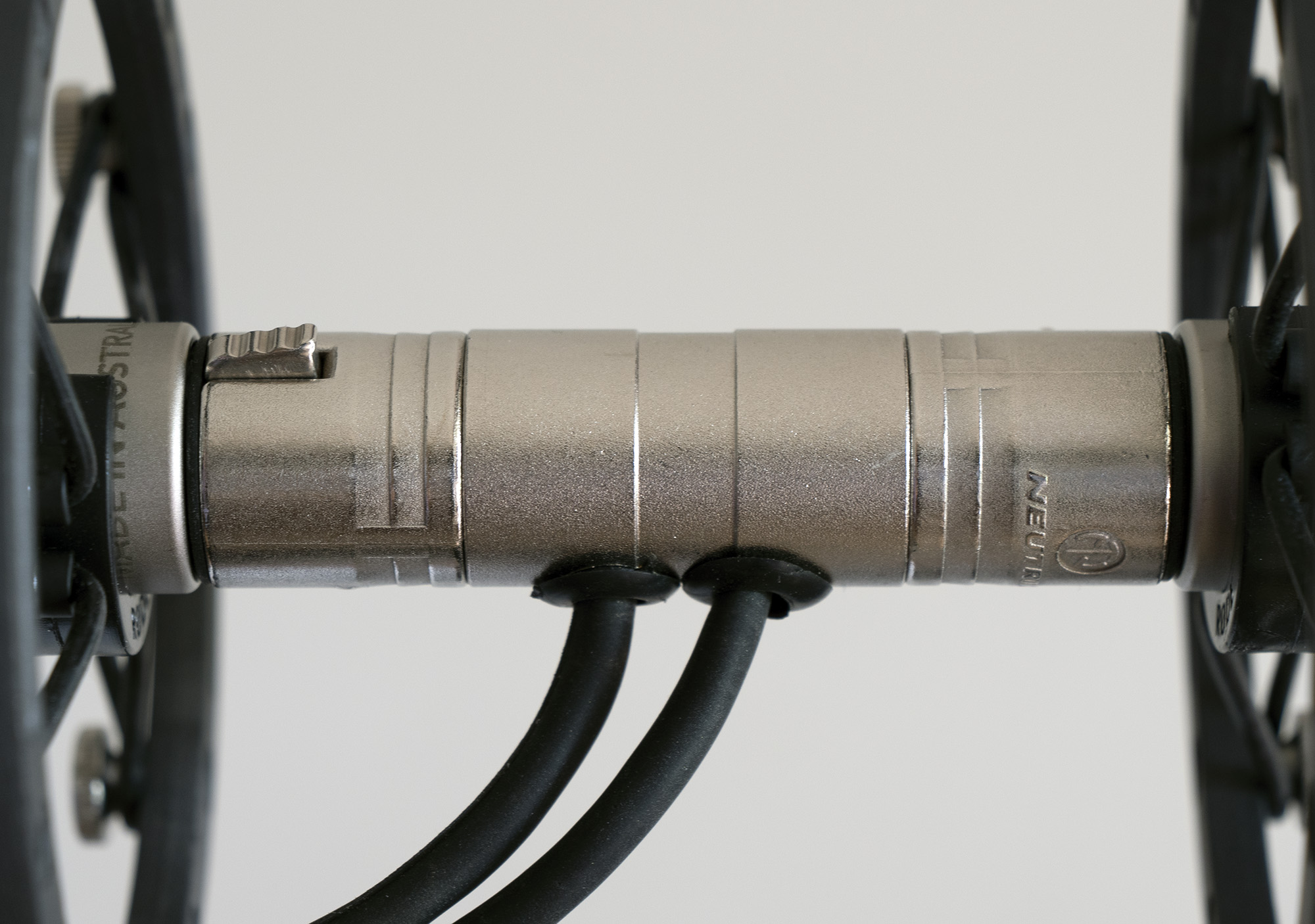
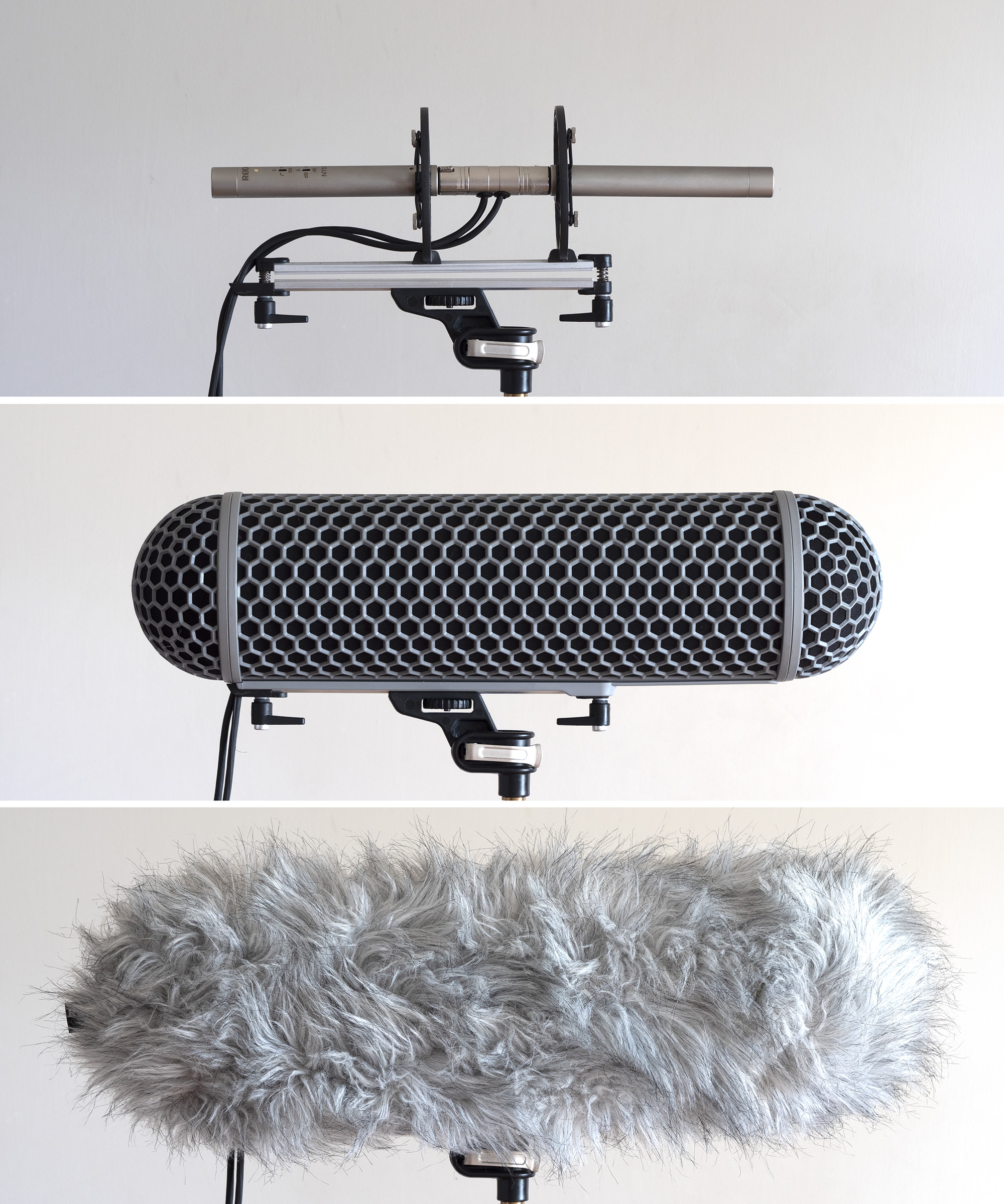 I’m a fan of omni SDC pairs for outside recording. For music I will often use these in Rycote Baby Ball Gags mounted on a stereo bar, itself on a substantial stand (usually the Manfrotto 1004BAC). But where I want something more portable and more windproof, I mount the two omni mics end-to-end inside a single windshield – the Rode blimp Mk1. Joining the two mics end-to-end is easy with a rewired and drilled female-to-female xlr coupler (well, actually, the female-to-female XLR connector is actually not off-the-peg, but made up of three items: two Neutrik NM3FXI and one Neutrik KM. Neutrik’s own female-to-female XLR connector doesn’t unscrew). This places the mics (a pair of Rode NT55 mics with the excellent NT45-O omni capsules) at a 360mm spacing, which renders a good stereo image and is exactly the ideal length for the Rode blimp (i.e. the same length as the straight part of the blimp). Being pure pressure omni mics there is, of course, no phase issue arising from the fact that they are pointing different directions.