Browsing Tag

Nano Shield

DIY Projects

Mini-RAD retrofitting of a Nano Shield

October 5, 2026
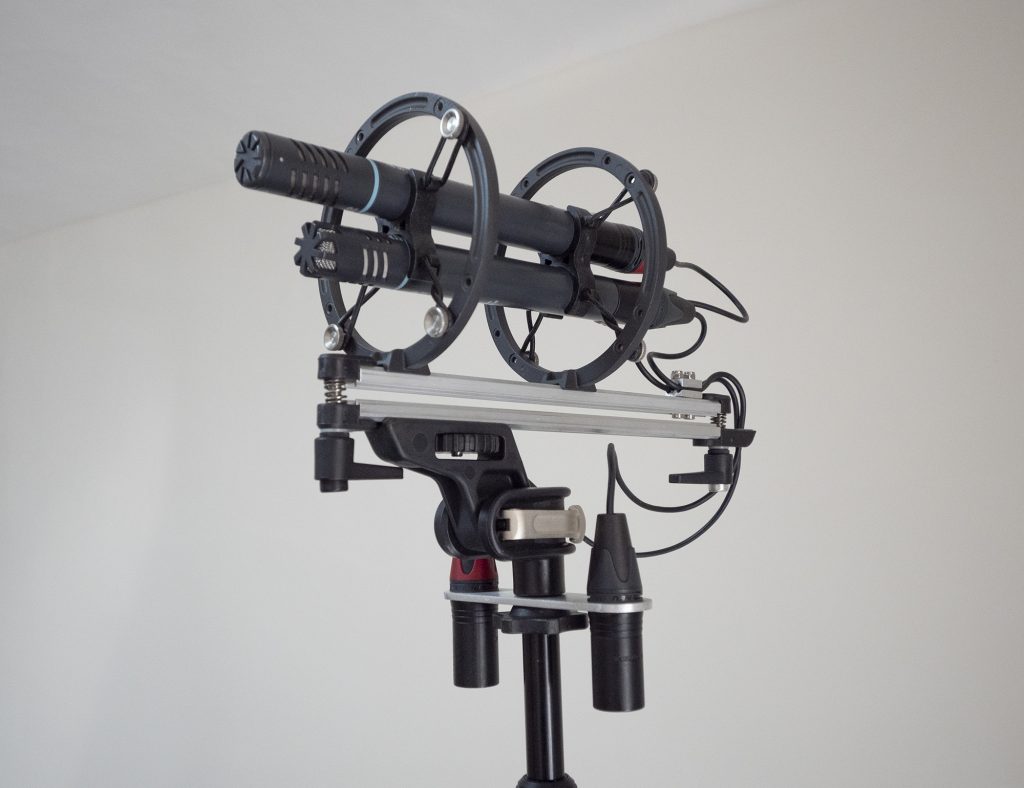
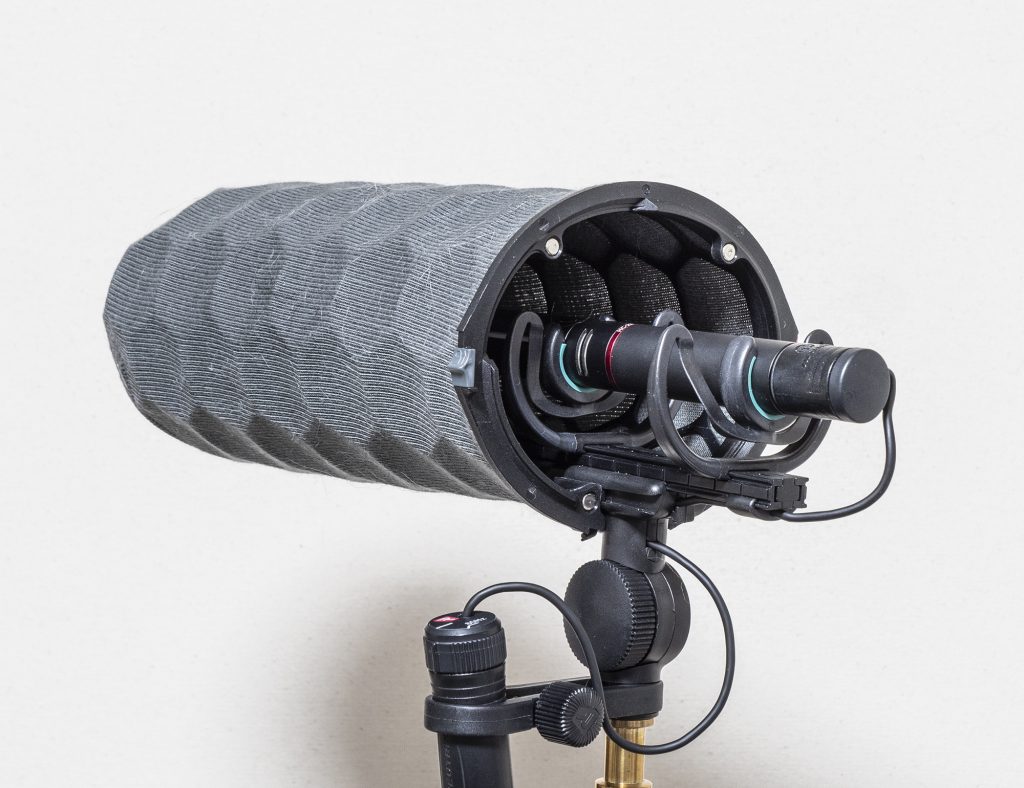
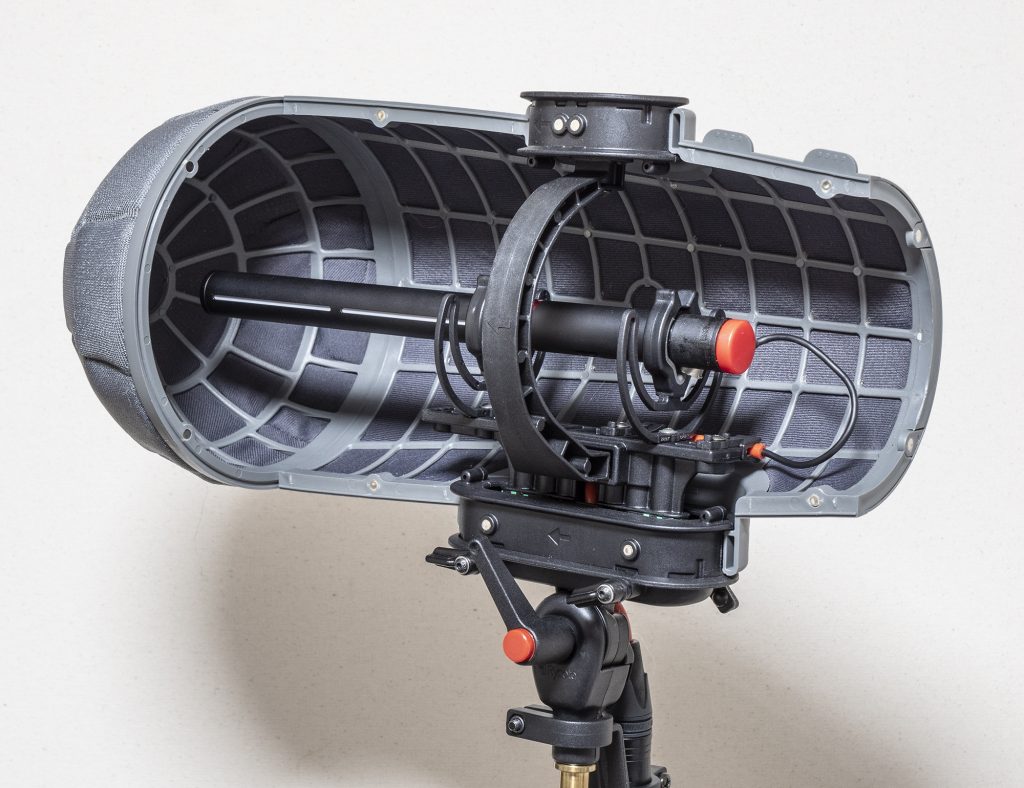
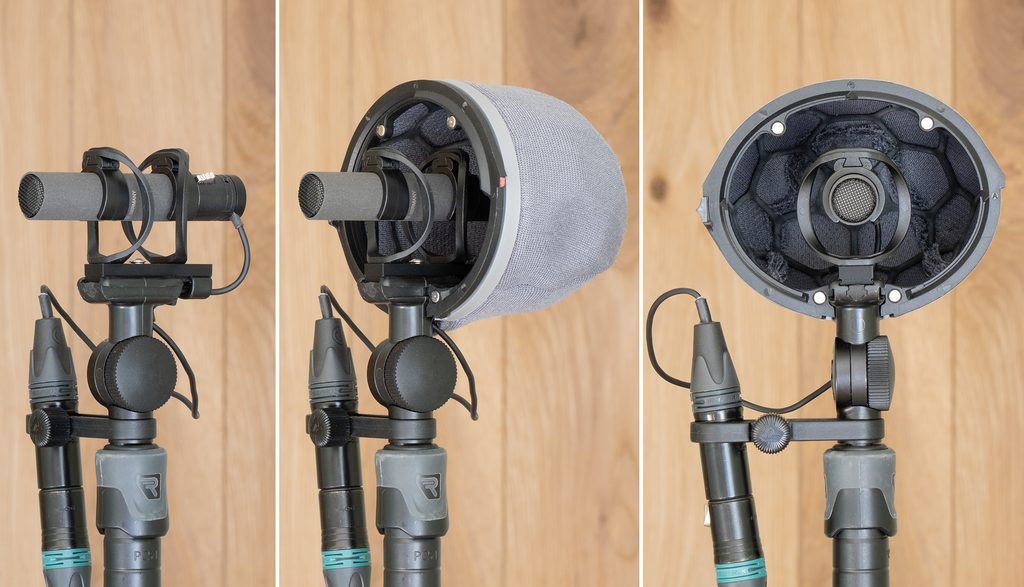
Mini-RAD hoops from Radius Windshields retrofitted to a Rycote Nano Shield.

Introduction

Back in 2024, when Radius Windshields had introduced the RAD-1 and RAD-2 hoops, but hadn’t yet produced the Mini-ALTO windshield, I retrofitted the hoops to a Rycote Nano Shield: you see this in the blog post here. This was tricky since the hoops are too tall to fit easily into the Nano Shield, so they had to be mounted on the underside of a purpose-made rail: this was a bit fiddly in use. With my 3d-printed double clips this gave me a workable compact MS rig, which – while a bit clunky – was better than using back-to-back clips in a Nano Shield fitted with lyres (not enough vertical room and the Nano Shield lyres have very little side-to-side compliance, which does side-address mics no favours). Once the Mini-ALTO arrived, such need ended and, of course, Radius’s subsequent production of their own injection-moulded (and adjustable) version of my more rudimentary 3d-printed MS clips was the icing on the cake.

The arrival of the smaller Mini-RAD hoops from Radius Windshields, however, means that retrofitting to a Nano Shield becomes much easier: no longer is hoop height an issue. Now this raises the question. from two different angles, as to why bother? First off, the smaller Mini-RAD hoops are just too tiny to allow insertion of an MS pair, so what would they offer over the Nano Shield’s original lyres? And, secondly, given that the Nano Shield was seemingly insufficiently tested before going into production, thereby attracting some negative feedback from users due to unexpected handling noise issues when used for production sound (which led to the issuing of some revised parts, including the 3D-TEX sock that covers the basket), why bother with the windshield at all? Well there wouldn’t be this blog-post if there wasn’t some merit in the retrofit, although, needless to say, reasons for doing so will vary from recordist to recordist and for some there may be no value. The key reasons for me are:

• Side-address mics. The Nano Shield’s lyres in many ways were an improvement on the standard Rycote lyres, but their design, which means compliance became much more restricted to the Z-axis (axial to the mic diaphragm for a typical end-address SDC), works well for end-address mics, but is not so good for side-address mics. The standard Rycote lyres have more side-to-side (X-axis) compliance and the Radius RAD-2 and Mini-RADs more still. This is why the Radius hoops work so effectively seemingly off-axis in, say, the ORTF in a Mini-ALTO designs I have been designing. So, if wanting to use a side-address SDC (be that a cardioid like the Schoeps MK 4V, a fig 8 or a stereo shotgun – of course, with a fig 8 capsule in it – such as the Sennheiser MKH 8018) is a very good reason to retrofit.

• Vertical use. This slightly overlaps with the point above, because the Nano Shield lyres are not effective when used vertically, first of all since vertical use implies side-address mics (unless recording planes or high-flying birds!) and, second, as the Z-axis compliance means they are simply too floppy when used vertically. OK, the answer could be to use a different windshield for vertical use, but this is where the Nano Shield’s design really comes to play, even if, as I suspect, through serendipity rather than deliberate design. The basket design is extremely unusual: I’m not thinking so much of the elliptical profile, but, rather the seamless construction. Most windshields, of course, have a basket that meets in a seam or a rail along the underside: this makes for simpler construction and, also, the rail – if it has one – provides scope for a variety of support points for shock mounts for mics of different length and design. The rail of the Nano Shield, however, is internal (part of the mic mount) and each pod is seamless around the straight barrel and into the hemisphere (if you can call it that when elliptical!) although, of course, there is a significant plastic component where the two halves of the windshield mate. The lack of a forward ring – a product of a separate end-cap in many a windshield – is beneficial to almost all use of a windshield, and the Cinelas are very good in this regard too. The thick plastic ring of an end cap evidently has an impact on (i.e. colours) the sound. What is more surprising with the Nano Shield is that the seamlessness extends to what is usually the bottom of the windshield: a seam or rail on the underside of a windshield in normal use has little to no impact. However, turn the windshield vertically, and use with either a mono omni mic or some form of 360 degree array (be that DMS or ambisonic), then a chunky seam or rail at the rear of the windshield starts to have an impact. Of course, not all windshields are equal in this degree: the relatively modest thin seam of a Mini-ALTO offers much less impact than the chunky rail of a Rycote Modular. But the seamlessness of the Nano Shield combined with its lightweight and open basket structure offers something quite different if – and I accept this is a big if – you are after a compact vertical windshield for individual side-address SDCs or, like me, an end-to-end pair for double mid side (DMS) using at least one twin mic: as I showed in my blog-post for DMS with the MKH 800 Twin and MKH 8030 combination, the Nano Shield offers an alternative to the Mini-ALTO for a compact rig, with the advantage of more transparency at the rear, but with the disadvantage of overly sagging lyres (and, of course, the general lack of robustness, ease of use and fit that mark the Mini-ALTO).
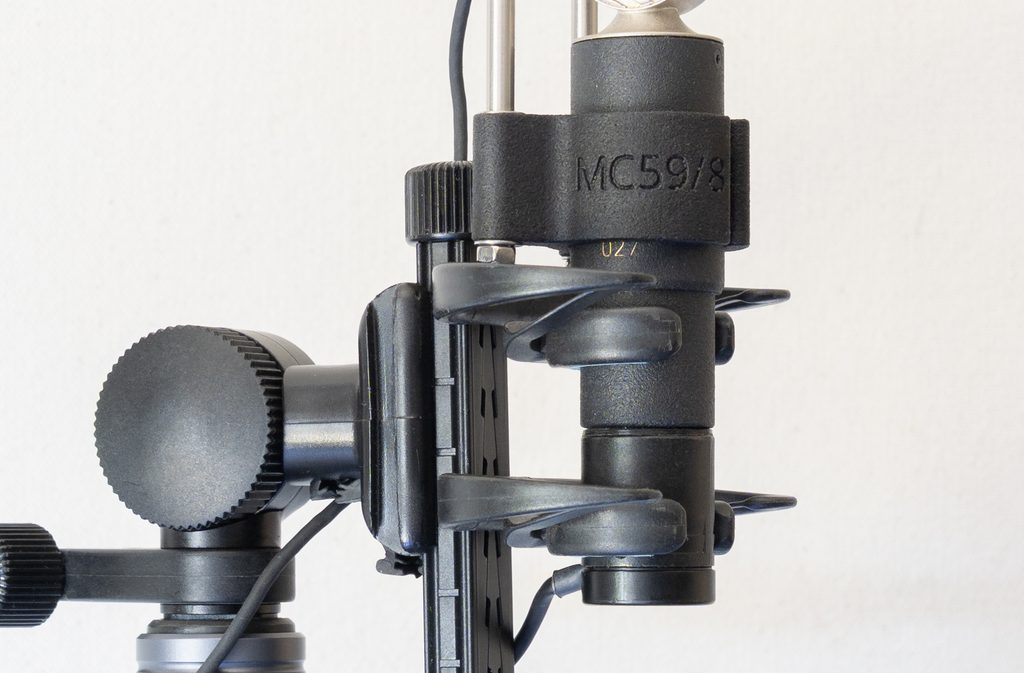
The emphasized Z-axis compliance of Nano-Shield lyres can be useful when used horizontally, but when used vertically, as here, the lyres sag.

Some readers may also wonder whether retrofitting the Nano Shield with the Mini-RADs resolves any remaining noise issues. I am not at all certain how much of the Nano Shield’s problem was related to its lyres, if at all, not least as I have struggled to replicate the noise/resonance once the Rycote-issued revised parts were fitted. But, that said, I am not swinging a boom day in day out, and much of my use involves static mounting of windshields for recording sound effects etc.: others may find in more intense real-world boom-pole use that the Mini-RAD retrofit is helpful in further resolving the noise issues of the Nano Shield, and it would be fascinating to hear if that is the case.

Rigging and testing

Given my reasons for doing this retrofit, there isn’t a great deal of testing to be done: I am already happy with the performance of the Mini-RADs and have posted my real-world tests on them here. For the sake of thoroughness, however, I did a specific comparison of the standard and retrofitted Nano Shields (i.e. with the baskets on, not just comparing the bare shock mounts), with both mounted on a short stereo bar at the end of an extended boom pole. There was no noticeable difference, and the spectrum analyzer results are shown here:
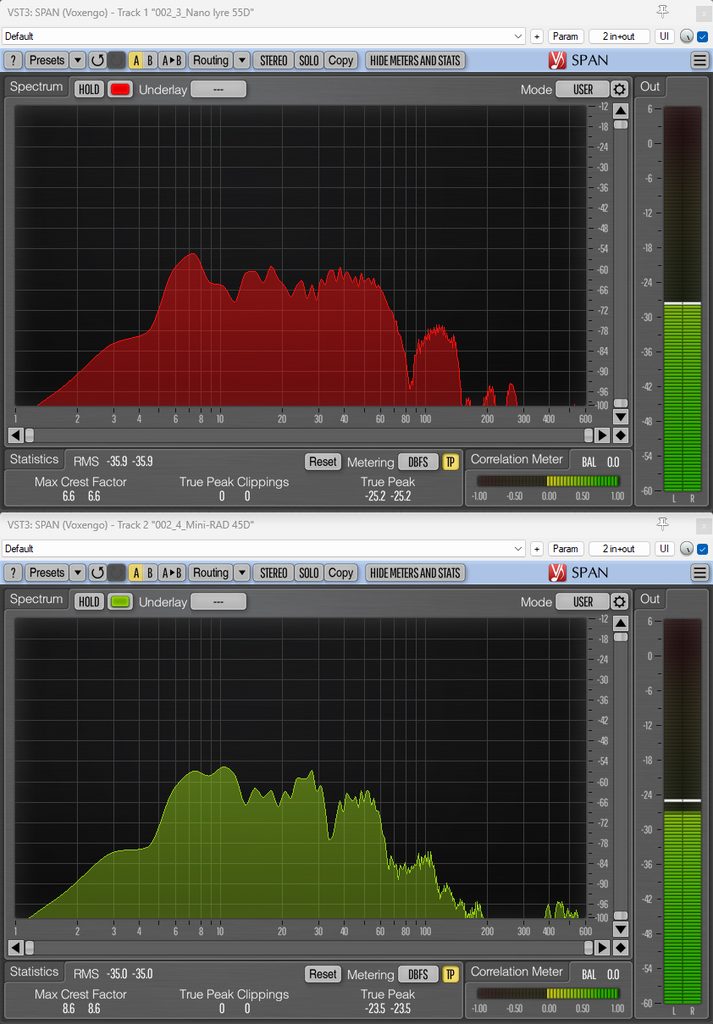
Comparing Nano Shields fitted with original Nano lyres in 55D (top: red), and retrofitted with Mini-RAD hoops in 45D (bottom: green). Rigged with matched Rycote C-08 cardioids on a Gitzo GB3560 carbon-fibre boom pole at full extension (3.95m) and being given some rough handling.

In terms of the vertical rigging prevention of sag, the results are very much as expected, as shown in this DMS rig:
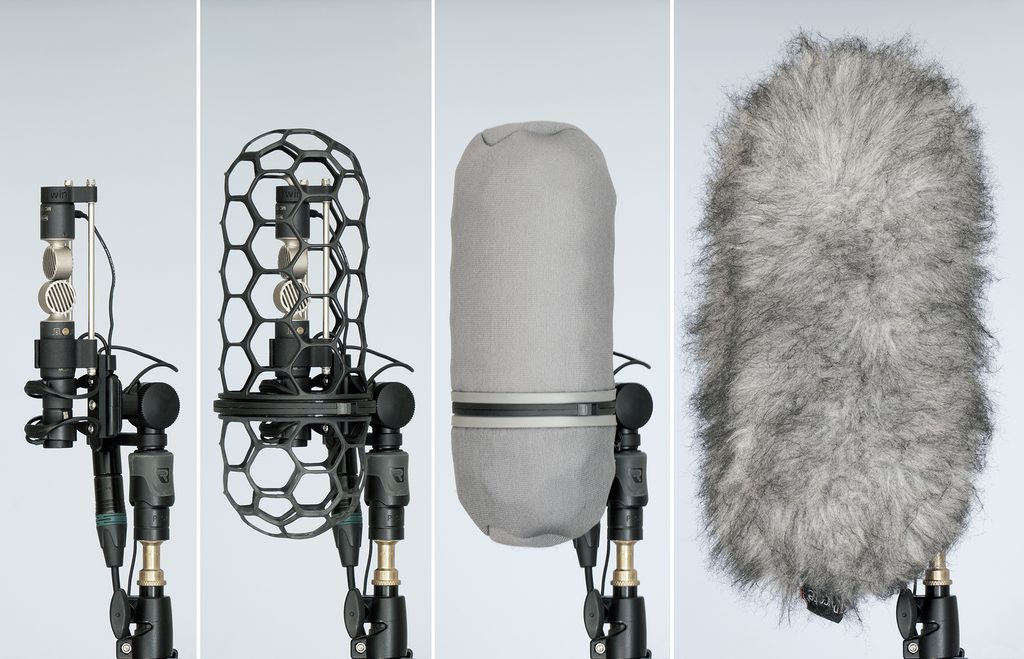
Vertical DMS rig with the Nevaton MC59/8 and MC 59 Twin: no sag in the suspension with the retrofitted Mini-RADs and, of course, the benefit of the all-round transparency afforded by the seamless Nano Shield basket (the mics capsules are nice and clear of the mount and the junction of the two pods).

Conclusions

The Nano Shield had a mixed reception and, as I understand it, only modest sales, doubtless in part due to the many social media comments on the noise issue. Despite the windshields not being as well tested or, indeed, as easy to use as the Mini-ALTO (in many ways the natural successor and alternative), the basket design remains quite unique and a rather clever bit of injection moulding: there isn’t, for example, even a Cinela equivalent that has all the same attributes. As such, if a Mini-RAD hoop retrofit helps anyone bring their Nano Shields back into use, then that’s a good thing: I’ve certainly found the fairly simple process worthwhile.

My simple 3d-model for the bar to support the Mini-RADs is freely available here in Onshape, but I am sure others interested in trying the retrofit will want to develop their own versions, perhaps with different lengths and spacings between hoops: fit is also a bit dependent on 3d printer and material.

Audio Gear

Cyclone and Nano Shield: comparing handling noise

April 24, 2023

Back in October 2022 I posted a blog article on some tests of various windshields I have: these included the Rode blimp, the Rycote Nano Shield and the Rycote Cyclone. The tests were all about performance in wind, but, of course, windshields also vary in terms of their suspensions. This matters to some degree with field recordings with mics on static stands (where vibrations can travel up the stand), but is especially relevant to mics on boom poles, be that for field recording or, more commonly, production sound for film or TV. With the Cyclone just edging the Nano Shield in terms of pure wind performance (and the Rode blimp not actually far behind), I was interested to test whether it also edged its smaller but newer sibling in terms of handling or other transmitted noise: in general use I wasn’t certain as conditions/use never quite match. Does the floating basket design of the Cyclone outweigh the newly designed lyres of the Nano Shield? How crucial is lyre compliance? And I must admit my curiosity was also raised further by some negative rumblings about the handling noise of the Nano Shield, not least on JWSound (a forum for sound production professionals): was I missing something?

So to some tests. First off, I should clarify what models I have tested: the Cyclone is the medium model (a 2021 model), while the Nano Shield model is the NS4-DB, with the improved sock design (using the same 3D-Tex material as used on the Cyclone) and the modified swivel arm for the suspension: both these updates were part of a free kit supplied by Rycote to address a resonance issue that some experienced with the original design (though some sound production professionals have suggested with only partial success). For mics, I used Rycote’s own HC-22 shotgun mic, for the reasons that I have a pair of them, they have an unusually good low-frequency response (useful for highlighting handling noise and exposing the limits of any suspension), and they have low self-noise (8.5 dBA) that helps reduce any distracting hiss when cranking up the gain to hear and measure handling noise. Needless to say, I didn’t use any high-pass filtering to remove the low frequencies for the purposes of these tests, and, of course, I double-checked to see if the mics really did produce the same level output by using a 1kHz test tone. The mics were mounted on a short stereo bar (at 175mm centres) mounted to a Gitzo carbon-fibre boom pole extended to 2.6m (8ft 6″). All tests were done indoors to reduce distraction of environmental noise and to remove wind from the equation.

The Nano Shield (left) and Cyclone (right) suspensions sans baskets: the Cyclone’s C-arm has been removed, but it’s still pretty chunky when used just for its suspension.

The Cyclone vs Nano Shield without baskets

First up, I tested the bare suspensions: that is the mics mounted in the windshield suspensions, but without the baskets. With the Cyclone I also removed its chunky C-arm, which is only necessary to support the basket. With the Nano Shield I used blue-lined lyres, which are 62 shore: the 100g weight of the HC-22 shotgun mic is within the range of mics that Rycote suggest should be used with such lyres (ranging up to the 150g MKH60). Using the stiffer green-lined lyres (68 shore) certainly made for more handling noise, so you need to be careful – as always with Rycote suspensions – not to use too stiff a lyre. With the Cyclone, the choice was a bit harder, not least as the shore numbers across the two different lyre types do not equate: for example, given that the Rycote mics are not yet on any compatibility chart, the Rode NTG1 (at 105g almost the same weight as the HC-22) is shown as compatible with 62-shore Nano Shield lyres and 72-shore older style shores (as used in the InVision mounts and in the Cyclone). Initially, I carried out these tests, therefore, with 72-shore lyres in the Cyclone, but the results were poor compared to the Nano Shield, so I swapped out to 62-shore lyres and results for the Cyclone improved. I can see why Rycote recommend 72-shore lyres for such mic weights, however, since manic/very shaky movement of the Cyclone suspension when enclosed (i.e. in later tests: see below) caused the mic to wobble wildly, generating a lot of noise and with obvious danger of hitting the basket. So, to summarize, for all tests I used the recommended and appropriate lyres in the Nano Shield, but for the Cyclone I used a more compliant lyre than recommended, but which gave better performance in all but the most extreme test: in essence, I used the suspensions I would choose for such mics in normal booming for dialogue or field recording.

With the bare suspensions I did four simple tests:

1) holding the boom pole statically in the H position (above head, arms bent nearly ninety degrees at elbows);

2) holding the boom pole in the less flexible but easier crucifix position (i.e. pole behind neck, arms extended horizontally along the pole);

3) holding the boom pole under one arm, which is rather harder, but allows control of mixer; and

4) the H position again, but tapping the pole near its base to test louder noise/stronger vibration transmission along the pole. Here is the sound file arising for the Cyclone (there is a brief silence between each of the four short clips):

And here is the sound file arising from the Nano Shield:

In each case you can hear a distinct difference: the bare Nano Shield suspension is producing significantly less handling noise than the Cyclone. Looking at one of the tests in a spectrum analyzer, as a typical example, we can visualize the differences:

Comparison of the noise in a static H position between Nano Shield (top) and Cyclone (bottom), both without baskets.

The sound is all very low frequency (below 80Hz ) and peaks around 25Hz, with about 10dB difference between the two in this example. It represents transmitted noise resulting from straining and shaking muscles and, of course, would be less with a fresh, fit and experienced boom pole operator: it is not often than being a weakling and an amateur is an actual advantage, but a worse-case scenario is useful here to highlight differences. There was, as expected, a smaller difference (around 3dB) in the more stable – and muscle-relaxing – crucifix position. Of course, a mic with more bass roll-off would exhibit less handling noise, and even what was recorded in these tests can be removed by use of a high-pass filter.

Nano Shield with basket and 3D-Tex sock (left) and Cyclone with basket (right).

The Cyclone vs Nano Shield with baskets fitted

To compare the Cyclone and Nano Shield with their respective baskets fitted I expanded the tests (still using the boom pole at 2.6m (8ft 6″) extension) rather, not least as I now had wind protection for the two mics, as follows:

1) holding the boom pole statically in the H position (above head, arms bent nearly ninety degrees at elbows);

2) holding the boom pole in the less flexible but easier crucifix/cruciform position (i.e. pole behind neck, arms extended horizontally along the pole);

3) holding the boom pole under one arm, which is rather harder, but allows control of mixer;

4) the H position again, but tapping the pole near its base to test louder noise/stronger vibration transmission along the pole;

5) cueing (quick rotations of the boom pole as if moving aim of the mic from one speaker/actor to another);

6) boom swinging – 3m/10ft horizontal arcs;

7) moving the mics up down around 1m (3ft) quickly, as if making a sudden adjustment;

8) holding the boom pole in the H position, but shaking it quite significantly (about 25mm/1 inch) up and down, to really push the suspensions; and

9) testing cable slaps (again rather exaggerated) at the base of the boom pole to test transmission of potentially different frequencies;

Here are the sound files arising (again, there is a brief silence between each of the short clips):

As with the sans basket tests, the Nano Shield significantly outperformed the Cyclone in eight of the nine tests. The one exception was that there wasn’t a lot of difference in the outcome of the underarm static boom pole holding; and I repeated the tests several times to check. The most significant difference was with the shaking test, but, as discussed earlier in the post, this is very much the consequence of the 62-shore lyres in the Cyclone allowing major lateral and vertical movement of the shotgun mic with such extreme handling.

Here are the spectrum analyzer screenshots for each of the nine tests:

1) Comparison of the noise in a static H position between Nano Shield (top) and Cyclone (bottom).
2) Comparison of the noise in a static crucifix position between Nano Shield (top) and Cyclone (bottom).
3) Comparison of the noise in a static underarm position between Nano Shield (top) and Cyclone (bottom).
4) Comparison of the noise in a static H position between Nano Shield (top) and Cyclone (bottom), with tapping of the boom pole at its base.
5) Comparison of the noise between Nano Shield (top) and Cyclone (bottom), whilst cueing.
6) Comparison of the noise between Nano Shield (top) and Cyclone (bottom), whilst swinging the boom pole.
7) Comparison of the noise between Nano Shield (top) and Cyclone (bottom), whilst moving the mics up and down.
8) Comparison of the noise between Nano Shield (top) and Cyclone (bottom), whilst shaking the boom pole.
9) Comparison of the noise between Nano Shield (top) and Cyclone (bottom), whilst slapping base with cable.

Conclusions

While my previous tests for wind performance favoured the Cyclone, these tests of the performance of the suspensions showed that the Nano Shield has the edge. This is reassuring in terms of booming: since getting two Nano Shields I have much preferred them at the end of a boom pole (due to smaller size and lower weight) to a Cyclone, but had wondered if I was losing out in some way, especially given the online rumblings. Of course, these tests are limited in range and by the models of windshield and, indeed, mics used: whilst I can be confident that the Nano Shield is a good choice vs the Cyclone for booming with my HC-22 shotgun mics, other sizes of the two windshield types and different mics may produce different results. I’d be rather surprised if results were reversed, but it can’t be ruled out. Why some others are getting problems with the Nano Shields is unclear: evidently, seriously skilled professional boom pole operators may do things with boom poles that are beyond my usage or imagination! In some cases it may be that the upgrade kits haven’t been applied or, indeed, that too stiff lyres are being used for the mic in hand: both would seem unlikely in the hands of an experienced professional, but, in the absence of any details of the exact set-ups causing issues, perhaps one shouldn’t make assumptions. Certainly, I must confess that before these tests I was using the stiffer green-lined lyres (68 shore), rather than the more suited blue-lined lyres (62 shore). For very light mics, it is the red-lined lyres (55 shore) that will be needed, and these are neither supplied with the Nano Shield kits nor, indeed, easily available.

Audio Gear

Windshield tests

October 6, 2022

Decent wind protection is essential outdoors (and sometimes indoors), but quite what to use for different conditions isn’t always clear. Is a massive full blimp overkill for more benign conditions and, as well as size and weight, is it having an effect on the mic’s frequency response? Are simpler windshields, such as foams and softies, better in lower wind? Is one full blimp better than another in high wind? Is a cheap Rode blimp terrible compared to an expensive Rycote Cyclone? When choosing windshields I often grab what I think will be best for the conditions and use, but this involves a combination of experience together with some untested assumptions. Having acquired quite a few windshields along the way, it is high time I tested those assumptions. My collection of windshields doesn’t cover all brands, but it covers several types and, therefore, these (admittedly unscientific!) tests may have value beyond personal musing: I hope so.

LOW/MEDIUM WIND

For the first set of tests, I took a pair of Rycote HC-22 shotgun mics into the garden on a day with light wind, up to around 8 mph (13 kmh), with some stronger gusting: by no means what I would describe as a calm day, but not what anyone would say was a blusterous day. I used shotgun mics throughout all the tests as these are geared to the outside for film and TV sound, and even have some use in other types of field recording. Obviously other polar patterns – most noticeably omni mics – have a much lower sensitivity to wind noise. Since I’ve used shotgun mics that means I haven’t included some of the windshields I own that don’t fit these mics, such as the Rycote Baby Ball Gags or the Rode WS8.

For the low wind tests I recorded tests in pairs, working my way up from a bare mic to the most sophisticated windshield that I have (a Rycote Cyclone). The sounds recorded are the garden ambience, plus a bit of key jangling to get those high frequencies: I’m not certain I always got the keys equidistant from the mics, so don’t be misled by any volume differences arising. In all the tests there was no low-cut/high-pass filtering and the HC-22 mic has a better bass response than many a (dialogue-focused) shotgun mic, so all these tests emphasize the effect of wind: the WAV files will allow you to play around with EQ to try to remove the low-frequency wind in a DAW should you wish. Anyway, here are the first batch of tests:

Test 1: bare mic vs foam

The results are entirely as expected: massive (unusable) wind rumble with the bare mic and, while the foam improves things in the second test, it hardly represents a solution in such light winds. I wouldn’t use any mic outside with just a foam windshield.

Test 2: foam vs Classic Softie

Again, as expected, there is a significant difference between the foam and the Rycote Classic-Softie Kit (18cm), with such softie windshields evidently designed for outdoor use. There is significant wind noise with the softie, however, despite the light wind: a high-pass filter in post at 100Hz removes most of it. I guess softies are a viable solution if a) you are in light winds; b) are recording sources where heavy EQ of the bass doesn’t matter; and c) where size is critical (e.g. ENG work). Cost might come into play too (this softie, without the grip, costs around £80, and cheaper alternatives can be had), though it is highly questionable as to whether anyone recording outside with any degree of seriousness wouldn’t have a full blimp: and, of course, softie-styled windshields will only cover similar mics in your collection (e.g. in this case, medium-sized shotgun mics).

Test 3: Classic Softie vs Rode Blimp without fur

With the first full blimp in the tests – the Rode Blimp mk1 here used without its fur/dead wombat – there is a distinct reduction in wind noise and certainly no loss of high frequencies compared to the Rycote Classic Softie.

Test 4: Classic Softie vs Rode Blimp with fur

And now with its fur on, the Rode Blimp is, effectively, the first recording without wind noise. Looking at it in Reaper there is some essentially inaudible low-frequency rumble (e.g. starting at 17 seconds into the clip), that is easily removed with a high-pass filter; the rumble is very audible on the softie windshield and not fully removed by the same high-pass filtering (100 Hz, 2 octave). Which is reassuring: for the level of wind, degree of exposure, and mic pattern, a Rode Blimp with fur on is the minimum wind protection I would have used for such a recording. Perhaps experience has some value!

Test 5: Rode Blimp with fur vs Rycote Nano Shield with fur

With two blimps with fur unsurprisingly in this wind level there is no discernible rumble: this tests serves to show that the smaller Rycote Nano Shield NS4-DB is effective, and that there is no discernible difference (at least to my ears!) in the high frequency performance/acoustic transparency. The elliptical shape of the Nano Shield may have some benefits in some situations, but it’s not evident in this field test.

Test 6: Rycote Nano Shield without fur vs Rycote Cyclone without fur

Rycote makes quite a bit of the 3D-Tex material covering their Cyclone windshields, saying it ‘provides enormous benefits in terms of surface turbulence and acoustic impedance, resulting in wind-noise reduction comparable to the combined modular-style windshield/fur cover performance’, so I thought it worth testing the medium Cyclone without its fur, and, by comparison, the Rycote Nano Shield NS4-DB without its fur too (and just the basic grey sock). Both struggled with the relatively modest wind (OK a little breezier than in the previous test a few minutes earlier) and while the Cyclone fared rather better, wind rumble is pretty evident. That windier section from 25 seconds onward isn’t easily removed by modest high-pass filtering (100 Hz, 2 octave) even on the Cyclone: in these far from extreme conditions I would’t use either without its fur.

Test 7: Rycote Nano Shield with fur vs Rycote Cyclone with fur

Putting the fur on both the Rycote Nano Shield NS4-DB and the Rycote Cyclone medium removes the wind noise entirely, as expected. I can’t hear any difference in the high frequency performance/acoustic transparency between the two in this test, or, indeed, listening back to the previous test. I would expect that more scientific testing would reveal some attenuation of high frequencies with any fur added to a windshield, but it is a small price to pay vs wind rumble. Again, in anything but the very lightest of breezes, I would add the fur to a blimp, and these field tests have confirmed that as a reasonable modus operandi.

HIGH WIND

Moving on from the tests in more benign conditions, this part of the post focuses on tests in high wind. Accordingly I have ruled out the smaller and cheaper solutions: I know from experience that a Classic Softie won’t cut out the wind rumble and that even a full blimp with fur will need a low-cut filter somewhere along the chain to get an acceptable sound. So this test is simply between three full blimps I own and, given that the wind was gusting strongly, each was fitted with its fur.

The three windshields are:

Rode Blimp mk1: no longer in production this has the same basket and fur as the updated mk2 version that is in current production, although the latter is lighter and has lyre suspensions. This is an improvement for use with a single mic, especially if booming, but I prefer the mk1 version for its more adaptable suspension: I can fit two or even three SDC mics in it, still centralized and well away from the basket (it is 100mm diameter), for mid-side and double mid-side recording. The current version of the blimp sells for a street price of around £200.

Inside the Rode Blimp mk1, showing how it can be easily adapted for a mid-side mic pair. For the windshield test it was reverted to its normal mono mic suspension.

Rycote Nano Shield: this is the newest of Rycote’s long line of windshields, and is distinguished by its small size, light weight, tool-free adjustment, eliptical profile (internally the basket is about 105mm wide and 85mm high) and inbuilt (external) low-cut filter. It has other attributes, such as being flexible, that have less obvious benefits to me. I have two of the Nano Shields: a diminutive NS2-CA for short shotgun and hypercardioid mics, and the larger NS4-DB for medium shotgun mics. I have used the larger NS4-DB for these tests, given that I used the Rycote HC-22 shotgun mic. The NS4-DB has a street price of around £600.

Inside the Rycote Nano Shield NS4-DB: rear part of basket removed. The low-cut filter (not used in the tests, though these were the conditions where you might well use it normally), can be seen in the foreground.

Rycote Cyclone: this is the most expensive of Rycote’s windshields and, with its size and design, this very much suggests it is their most capable model. It comes in three basket sizes, and with a mono and a range of stereo and double mid-side internal mounts. My version is the mono medium Cyclone. The street price (including the separately sold fur) for this is around £720.

Inside the Rycote Cyclone Medium, showing the mono suspension fitted with the HC-22 shotgun mic used in the tests.

The high wind tests

The tests were pretty simple: the three windshields were mounted on a bar on a stand and faced straight into the wind, which was gusting to around 45mph (72kmh). Recordings of the Rycote shotgun mics (each at 26dB gain) were made simultaneously into a Sound Devices Mixpre-3, with no low-cut filter applied. I only have two Rycote HC-22 mics, so for these three-way high wind tests the third mic was a Rycote HC-15 (used in the Rode Blimp): I don’t think this invalidates the tests as it is such a close match to the HC-22, as demonstrated in my other tests/posts. The two Rycote windshields, however, did use matching HC-22 mics. The location was a garden in a quiet Norfolk village, so the wind can be heard hitting trees and hedges, as well as the mics themselves. I read a short piece of text to give some dialogue too (sorry: I am no voice actor!), and then afterwards in Reaper just spliced a few bits of the recordings together (to capture the reading and some wind gusting) and trimmed the length: no other processing (again, no low-cut/high-pass filter applied). Here are the three recordings:

Rode Blimp:

Rycote Nano Shield:

Rycote Cyclone:

All three WAV files here will allow readers to listen and play around with them themselves and draw their own conclusions. In terms of coping with high wind, there isn’t a vast difference: without a low-cut/high-pass filter and no attempt to seek a more sheltered spot all three are affected by the strong gusts as, indeed, I would have expected. The Rode does have a little more noise, again as I would have expected: this is evident by listening and by analysis, which shows its peak at-12.5dB vs -15.1dB for the Nano Shield and -16.6.dB for the Cyclone. Applying a high-pass filter in Reaper shows up the distinction a bit more, as it is much easier to cut out most of the low frequency wind energy with the Cyclone than with the other two windshields.

So where does this leave me? All three full windshields are effective, with the performance differences between them, while noticeable, much smaller than between them and the next tier down of windshields (i.e. softie types). The Cyclone is clearly the best in terms of pure wind noise reduction, so I’ll continue to use that where practical. If booming for dialogue (and that isn’t very likely in such high wind) or if travelling minimally, however, I’ll continue to use the lightweight and compact Nano Shield (and very possibly my still smaller NS2-CA for short shotgun and hypercardioid mics) instead. But if wanting mid-side or double mid-side flexibility, I won’t be worried about using my wonderfully adaptable old Rode Blimp. So no real change to what I do anyway!

Audio Gear

A windy weekend with the Rycotes

November 8, 2021
Rycote HC-15 and HC-22 shotgun mics in Rycote Nano Shields: furry windjammers needed too in 34 mph wind.

Last weekend was blowy and autumnal here in Norfolk, so I had a bit of fun out in the wind with the Rycote shotgun mics that I have been testing, in this case with the new Rycote Nano Shield kits: the NS2-CA for the HC-15 short shotgun and the NS4-DB for the HC-22 medium shotgun. The Nano Shields are impressively light and small, even if the deliberately bendy (but resilient) structure seems a bit unfamiliar to start with.

First up, I simply stuck the mics in the garden of this quiet village, facing the road, so you can hear the sounds of wind in the trees, passing cars, and the odd actual shotgun going off. With no low-cut switches on either mic, the 80 Hz switchable low-cut filter on the XLR connector seemed useful so here is the HC-15 with no low-cut (or high-pass) filter:

And here is a recording made at the same time, but with the HC-22 and its low-cut filter switched on:

OK, there could be a difference between the two mics or the effect of the different sizes of their Nano Shields, so here’s the test reversed. First, the HC-15 with its low-cut filter switched on:

And then the HC-22 with no low-cut filter:

So the verdict: in high winds the Nano Shield 80Hz low-cut filter is effective, especially with mics such as Rycote’s own ones with no in-built filters. Evidently the new windshields and mics were considered together. There’s no sense that the wind is overloading the mic to the degree that the low-cut filter is too far down the chain to be effective. Of course, this means that you can apply a low-cut filter at the preamp stage: how good this is will depend on your preamp/recorder, but I found no discernible difference when using my Sound Devices MixPre-3 80Hz low-cut filter. This doesn’t mean that there is no value in having a low-cut filter at the Nano Shield stage since in severe wind conditions you can double up: e.g. set the MixPre-3 low-cut filter (perhaps to say 40Hz) and apply the Rycote 80Hz low-cut filter too.

While doing various tests in the garden, out of idle curiosity I also set the two shotgun mics up as a NOS pair (capsules at 30cm spacing, angled out to 90 degrees between the mics). Despite being manifestly different mics, the identical capsule and preamps mean that it works surprisingly well. If nothing else, it’s a demonstration of how well the two mics match if cutting from one to the other. Sorry about the rather theatrical footsteps stamping past at one point!

Out in the woods on a windy day with Rattlebox for some mic tests…

Off then to the woods to test the mics in wind on something different. Perhaps it’s just me, but the woods around north Norfolk in early November seem pretty dead in terms of sound apart from wind (maybe I simply lack the patience to lurk about for hours like a real wildlife sound recordist?), so for a bit of acoustic interest I persuaded Norfolk’s raucous folk band, Rattlebox, to do some unaccompanied singing (Dick Shannon’s ‘The Auld Triangle’): this was also for my tests on double mid-side recording with two forward-facing mics, for which see my separate post. Anyway, in terms of the Rycote mics, here’s a rather unfair test of the HC-15, pointing into a semicircle of singers – fine for the lead vocalist, but, as intended with a shotgun mic, rejecting much of the other singers in the choruses that were more side-on to the mic:

Combining with an AKG CK94 for a mid-side pair changes things rather, as you’d expect. The HC-15 works rather well in this manner:

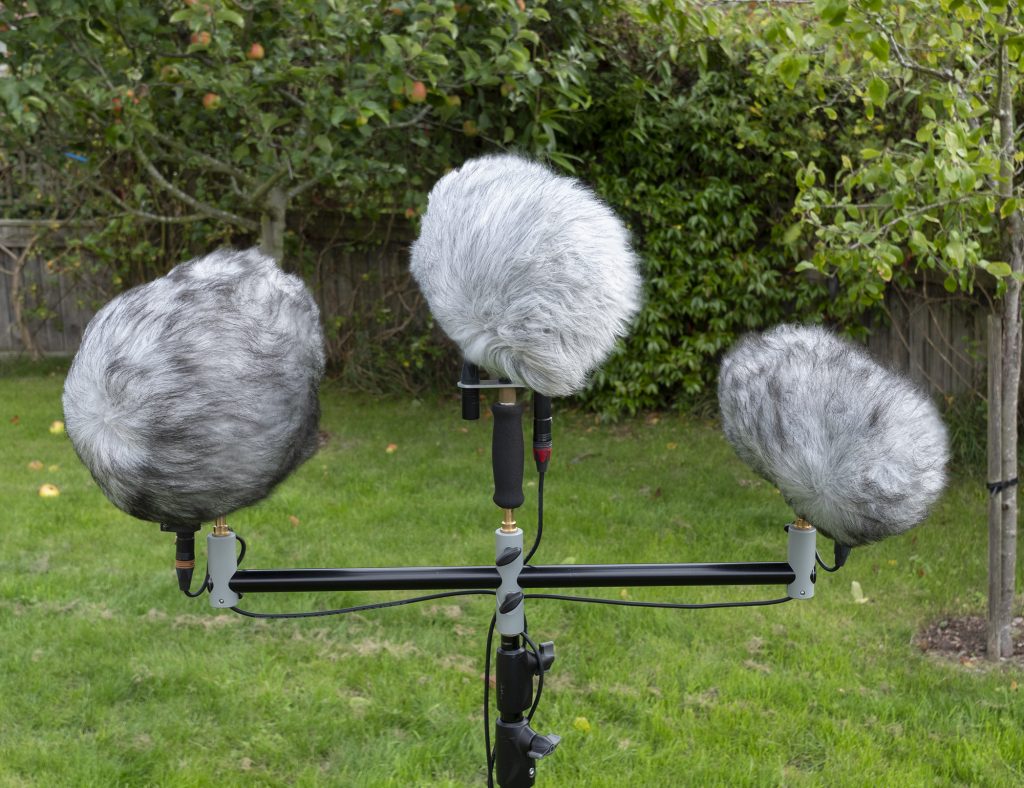
Finally, returning to the stereo experiment in the garden (above), I set up the HC-15 and HC-22 as a NOS pair (as shown in the photo above – which also shows a double mid-side rig in a Rode blimp), with the following result:

Again, I’m not recommending mixing a short and a medium shotgun as a stereo pair, but it’s not bad.

So the final word on the wind tests? Well, needless to say these were much more extensive than shown in this short post, but it is clear that the Rycote mics handle themselves fine in windy conditions. The Nano Shields – which I haven’t reviewed as such – are a good match and their performance belies their small size and light weight. Finally, and rather incidentally, those slightly tongue-in-cheek NOS stereo pair tests with the two different mics confirm both that the off-axis sound is rather good, and that the two different mics match very well.